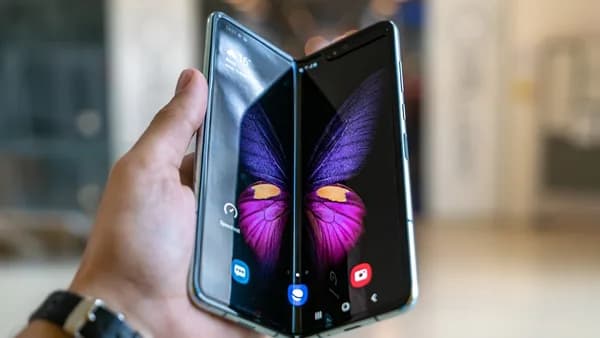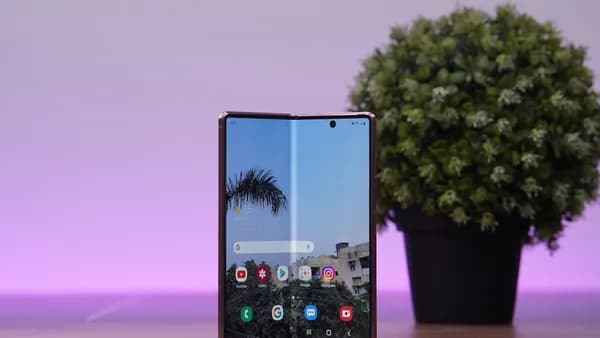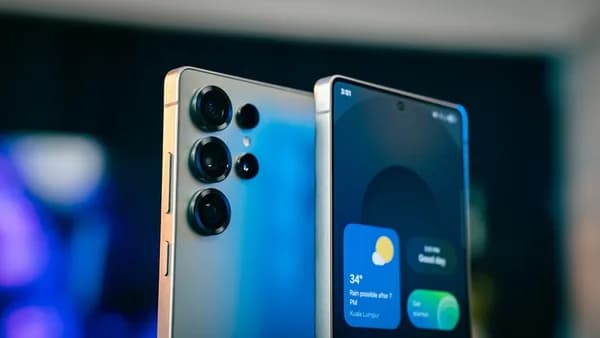
Samsung replaced old posts on two Instagram accounts with six Galaxy Unpacked teaser videos on July 1, 2026 — and the message is not a feature, a camera spec, or an AI demo, but a shape.
That is the useful signal beneath the stunt. The reset on Samsung Mobile and Samsung Mobile USA points to a launch campaign built around absence and repetition, not disclosure, according to Notebookcheck. Samsung has not officially confirmed the next Galaxy Unpacked date, though Notebookcheck notes that rumors have circled July 22 for months.
Samsung is “hitting reset” ahead of its next foldable launch, with cryptic teaser posts that users are expected to “decode.”
That framing matters. Samsung is not just clearing a feed. It is trying to make the first public idea around the Galaxy Z Fold 8 a question: what changed?
Samsung’s Instagram wipe turns Galaxy Z Fold 8 marketing into the first product signal
The Instagram wipe works because deletion feels intentional. A normal teaser adds noise to an existing feed. This one removes the archive, then replaces it with a controlled set of clues.
That makes the campaign itself a product signal. Samsung appears to be shifting from the usual pre-launch rhythm — thinness, hinge upgrades, camera, display privacy features, battery comparisons — toward a mystery-led narrative where the form factor becomes the story before specs arrive.
Notebookcheck’s read is direct: the new posts point to a “fresh new start” ahead of Galaxy Unpacked and suggest that the Galaxy Z Fold 8 form factor is “practically confirmed” to be changing. The teaser examples matter here. Samsung shows elongated objects being scaled down toward a roughly 16:9 aspect ratio, including a chocolate bar and a puzzle.
MLXIO analysis: that is not random visual play. Samsung wants the audience to associate the next Fold with proportions. Not megapixels. Not benchmark scores. Proportions.
For a foldable line that has to justify why it exists beside slab phones, that is a sharper pitch. The promise is not simply “better Fold.” It is “different Fold.”
Six teaser videos make “changing shape” the pre-launch message
The striking part is not that Samsung posted six videos. It is that the six videos appear to reinforce the same idea instead of spreading attention across multiple features.
That repetition gives Samsung control over the first association. Before leaks, pricing talk, or spec sheets dominate the conversation, the company is pushing one concept: new form factor.
The visual language leaves room for several interpretations:
| Possible reading | What the teaser supports | What remains unconfirmed |
|---|---|---|
| Changed screen ratio | Elongated objects scaled toward 16:9 | Exact cover and inner display dimensions |
| Thinner Fold design | “Scaled down” visual motif | Thickness, weight, hinge design |
| Wider or more conventional cover display | Emphasis on proportions | Whether Samsung changes the outer-screen ergonomics |
| New Fold/Ultra split | Notebookcheck says Fold fans may need the Galaxy Z Fold8 Ultra for the traditional design | Official naming, pricing, and model lineup |
One teaser reportedly shows a wallpaper with the number 8, which Notebookcheck calls the clearest hint yet that the campaign targets the successor to the Galaxy Z Fold 7.
The risk is obvious. If the final hardware change is modest, Samsung may have inflated expectations with its own mystery machine. A slightly altered ratio will not satisfy buyers who spend weeks decoding a “reset.”
The small set of numbers Samsung wants everyone to notice
The source-backed data set is narrow, but revealing:
- Date: The Instagram reset landed on July 1, 2026.
- Accounts: Samsung refreshed Samsung Mobile and Samsung Mobile USA.
- Videos: The campaign centers on six new teaser videos.
- Launch timing: Samsung has not confirmed the exact Unpacked date; July 22 remains the long-running rumor cited by Notebookcheck.
- Visual clue: The videos repeatedly convert elongated objects toward a roughly 16:9 aspect ratio.
- Model clue: One video includes the number 8.
MLXIO analysis: the absence of hard specs is part of the design. Foldables carry more explanation burden than slab phones. They have to make buyers believe the trade-offs are worth it before the price, durability questions, and use-case debates arrive.
Notebookcheck also flags possible price pressure. It says hints from industry sources, plus the launch prices of the Vivo X Fold6 and Honor Magic V6, point toward higher foldable prices. No Samsung price is confirmed in the supplied source material, so this remains a watch item rather than a settled fact.
Readers tracking the timing debate around the next Fold can pair this campaign with our earlier coverage, August 5 Leak Puts Galaxy Z Fold 8 Buyers on Clock. For wider Samsung device context, our report on Galaxy S27 Pro Steals Ultra’s Privacy Display Trick shows how much of Samsung’s 2026 phone chatter is already being shaped by design-specific leaks.
A reset narrative replaces the usual Fold credibility pitch
Samsung’s foldable marketing has often had to answer a practical question: why buy this instead of a conventional premium phone?
This campaign tries to answer before the question is asked. By centering fun, puzzle-solving, and shape, Samsung is selling curiosity first. The product details can wait.
That approach fits the campaign language reported by Android Central: Samsung wants users to follow clues and “decode” the posts, while saying it will reveal the usual phone details “when we’re ready.”
MLXIO analysis: this is a bet that mystery can create emotional permission for a foldable upgrade. If buyers believe the device has changed in a visible way, Samsung gets more room to argue for premium pricing and new use cases later.
Notebookcheck’s most consequential claim is that Samsung may make a U-turn with the standard Galaxy Z Fold8, while the Galaxy Z Fold8 Ultra carries forward the traditional Fold design. If accurate, Samsung is not just refreshing one device. It is repositioning the Fold family around two design identities.
Carriers, creators, developers, and Apple watchers get different signals
Consumers will read the teasers through pain points. Existing Fold users may focus on portability, cover-screen comfort, and whether the new shape fixes daily handling. Mainstream buyers may care less about clues and more about whether the device feels durable and practical after Unpacked.
Retailers and carriers, by contrast, need a clean sales story. MLXIO analysis: a visibly different form factor is easier to sell than an incremental spec bump. “It changed shape” travels faster than “the hinge tolerance improved,” even if the latter matters more in daily use.
Creators and app developers have a different concern. If Samsung changes screen dimensions or folding behavior, interface layouts may need fresh testing. That can create new creative formats, but it can also add work for apps that already support several Android screen sizes.
Apple watchers will also parse the campaign closely because Notebookcheck frames Samsung’s move in relation to Apple’s rumored iPhone Ultra, also described as iPhone Fold. That does not confirm Apple’s device or Samsung’s final design. It does show that the teaser is being read as a competitive signal, not just a social stunt.
A new Fold shape would change the buyer’s checklist
If Samsung delivers a meaningful design shift, buyers should judge the Galaxy Z Fold 8 by practical gains, not novelty.
The right questions after Unpacked are concrete:
- Portability: Is the folded device easier to carry and use one-handed?
- Cover display: Does the outer screen feel less compromised?
- Inner display: Does the new ratio improve multitasking, reading, or video?
- Hinge: Is the mechanism thinner, stronger, or more stable?
- Crease: Is visibility reduced in real use, not just promo angles?
- Battery: Did the shape change cost endurance?
- Cameras: Did Samsung make compromises to hit the design?
- Durability: What rating and protection claims are official?
- Price: Does the final number match the promised utility?
The Instagram campaign can make the Fold feel fresh. It cannot prove the Fold is better. That proof starts when reviewers and early buyers handle the device.
The Unpacked test: whether the reset survives contact with the hardware
Samsung’s likely reveal path is now boxed in by its own teasers. The company has trained the audience to expect a visible design break, whether that arrives through thinness, proportions, hinge engineering, or a split between Galaxy Z Fold8 and Galaxy Z Fold8 Ultra.
The campaign also points toward a launch story built around fun and lifestyle rather than productivity alone. That is useful if the form factor really changes how people use the phone. It is risky if the reveal depends on clever editing and familiar hardware.
The confirming evidence will be simple: official dimensions, display ratios, hinge claims, durability details, pricing, and hands-on reactions that describe a real usability jump. The weakening evidence would be just as clear: a teaser-heavy launch where the “new form factor” turns out to be a modest visual adjustment wrapped in a louder campaign.
The Bottom Line
- Samsung is using its Instagram wipe as an early signal that the Galaxy Z Fold 8 may bring a form-factor change.
- The campaign shifts attention away from specs and toward proportions before the official Galaxy Unpacked reveal.
- The rumored July 22 launch window makes these teasers a key clue for what Samsung wants buyers to notice first.