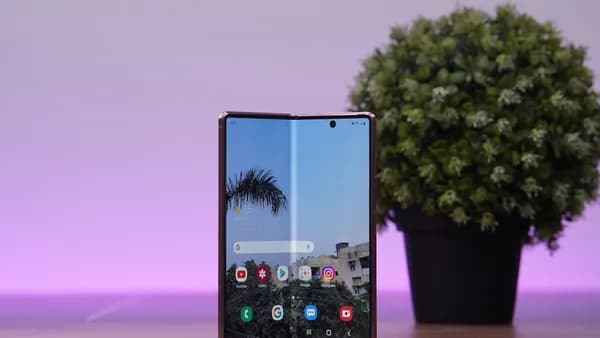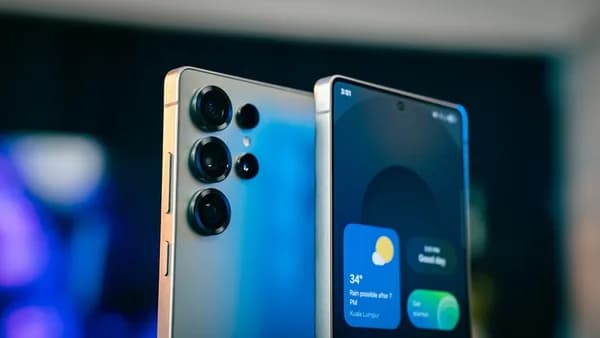
Samsung’s next clamshell foldable may reverse last year’s Exynos-only move by adding Snapdragon variants — not as a performance flex, but as a cost-control tool. That is the tension around the expected Galaxy Z Flip 8: Samsung needs the phone to look premium while reportedly making it cheaper to build.
The latest leak, cited by Notebookcheck, comes from Lanzuk (yeux1122) on Naver and says the Galaxy Z Flip 8 will ship in two chip versions: one using Samsung’s in-house Exynos silicon and another using Qualcomm Snapdragon. That would mark a shift from the Galaxy Z Flip 7, which Notebookcheck says was the first Flip model to move to Exynos and was sold only with that chip.
This is not just another chipset rumor. If accurate, it suggests Samsung is testing how much of the foldable formula can be optimized behind the glass without buyers feeling shortchanged.
Samsung’s Cost-Cutting Test Starts With the Chip, Not the Hinge
The expected assumption was simple: after moving the Galaxy Z Flip 7 fully to Exynos, Samsung would keep the Flip line on its own silicon. The reported reality is messier. The Galaxy Z Flip 8 may follow the regional dual-chip strategy more commonly associated with the Galaxy S and Galaxy Z Fold lines.
Notebookcheck’s key claim is blunt: using Samsung’s own Exynos SoC is reportedly more expensive for Samsung than using Qualcomm’s Snapdragon chip. That flips the usual surface-level logic. In-house silicon often looks like the obvious margin play. Here, the leak suggests the opposite may be true.
The likely Exynos chip is said to be the Exynos 2600, though the leaker did not name the exact SoC. That matters because the cost argument is not about downgrading the phone on paper. It is about giving Samsung room to allocate chips by region, cost, supply, or product strategy.
A simple before-and-after view shows the shift:
- Galaxy Z Flip 7: Exynos-only, according to Notebookcheck.
- Galaxy Z Flip 8: Reportedly split between Exynos and Snapdragon variants.
- Typical Samsung regional pattern: Snapdragon in the US, Canada, China, and Japan; Exynos in Europe, India, and South Korea, with the US also central to other Flip 8 feature changes.
- Open question: Whether the Flip 8 follows that same map.
That last point is critical. The leak says dual-chip treatment is expected. It does not confirm the regional split.
The Flip Line Is Where Samsung Can Hide Efficiency Work
The Galaxy Z Flip 8 is described as the smallest device in Samsung’s next foldable trio, which Notebookcheck says is expected next month. That makes it a logical place to test cost control because the Flip format is less about maximal screen real estate and more about making a foldable feel normal enough for daily buyers.
MLXIO analysis: if Samsung can reduce build cost without changing the parts users care about most — display feel, battery life, cameras, durability, and software responsiveness — the Flip line becomes a cleaner business. The risk is that enthusiasts will notice any unevenness between Exynos and Snapdragon variants, especially if battery life, heat, or sustained performance diverge.
The supplied related context points in the same direction: the Galaxy Z Flip 8 is expected to be more iterative than dramatic. Android Central’s comparison expects design refinements, a new Exynos processor, possible Qi2 magnets, and Android 17 software, while warning that upgrades beyond that may be limited. IntoMobile’s supplied report says rumored changes include a new hinge design, a possible “crease-free display design,” and largely unchanged battery, charging, camera module, speakers, and vibration motor.
That makes the chipset split more important, not less. If Samsung is not changing much visibly, the silicon strategy becomes one of the few major internal moves.
For more on how Samsung may be separating its foldable strategy across product tiers, see MLXIO’s coverage of Galaxy Z Fold 8 Leak Exposes Samsung’s Big Split Bet and Galaxy Z Fold 8 Leak Reveals Samsung’s iPhone Ultra Bet.
The Available Numbers Show Price Pressure, Not Samsung’s Actual Margin
The source material does not provide Samsung’s bill of materials, production yield, or per-unit margin. So any precise margin estimate would be guesswork. What it does show is the pricing box Samsung is working inside.
Android Central’s supplied comparison says the Galaxy Z Flip 7 launched at $1,099 for the 256GB model, with the 512GB upgrade adding $120. It was revealed on July 9, 2025, and became generally available on July 25. The same context says current leaks point to a July 22, 2026 release date for the Galaxy Z Flip 8, with a Galaxy Unpacked event likely earlier in July.
Some hardware figures also frame the problem:
| Device detail | Galaxy Z Flip 7 | Galaxy Z Flip 8 rumor/context |
|---|---|---|
| Starting price | $1,099 for 256GB | Exact price not leaked in supplied material |
| Folded thickness | 13.7mm | Conflicting rumors; one supplied report says 0.02 inches thinner |
| Weight | 188 grams | Supplied context suggests possibly lighter; another says 6.3 to 6.6 ounces |
| Inner / cover display | 6.9-inch inner, 4.1-inch cover expected in comparison context | Likely similar, according to supplied context |
| Chip strategy | Exynos-only | Reportedly Exynos plus Snapdragon |
The hard lesson: Samsung can make the Flip feel familiar and still change the economics underneath. Buyers may see the same basic shape. Samsung may see a different cost structure.
Iteration Has Become the Flip Series’ Default Language
The supplied context describes the Galaxy Z Flip 7 as a known quantity: slim, durable, with solid performance and cameras, but also limited by cover-screen software, small battery, slow charging, and no native Qi2 magnets. That is the setup for the Flip 8.
The expected upgrades are not framed as a full redesign. They are narrower:
- Processor: expected move toward Exynos 2600, with Snapdragon variants now rumored.
- Design: possible thinner or lighter build, though leaks conflict.
- Charging: possible Qi2 support in Android Central’s supplied comparison.
- Display: rumored crease reduction or “crease-free” design.
- Cameras and battery: supplied reports suggest little or no major change.
MLXIO analysis: this is how Samsung trains buyers to accept foldable iteration. The annual sell becomes polish, software, durability claims, and small ergonomic improvements — not a full hardware reset every cycle. That makes cost optimization easier to hide, but it also raises the bar for execution. A familiar phone with a higher price or uneven chip performance will invite sharper scrutiny.
Different Stakeholders Will See the Same Flip 8 Very Differently
For Samsung, a dual-chip Galaxy Z Flip 8 could offer flexibility. If Snapdragon is cheaper in some cases, Samsung can use it without abandoning Exynos across the whole product. That preserves optionality.
For buyers, the issue is simpler: which version is better? If regional variants differ in battery life, thermals, image processing, modem behavior, or gaming performance, the chipset label becomes more than a spec-sheet footnote.
For carriers and retailers, the supplied material does not confirm promotions or trade-in plans. Still, MLXIO analysis: a cheaper-to-produce Flip would give Samsung more room to support launch incentives if it chooses to. That remains an inference, not a reported plan.
For component suppliers, the source only supports one concrete point: Samsung may not rely solely on Exynos this time. Broader claims about supplier impact are not confirmed.
The Next Proof Point Is Whether Buyers Can Tell Which Chip They Got
The Galaxy Z Flip 8 may become a referendum on invisible cost engineering. If Samsung ships Exynos and Snapdragon variants with no obvious user-facing gap, the company gets more control over foldable economics without damaging the product story.
If differences show up in battery life, heat, or sustained performance, the cost-saving move could become a perception problem. The Flip line already faces questions from the supplied context around battery size, charging speed, camera reuse, and cover-screen limits. A disputed chip split would add another variable.
The practical watch list is narrow:
- Launch price: whether Samsung holds near the Galaxy Z Flip 7’s $1,099 starting point or moves higher.
- Regional chips: whether the usual Snapdragon and Exynos market split applies.
- Battery and charging: whether rumored continuity becomes a weakness.
- Camera hardware: whether Samsung keeps the same module.
- Display crease: whether the rumored improvement is visible in reviews.
- Performance parity: whether Exynos and Snapdragon versions behave similarly under load.
The strongest version of this strategy is boring on purpose: familiar design, fewer obvious compromises, and lower internal cost. The weakest version is also familiar — but in the wrong way. If the Galaxy Z Flip 8 feels like the same phone with a messier chip map, Samsung’s cost-cutting gamble will be hard to sell as progress.
The Bottom Line
- Samsung may prioritize cost control over a single global chipset strategy for its next foldable.
- Regional chip differences could affect buyer expectations around performance, battery life, and value.
- The move shows how foldable makers are looking for savings beyond obvious hardware changes like hinges or displays.