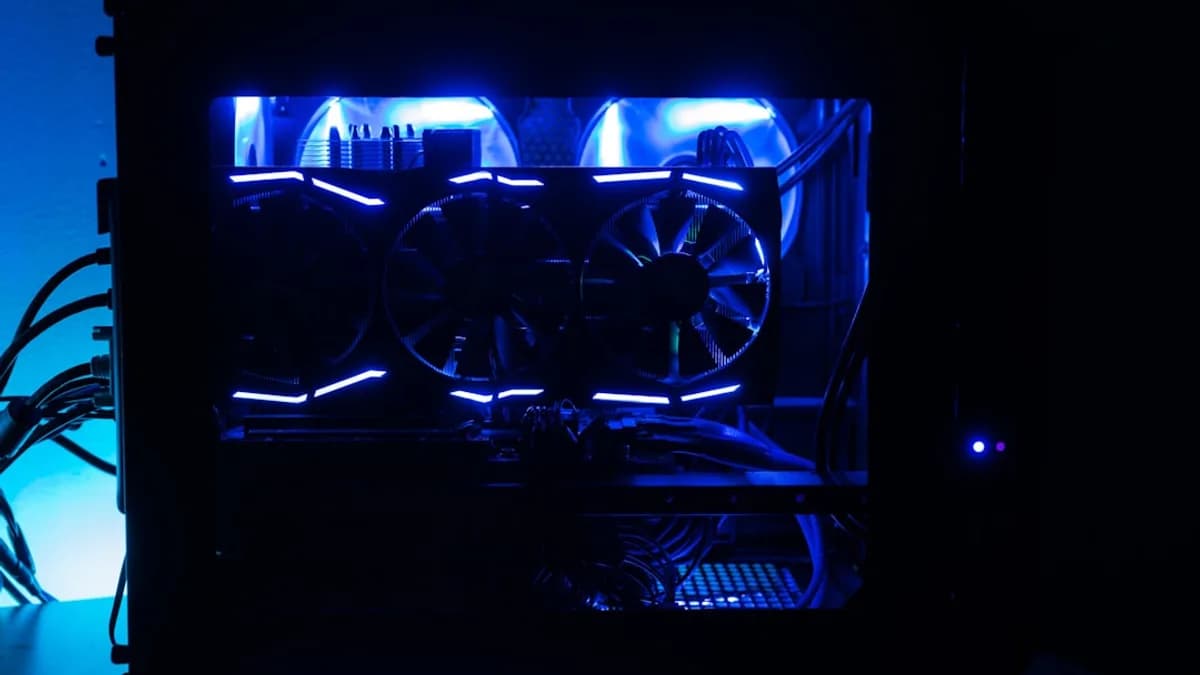
On June 4, Cooler Master’s Computex 2026 prototype made a blunt argument: the next PC cooling gain may come less from bigger GPU heatsinks and more from forcing hot air to leave the case in the right direction.
At the show, Cooler Master displayed MasterFlow, a single-slot GPU accessory built around a metal shroud and blower-style fan that redirects graphics-card exhaust out the rear of the chassis, according to Notebookcheck. The claimed payoff is up to 6 degrees Celsius lower CPU temperatures, via PC Gamer, because less GPU heat rises into the CPU cooler’s air path.
That timing matters. Computex 2026 was full of AI PCs, displays, handhelds, and RTX Spark-based laptops — a theme we covered separately in Nvidia Bets Your Next PC Will Need RTX Spark Inside. MasterFlow stood out because it is not a silicon story. It is a ducting story. Old idea, new thermal problem.
June 4 at Computex: MasterFlow targets the heat GPUs leave behind
Modern open-air GPUs cool themselves well, but they often dump warm exhaust back into the case. Notebookcheck describes current cards as using pass-through coolers with two or three front fans that pull air through the GPU and exhaust it through the back of the card. The problem is where that air goes next: toward the CPU zone.
MasterFlow attacks that second-order problem. It does not replace the GPU cooler. It sits with it, collecting or redirecting the hot air and pushing it out the rear expansion area.
The core claim is narrow but meaningful:
Cooler Master says MasterFlow can lower CPU temperatures by about 4–6°C, according to VGTimes, while Notebookcheck cites a claim of up to 6 degrees Celsius lower CPU temperatures.
That distinction matters. The headline benefit is not “your GPU runs much colder.” The supplied material supports a CPU-temperature claim, caused by moving GPU exhaust out of the case more predictably. MLXIO analysis: if the CPU cooler or radiator is being fed by GPU-warmed air, even a modest redirect can matter more than another case fan spinning harder.
The old blower idea returns as a single-slot add-on
Blower-style GPU cooling is not new. Older graphics cards often used radial fans to push hot air straight out of the rear bracket. Notebookcheck says that design is now “a thing of the past” for most modern GPUs, which favor open-air, multi-fan layouts.
MasterFlow revives the useful part of that older model without forcing buyers into a full blower GPU. The card keeps its stock cooler. The accessory tries to impose order on the exhaust path.
| Cooling approach | Heat path | Trade-off shown by the source material |
|---|---|---|
| Open-air GPU cooler | Dumps warm air into the case | Good for the GPU itself, but can send heat toward the CPU |
| Traditional blower GPU | Pushes hot air out the rear | Older concept now less common on modern GPUs |
| Cooler Master MasterFlow | Adds a rear-exhaust path above/near the GPU | Still a prototype; compatibility and final design details remain open |
Cooler Master’s broader cooling history makes the concept less random. In its own account of heat pipe development, the company frames its thermal design philosophy this way:
“don’t just add more, but make every pipe count.”
That line was about heat pipes, not MasterFlow. Still, the same logic fits this prototype. MasterFlow is not adding a larger GPU cooler. It is trying to make existing airflow count.
The 4–6°C claim will live or die in independent testing
A 4–6°C CPU-temperature reduction is not trivial if the test system is thermally constrained. It is also not enough information on its own.
Reviewers will need to test whether MasterFlow changes:
- CPU temperature: The headline claim Cooler Master is making.
- GPU core and hotspot behavior: Not claimed in the source, but important for users deciding whether the accessory helps the whole system.
- Fan speed and noise: A few degrees may matter most if they allow lower RPM, not higher frame rates.
- Case sensitivity: Compact builds and airflow-restricted cases may react differently from larger, well-ventilated towers.
- Mounting variables: Horizontal GPU layouts, vertical GPU layouts, and triple-fan cards could produce different results.
Notebookcheck says MasterFlow works best with RTX 5070 Ti cards or higher, according to Cooler Master via GDM. It also says the blower position can be fine-tuned to align with a GPU’s exhaust vent, but length adjustment is limited, making it better suited to triple-fan GPUs.
That is the key constraint hidden inside the prototype. MasterFlow is not a universal thermal patch yet. It is a shaped answer to a specific physical layout.
The next design decision is power: USB Type-C or 4-pin PWN
Cooler Master has not finalized the product. Notebookcheck says the company is still deciding whether the fan should be powered by USB Type-C or a 4-pin PWN connector.
That choice is not cosmetic. MLXIO analysis: power and control will shape who can install MasterFlow cleanly. A motherboard fan header could make fan curves easier to manage inside existing PC cooling software. USB Type-C could widen compatibility, but may create a less tidy build depending on cable routing. The source does not say which path Cooler Master prefers.
Other physical questions remain open:
- Compatibility: Cooler Master points to RTX 5070 Ti or higher, but the source does not provide a full GPU support list.
- Adjustment range: The fan position can move, but not much lengthwise.
- Retail access: Notebookcheck says it will appear in Cooler Master’s own pre-built systems at least initially.
- Pricing: No price is supplied in the source material.
This is where the prototype status matters. Computex showed direction, not a finished buying recommendation.
Cooler Master’s first prebuilts will decide whether this becomes more than a clever duct
Notebookcheck says MasterFlow is expected to be released within the year and will appear first, at least initially, in Cooler Master’s own pre-built systems. That is a sensible proving ground. Cooler Master can control the GPU, case, spacing, cables, and exhaust path instead of asking retail buyers to solve every fitment problem themselves.
For enthusiasts, the appeal is easy to state and hard to prove: lower CPU temps, cleaner airflow, possibly quieter operation. For skeptics, the objection is just as direct: if a case already manages GPU exhaust well, giving up a slot for a blower accessory may feel like fixing a problem that should not exist.
The broader cooling angle is also visible beyond PCs. We have seen “smarter cooling” used as a product pitch in other categories, including MLXIO’s coverage of the $900 Xiaomi Mijia Ultra 3HP Bets on Smarter Cooling. MasterFlow is a PC-specific version of that same engineering instinct: not just more cooling hardware, but more intentional heat movement.
The next evidence point is simple. If Cooler Master’s prebuilt systems show repeatable 4–6°C CPU reductions without obvious noise, fit, or cable compromises, MasterFlow could become a template for case-integrated GPU exhaust channels. If the gains depend on narrow GPU layouts or carefully tuned demo builds, it will remain a niche accessory for hot, cramped, high-end PCs.
Either way, the signal from Computex 2026 is clear: Cooler Master is betting that airflow discipline still has unfinished business inside the gaming desktop.
The Bottom Line
- MasterFlow targets case airflow rather than simply making GPU heatsinks larger.
- Lower CPU temperatures could matter in compact or high-power gaming and AI PC builds.
- The prototype revives blower-style exhaust concepts for modern open-air GPU thermal problems.