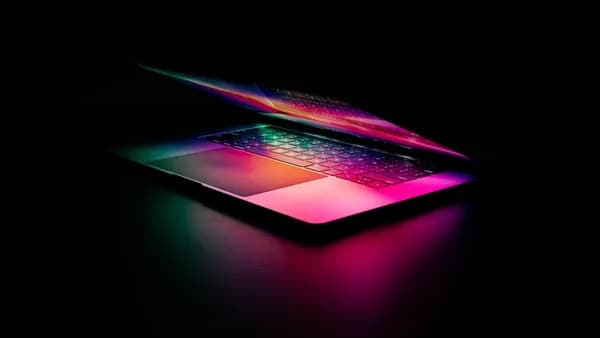
On June 1, 2026, HP used the debut of the OmniBook Ultra 16 and OmniBook X 14 to make a blunt claim: the next AI workstation does not have to look like a workstation at all.
The company says the two machines are the “world’s thinnest RTX Spark laptops”, according to Notebookcheck. That framing matters because HP is not just selling thinner premium laptops. It is testing whether Nvidia’s RTX Spark platform can collapse three categories into one device: thin-and-light laptop, creator workstation, and local AI development box.
HP describes RTX Spark systems as “personal AI computers” built to run complex local AI agents, secure data analysis, and multi-step autonomous tasks.
The catch is obvious. HP is promising high-end AI and creative performance in ultra-slim designs, with all-day battery life still attached. That raises the questions that will decide whether this is a category shift or a spec-sheet flex: thermals, sustained performance, software support, and pricing, none of which HP has fully detailed yet.
June 1, 2026: HP shrinks the AI workstation pitch into two OmniBooks
The announcement centers on two laptops: the HP OmniBook Ultra 16 and HP OmniBook X 14. Both are set to use Nvidia’s RTX Spark platform, which combines a Blackwell-based GPU with a 20-core Arm-based Grace CPU.
HP’s strongest positioning is portability. The OmniBook X 14 is described as the world’s thinnest RTX Spark laptop, aimed at users who want elite performance without carrying a bulky workstation-class machine.
MLXIO analysis: HP is trying to move the workstation conversation away from raw chassis size and toward local compute density. If the company can deliver meaningful sustained performance in these designs, the laptop becomes less of a companion device and more of the primary AI machine for developers and creators.
That is the same strategic pressure Nvidia has been pushing into the PC market. For context, see MLXIO’s coverage of Nvidia Bets Your Next PC Will Need RTX Spark Inside, RTX Spark Turns Intel and AMD Into Nvidia’s Targets, and Asus RTX Spark ProArt. HP’s launch is the OEM-side proof point Nvidia needs.
Before the 2026 launch window: the specs HP wants buyers to believe
The headline hardware numbers are unusually aggressive for thin laptops.
| HP / Nvidia claim | Why it matters | What remains unproven |
|---|---|---|
| Up to 128GB unified memory | Lets CPU and GPU access a shared memory pool for large AI and creative workloads | Exact configurations are not disclosed |
| 6,144 CUDA cores | Gives RTX Spark a serious parallel compute pitch | Sustained laptop performance is unknown |
| Fifth-generation Tensor Cores | Targets local AI inference and agent workloads | Real model benchmarks are not provided |
| 120B-parameter LLMs locally | Signals that HP wants these laptops used beyond lightweight AI features | Performance, latency, and usable context behavior are not shown |
| 12K video editing | Positions OmniBook as a creator workstation alternative | Storage, thermals, and software behavior will matter |
| All-day battery life | Keeps the thin-and-light promise alive | HP gives no workload-specific battery figures |
The most important number is not the CUDA core count. It is 128GB of unified memory.
Unified memory matters because local AI workloads and high-resolution creative projects can be constrained by memory long before they run out of nominal compute. A large shared pool gives models, agents, video files, and GPU-accelerated applications more room to operate without constant shuffling between separate CPU and GPU memory domains.
That does not make every claim equally strong. 12K video editing is a meaningful capability only if the system can sustain it under real timelines, effects, color work, and export loads. All-day battery life is also too vague on its own. A laptop can last all day in light productivity and still drain quickly under local inference or 12K editing.
HP says the laptops are expected later in 2026, while exact configurations and pricing remain undisclosed.
The immediate ripple: Windows AI PCs move beyond the NPU checkbox
HP’s announcement also shows how the AI PC pitch is changing.
The first wave of AI PCs often centered on background acceleration and embedded neural processing. RTX Spark shifts the claim upward. HP and Nvidia are talking about local AI agents that can manage workflows, analyze secure data, and carry out multi-step tasks without relying entirely on cloud processing.
That is why Microsoft appears in the announcement. Nvidia and Microsoft are said to have worked on native Windows 11 compatibility, including workload profile scheduling, or WPS, to balance the 20-core CPU architecture.
There is also Nvidia OpenShell, described in the source material as bringing new security primitives for running AI agents with “Zero Trust” confidence. In plain terms, this is about guardrails: local agents need permission boundaries if they are going to touch files, applications, tools, and sensitive data.
MLXIO analysis: this is where the hardware story becomes a software story. The chip can be fast. The memory can be large. But if Windows agents do not behave reliably, and if creative and developer tools do not support the platform well, the hardware advantage will sit idle for many users.
The first reviews will split developers, creators and IT buyers
Different buyers will judge HP’s RTX Spark laptops by different standards.
Developers will care whether the machines can run meaningful local agents, test models, and handle inference workloads without constant cloud fallback. The source material says the platform can run 120B-parameter LLMs locally, but it does not provide tokens-per-second results, thermal behavior, or model-specific benchmarks.
Creators will focus on whether 12K video editing, large 3D scenes, and Nvidia acceleration work in real projects. The memory pool is attractive, but creative workflows also depend on storage speed, display quality, software optimization, and how long the laptop can sustain high loads.
IT leaders will read the same announcement differently. Local AI can reduce exposure of sensitive data to external services, but only if security controls, compatibility, manageability, and battery behavior hold up in production. HP has flagged security primitives through Nvidia OpenShell, but deployment details are still thin.
Premium laptop buyers may be the hardest group to convince. If they do not run large models, 12K workflows, or AI agents, the RTX Spark pitch may feel abstract. This level of hardware is most compelling when the user can keep it busy.
The competitive claim HP has not yet proven
HP and Nvidia are clearly aiming at a higher bar than conventional thin laptops. The platform promises Blackwell GPU architecture, Arm CPU efficiency, a large unified memory pool, and similar performance whether plugged in or unplugged, according to the additional Nvidia platform material supplied.
That combination puts pressure on several existing laptop categories, but the source material does not provide direct benchmark comparisons against Apple Silicon, Snapdragon-powered Windows PCs, or traditional mobile workstations. Any winner-and-loser claim would be premature.
MLXIO analysis: the real squeeze is category-level. If an ultra-thin machine can handle local AI agents, high-resolution creative work, and credible battery life, then bulkier workstation laptops have to justify their size more clearly. But “if” is doing a lot of work here.
HP’s advantage is the clarity of the pitch. The OmniBook line is being framed around AI capability, not just portability or premium design. Nvidia’s advantage is even more strategic: RTX Spark extends Blackwell from data-center and desktop relevance into mobile personal computing.
Later in 2026: memory, software and battery tests decide the thesis
By the time the OmniBook Ultra 16 and OmniBook X 14 arrive later in 2026, the buying question should be sharper than “does it have AI?”
The useful questions will be more concrete:
- Memory: Which models and creative workloads actually benefit from 128GB unified memory?
- Performance: How fast do local agents and large models run under sustained load?
- Battery: What does “all-day” mean for light work, creative work, and AI inference?
- Software: Which Windows, Adobe, developer, and enterprise tools are optimized for RTX Spark?
- Thermals: Can the world’s thinnest RTX Spark laptops hold performance without throttling hard?
HP’s biggest opportunity is not merely claiming the thinnest RTX Spark designs. It is proving that a portable laptop can replace enough cloud dependence and enough workstation bulk to matter.
The evidence that would confirm the thesis: credible local AI benchmarks, stable creative performance, meaningful battery results under mixed workloads, and clear pricing. The evidence that would weaken it: vague benchmark claims, limited software support, or battery life that only looks good outside the workloads HP is using to sell the machine.
The Bottom Line
- HP is pushing AI workstations into thinner laptop designs instead of traditional bulky chassis.
- RTX Spark could make local AI development and secure data analysis more practical on portable PCs.
- The real test will be thermals, sustained performance, software support, and pricing, which HP has not fully detailed.