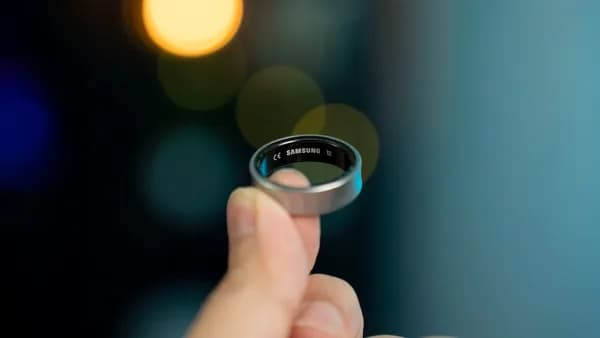
CHARM weighs just 5.1 grams, yet its prototype sensor stack can continuously track four biochemical markers from sweat — including glucose and ketones — inside a ring. That is the promise behind the Continuous Health Analyzing Ring Module, a research device recently detailed in a scientific publication and covered by Notebookcheck.
The catch is just as important: CHARM is not a commercial diabetes device. It is a research platform with major validation questions still open. Its battery runs for around 12 hours, but Notebookcheck argues that is a smaller issue than the measurement challenge itself: proving that sweat chemistry can reliably map to clinically useful glucose and ketone signals across different people, glucose ranges, and hydration states.
Why could a sweat-sensing CHARM ring change glucose and ketone tracking?
Glucose, ketones, lactate, uric acid, vitamin C, and alcohol are not the kind of molecular data most smart rings touch today. Mainstream wearable rings tend to infer health signals through optical sensors, motion sensors, skin temperature, and software models.
CHARM points in a different direction. Instead of shining light into tissue to estimate pulse-related signals, it samples sweat and reads chemical changes directly through electrochemical sensing.
That matters because sweat sits at the skin surface. If a ring can extract and analyze it passively, the device could move wearable health tracking from indirect biophysical estimates toward biochemical monitoring. For people with Type 1 diabetes, the source material highlights two especially relevant targets: continuous glucose tracking and simultaneous ketone monitoring, which could help flag risk around diabetic ketoacidosis if the method is eventually validated.
But that “if” is doing heavy work. Peer reviewers explicitly called for validation across larger and more diverse cohorts, including different blood glucose levels and hydration states. That keeps CHARM in the research lane for now, not the product aisle.
What is CHARM, and which biomarkers can it read from sweat?
CHARM stands for Continuous Health Analyzing Ring Module. The prototype weighs 5.1 grams and has an outer diameter of 3 centimeters, according to Notebookcheck. Its sensor suite can, in principle, measure glucose, ketones, ascorbic acid, uric acid, lactate, and alcohol.
It cannot track all six at once. The ring is constrained to four parameters simultaneously to avoid voltage drops.
UC San Diego’s own write-up describes the device as a fully integrated smart ring for daily biochemical monitoring, developed by engineers in Professor Joseph Wang’s lab and published in Nature Communications on July 23, 2026.
“Commercial rings only provide biophysical information, but they lack molecular information about biochemical markers that offers deeper insights about an individual’s health status,” said study first author Tamoghna Saha, a postdoctoral researcher in Wang’s lab.
That distinction is the heart of the project. A ring that tracks sleep and heart rate is reading the body’s signals from the outside. CHARM tries to read chemical traces that may reflect metabolism more directly.
The wearable category has been pushing into more specialized health hardware, including products like a blood pressure smart ring that challenges cuff-based measurement. CHARM is more experimental than that. It is not just packaging a known sensor into a smaller shell; it is testing whether sweat chemistry can become a dependable wearable data stream.
How does CHARM use sweat sensors instead of optical sensors?
CHARM samples sweat passively using an integrated osmotic hydrogel. UC San Diego describes the hydrogel as a soft polymer that creates a pressure gradient to pull fluid from the skin without requiring exercise or dynamic pumping.
Once sweat reaches the sensor area, an electrochemical sensor array measures biomarker signals. The ring processes those readings onboard, and UC San Diego says biomarker information is sent wirelessly to a smartphone app.
That is very different from photoplethysmography, where LEDs and photodiodes infer signals from light absorption and reflection through skin. Optical systems are useful for heart-rate-style signals. CHARM’s bet is that chemical sensing can add molecular context: glucose, ketones, lactate, and other compounds that optical sensors do not directly read.
The engineering trade-off is severe. A ring has to fit the sensor array, sweat extraction component, fluidic channel, electronics, battery, and shell into a tiny form factor. UC San Diego says one half of the ring houses the sensor array, sweat extraction component, and fluidic channel; the other half houses the flexible electronics.
The power system is a flexible zinc-silver oxide rechargeable battery, rated for up to 12 hours of operation between charges. The electronic board is described as smaller than a US quarter coin.
How would CHARM compare with finger-prick tests and continuous glucose monitors?
CHARM’s appeal is obvious: sweat sensing could be less painful and more passive than finger-prick blood sampling. It also avoids the framing of a conventional continuous monitor by using a ring form factor.
But it does not examine blood directly. The additional context provided with the source material says the prototype converts electrical currents generated by sweat into blood concentration values using individually calibrated coefficients. That is a major interpretive step, not a direct measurement.
| Method | What it samples | Source-backed status in this story |
|---|---|---|
| Finger-prick blood test | Blood | Used here only as a contrast for invasiveness |
| Commercial CGM | Compared against in trials | UC San Diego says CHARM glucose readings closely tracked commercial CGMs in trials |
| CHARM smart ring | Sweat | Research prototype requiring larger validation and calibration |
The human testing detail is important. The additional source context says final human testing involved three people: one healthy individual and two with Type 1 diabetes. That is enough to demonstrate engineering feasibility, not enough to settle reliability.
Notebookcheck also notes that ongoing calibration will likely remain necessary. For a consumer wearable, calibration may be annoying. For a diabetes-related device, calibration and validation decide whether the data can be trusted.
What would CHARM mean for a runner, a person with diabetes, or someone tracking ketosis?
A CHARM-style device could be attractive to a marathon trainee because it targets lactate, glucose, and hydration-linked sweat chemistry in a passive wearable format. The source does not prove that runners can use it to guide training. It shows that the ring can continuously monitor selected sweat biomarkers in a compact prototype.
Someone tracking ketosis may be drawn to continuous ketone trends without repeated blood checks. Again, usefulness depends on whether the sweat-derived ketone signal tracks the relevant body state accurately enough for the user’s purpose.
The diabetes case is more serious. UC San Diego says trials with healthy volunteers and people with Type 1 diabetes showed glucose readings closely tracking commercial CGMs, while ketone readings closely tracked commercial blood meters. Wang framed the potential directly:
“For example, the ring’s ability to track both glucose and ketone continuously and simultaneously would greatly benefit optimal insulin dosing for the management of diabetes.”
That is the ambition. The current evidence still leaves CHARM short of a treatment-decision device.
In wearable health hardware, the question is no longer only whether a sensor can fit on the body. It is whether the signal is meaningful enough to act on. That same tension shows up in adjacent devices, from Suunto’s leaked SHRM2 heart rate monitor to ring-based blood pressure tracking.
What limits must CHARM clear before sweat glucose rings become real?
The biggest hurdle is not miniaturization. It is proof.
Peer reviewers cited the need for larger, more diverse cohorts to test reliability across changing glucose levels and hydration states. The source material also points to ongoing calibration as a likely requirement. That means CHARM’s measurements may remain highly user-specific rather than plug-and-play.
Practical barriers remain too:
- Battery: The prototype runs for around 12 hours, which may be short for daily wear.
- Signal selection: It can target six biomarkers in principle, but only four at once.
- Validation: The strongest claims need broader human data than the reported final testing group of three people.
- Use case: Fitness insight, nutrition tracking, and diabetes management carry very different risk levels.
CHARM is useful because it shows a credible path for smart rings to move beyond heart rate, sleep, and temperature. The next test is whether sweat-based biochemical readings can survive real-world variation without constant hand-holding.
For readers watching this space, the practical signal is simple: treat CHARM as a serious research milestone, not a product preview. If future studies show repeatable glucose and ketone tracking across larger groups and different hydration states, sweat-sensing rings could become one of the more consequential wearable health categories. If calibration and variability remain unresolved, CHARM may stay exactly where it is now: an impressive lab device with unanswered clinical questions.
Impact Analysis
- CHARM suggests smart rings could eventually move from indirect health estimates to biochemical monitoring.
- Continuous glucose and ketone tracking could be meaningful for people with Type 1 diabetes if the method is clinically validated.
- The biggest hurdle is proving sweat chemistry reliably reflects useful glucose and ketone signals across real-world conditions.