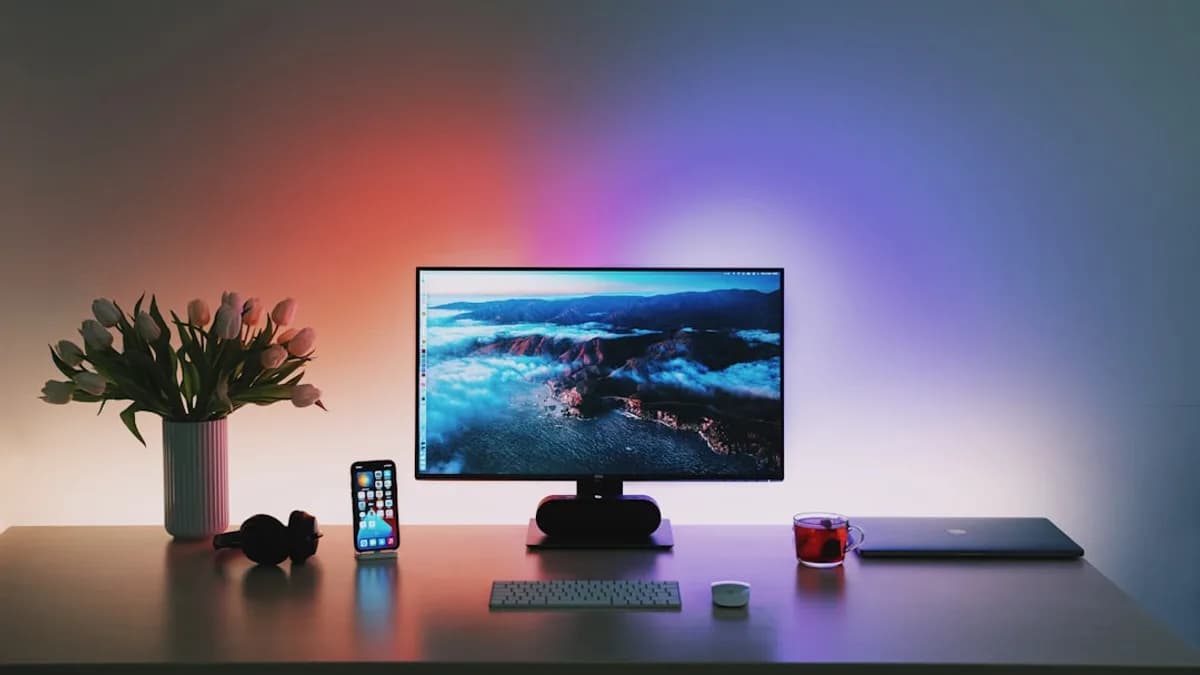
$999 is the number that makes BenQ’s MA270S more than another Mac-friendly monitor: it is a glossy 27-inch 5K display aimed straight at the visual territory Apple guards with the $1599 Studio Display.
The new monitor’s core pitch is unusually specific. BenQ is not just selling resolution, ports, or a silver stand. It is selling a more Apple-like external display experience, according to 9to5Mac , with a glossy panel in a category where matte finishes still dominate.
A $999 Glossy 5K Monitor Takes Aim at Apple’s $1599 Display
The MA270S matters because it attacks one of the stranger gaps in the Mac accessory market. Apple’s own displays ship glossy by default. MacBooks ship glossy. The iMac look that many users still associate with macOS is glossy, dense, and color-rich. Yet most external monitors still arrive with matte coatings.
BenQ is pushing against that default. The MA270S uses a 27-inch 5K panel with a glossy finish, which makes it feel closer to Apple’s own visual language than the typical office monitor. That is the real product thesis.
The company has already made monitors focused on Apple’s M5 Macs, including the MA270U, a cheaper 27-inch 4K model that 9to5Mac previously tested. But the MA270S moves up a tier. It keeps the Mac-oriented design touches while adding the resolution that better matches what many Mac users expect from Apple hardware.
MLXIO analysis: this is not a pure specs race. BenQ is competing on “Mac fit.” That means finish, scaling, desk setup, keyboard brightness controls, and single-cable docking matter as much as the panel number on the box.
27 Inches, 5K, 70Hz: The Spec Sheet Lands in Studio Display Range
The headline numbers put the MA270S in the same conversation as Apple’s Studio Display: 27 inches, 5K, and a glossy finish. The comparison is unavoidable because Apple’s display is also a 27-inch 5K product, but priced at $1599.
BenQ’s monitor costs $999. That creates a $600 gap against the Studio Display, while still offering the combination many Mac buyers care about most: 5K sharpness at 27 inches.
| Feature | BenQ MA270S | Apple Studio Display |
|---|---|---|
| Size | 27-inch | 27-inch |
| Resolution class | 5K | 5K |
| Finish | Glossy | Glossy by default |
| Price cited by source | $999 | $1599 |
| Brightness cited by source | 400 nits | 600 nits |
| Build cited by source | Mostly plastic | All aluminum |
The MA270S also brings practical desk features. It can run from a single USB-C cable, power a MacBook, and handle accessories connected to the monitor. The port list includes four USB-C ports, two USB-A ports, and two HDMI ports.
BenQ’s Display Pilot 2 app lets users control display settings and brightness from the Mac keyboard rather than the monitor’s physical controls. It also includes a KVM, so one keyboard and mouse can work across a Mac and a Windows PC.
That matters for MacBook dock users. It turns the monitor from a passive screen into the hub of the desk.
Glossy Is the MA270S’s Most Important Spec
The glossy finish is the defining bet. BenQ is betting that many Mac users do not want the softer, reflection-diffusing look that comes with matte coatings. They want the display to look like it belongs next to a MacBook.
That choice has trade-offs. Glossy panels can look more vivid in controlled lighting, and they better match Apple’s default display feel. Matte finishes can be more forgiving in offices, shared rooms, or spaces with difficult lighting.
9to5Mac’s framing is blunt: matte finishes have dominated external monitors, while Apple’s displays ship glossy by default. BenQ is choosing Apple’s side of that divide.
“It’s been my daily driver for weeks, and I’m certainly quite pleased with it.”
That hands-on line is useful because this monitor is not being judged only by its spec sheet. The question is whether it feels native to a Mac workflow. The source says the MA270S has “excellent colors,” 99% P3 color coverage, HDR400 support, built-in speakers, and a panel that goes up to 70Hz.
The 70Hz refresh rate is not the star. 9to5Mac calls it “nothing to write home about.” The stronger argument is the full package: 5K, glossy, Mac controls, and a lower price than Apple’s display.
BenQ Is Copying the Right Parts of the Apple Display Formula
BenQ did not match Apple part for part. The compromises are clear.
The Studio Display has an all-aluminum build. The MA270S is mostly plastic. Apple’s panel reaches 600 nits, while BenQ’s is cited at 400 nits. Those are real differences, not footnotes.
But BenQ appears to have focused on the pieces that most affect daily use:
- Resolution: 5K at 27 inches, matching the class Mac users expect for crisp text and dense UI rendering.
- Finish: Glossy, which aligns more closely with Apple’s built-in screens.
- Docking: A single USB-C cable can power the MacBook and carry connected accessories.
- Controls: Display Pilot 2 brings monitor settings into the Mac experience.
- Flexibility: The stand swivels, tilts, pivots, and supports height adjustment.
MLXIO analysis: this is where BenQ’s strategy gets sharp. It does not need to out-Apple Apple. It only needs to deliver enough of the Studio Display experience at $600 less for buyers who can accept a less premium shell and lower brightness.
For readers weighing broader Apple setup choices, this monitor story sits beside the same workstation question raised in our coverage of the 128GB RTX Spark Dev Box putting Apple’s Mac Studio on notice: which parts of an Apple-centric desk need to be first-party, and which can come from a focused third-party vendor? The MA270S is a display-side version of that debate.
Mac Creators and Desk Workers Will Grade This Monitor Differently
Creative users will likely focus on the 5K resolution, 99% P3 color coverage, glossy finish, and how closely the display resembles a MacBook or Apple desktop display. The source supports the broad pitch: BenQ is emphasizing color quality and Mac compatibility.
Office and productivity users may care more about the practical details. The stand adjusts in multiple directions. The ports are generous. The monitor can act as a hub. But glossy also means lighting discipline matters more than it would with a matte display.
The Reddit discussion supplied with the source material shows the kind of buyer BenQ is courting: Mac mini owners and former iMac users looking for a display that feels close to Apple’s older all-in-one experience. One commenter who bought the MA270S said it was “as good as my old 27” iMac Pro,” while also flagging a touchy cable and the absence of a built-in webcam as drawbacks.
That user feedback should not be treated as a full review sample. It does, however, reinforce the same theme as the 9to5Mac hands-on: the MA270S is being judged against Apple display memory, not just against generic monitors.
This also connects to the broader tension in Apple-adjacent products we covered in iPadOS 27 bets on AI while Mac-style fans get snubbed: users often want Apple-like behavior across devices and accessories, but Apple does not always give every segment the exact product or configuration they want.
The Buyer Risk Is Not the Spec Sheet — It Is the Real Room
The MA270S looks strongest on paper for users with controlled lighting, a MacBook or Mac desktop, and a preference for glossy panels. It looks weaker for buyers who sit near bright windows, dislike reflections, or want Apple’s metal build and higher brightness.
The practical test list is clear:
- Reflections: Does the glossy finish stay comfortable in the buyer’s actual room?
- Brightness: Is 400 nits enough compared with the Studio Display’s 600 nits?
- Build: Does the mostly plastic chassis feel acceptable at $999?
- Wake and docking behavior: Does single-cable use remain reliable over weeks?
- Color consistency: Does the panel hold up for photo, design, and video workflows?
The MA270S could become one of the more credible Studio Display alternatives because it targets the part of the experience many competitors miss: not just resolution, but the way a Mac display should look and behave on a desk.
The evidence that would strengthen that thesis is simple: longer-term reviews showing stable USB-C behavior, good panel uniformity, comfortable reflection handling, and color performance that matches BenQ’s Mac-focused pitch. The evidence that would weaken it is just as clear: glare complaints, reliability issues, or buyers deciding that Apple’s brighter aluminum display still earns the extra $600.
The Bottom Line
- BenQ is undercutting Apple’s Studio Display by $600 while targeting the same 27-inch 5K glossy niche.
- The MA270S gives Mac users another option that better matches Apple’s glossy visual style than many matte monitors.
- Its appeal depends on Mac-specific experience details like scaling, desk setup, brightness controls, and single-cable docking.