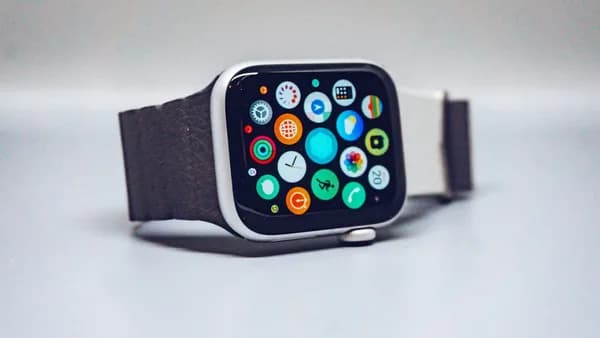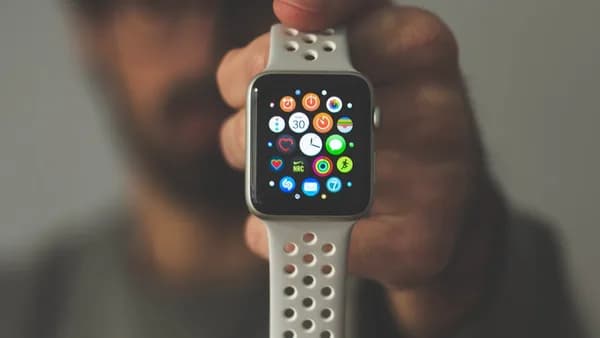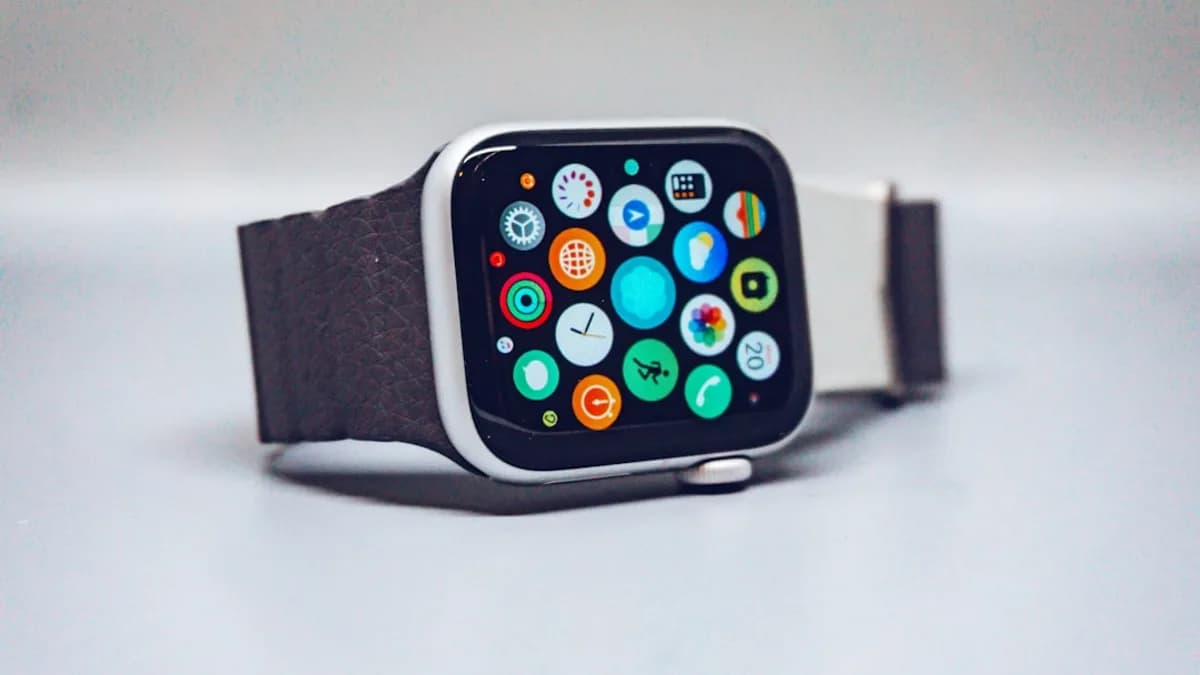
24 hours is still the ceiling for the standard Apple Watch Series 11, and that is exactly why a display component most buyers never see could matter more than another cosmetic redesign.
A new report says LG Display is developing High-Mobility Oxide, or HMO, OLED backplane technology that could replace the LTPO OLED panels used in future Apple Watches, according to Notebookcheck. The earliest realistic target in the report is the Apple Watch Series 13, expected in September 2027, because the panels have not yet been validated for mass production.
That matters because Apple’s watch still lives inside a narrow battery window. Apple says the Series 11 reaches 24 hours, up from the 18 hours older models were supposed to deliver. Notebookcheck argues that, in practice, the gain is “hardly any longer.” For users who want more, the current answer is either the larger and more expensive Apple Watch Ultra or a smartwatch from another manufacturer.
Why could HMO OLED attack the Apple Watch’s 24-hour ceiling?
The battery problem is not just a battery problem. On a smartwatch, the display is one of the components that keeps pulling power all day, especially when the screen stays visible in always-on mode.
HMO OLED matters because it targets that draw at the component level. Instead of asking Apple to make the case larger, shrink features, or rely only on software tuning, HMO aims to make the display’s transistor layer more efficient. That could give Apple more room inside the same daily charging cycle.
The source does not provide a percentage improvement. That is the key restraint here. No one should read “HMO” as a confirmed jump from one day to several days. Battery life will still depend on the processor, software, sensors, display brightness, battery capacity, and how aggressively Apple runs the watch.
MLXIO analysis: The practical upside is not necessarily a week-long Apple Watch. The more grounded possibility is a standard Apple Watch that feels less fragile at the end of the day: more margin after workouts, sleep tracking, travel, or heavy notification use.
Apple battery reporting has also become a broader theme across the company’s devices; see our related coverage of iPhone battery supply-chain claims for how small component changes can become major product talking points.
What is HMO OLED, and how is it different from LTPO OLED?
The display term that matters here is backplane. In an OLED panel, the backplane is the layer of thin-film transistors that controls how current reaches each pixel. It helps determine how the screen turns pixels on, dims them, refreshes content, and holds an image.
Today’s Apple Watch uses LTPO OLED. LTPO has been important because it supports variable refresh rates and always-on display behavior while keeping power draw lower than older OLED approaches. That is why the watch can show a dimmed face instead of going fully dark every time the user lowers their wrist.
HMO, short for High-Mobility Oxide, takes a different route. It is designed to use oxide transistor advantages more fully, with lower power consumption as the headline benefit. Related reports say oxide-based approaches can avoid some complex LTPO manufacturing steps, including laser crystallization and ion implantation, though LG Display still has to prove the technology works at production scale.
| Display backplane | Used for | Main battery angle | Status in this report |
|---|---|---|---|
| LTPO OLED | Current Apple Watch OLED panels | Enables variable refresh rates and always-on display efficiency | Shipping today |
| HMO OLED | Future Apple Watch candidate | Aims for lower power consumption than LTPO | In development and not yet mass-validated |
The technical challenge is speed. The transistors need to switch fast enough for Apple’s display requirements. If the panel saves power but cannot meet performance, brightness, reliability, or yield targets, it does not ship.
How would HMO save power during always-on Apple Watch use?
Always-on mode is a slow battery drain by design. The watch face remains active for hours, even when dimmed. The panel still has to maintain the image, refresh content when needed, and drive the transistor layer under the OLED pixels.
A more efficient oxide backplane could reduce that background cost. The biggest gains would likely appear when the display is doing less: showing a static watch face, sitting at a low refresh rate, or staying visible while the user is not actively interacting with it.
That is why this kind of change is more interesting for a watch than it might sound on paper. A phone display turns on and off throughout the day. A watch display can sit on the wrist for long stretches, quietly consuming power.
Example scenario, framed as analysis: A user starts at 7 a.m., tracks a workout, checks notifications, uses the watch through the day, and wears it overnight for sleep tracking. Under the current one-day model, that user may need a charge before bed or soon after waking. If HMO reduces display draw across the many idle hours in that cycle, the benefit compounds.
This is also why display efficiency has become a recurring hardware story outside wearables. MLXIO recently covered OLED performance trade-offs in Razer Blade 16 display testing, where panel behavior also shaped the user experience beyond the spec sheet.
What would longer Apple Watch battery life actually look like?
The most useful expectation is not “Apple Watch becomes a week-long wearable.” The source does not support that. A better frame is comfort.
A standard Apple Watch with more efficient display hardware could move from a device that must be managed daily to one with more buffer. That could mean less anxiety after a long day, more room for overnight wear, or fewer situations where a short top-up becomes mandatory.
Apple could also choose to spend the efficiency gains elsewhere. That is not confirmed, but it is the central product trade-off.
Possible uses of HMO efficiency, if Apple adopts it:
- Battery life: Extend runtime without changing the case size.
- Brightness: Preserve battery life while supporting a more demanding screen target.
- Features: Offset power draw from software or health-related functions.
- Design: Keep runtime similar while using internal space differently.
Notebookcheck says the Apple Watch Ultra 4 is set to receive a new design this year, while the Apple Watch Series 12 is said to mainly benefit from software improvements. HMO, however, is not expected for Series 12 because LG Display has not yet validated the panels for mass production.
That leaves the Series 13 as the earliest named candidate in the report. Even then, “earliest” is doing a lot of work.
Why rival wearables can last weeks while Apple Watch stays near a day
Battery comparisons across wearables are rarely clean. Notebookcheck notes that competing devices sometimes measure battery life in weeks or even months. The Apple Watch, by contrast, runs a high-resolution OLED interface with an always-on option and a dense smartwatch feature set.
That is the trade Apple has made since the first Apple Watch shipped in 2015: a more interactive wrist computer rather than a minimal tracker optimized around long runtime. The display is central to that choice. It makes the product feel richer, but it also raises the energy floor.
HMO is interesting because it does not ask Apple to abandon OLED. It tries to make the premium display approach less expensive in power terms.
MLXIO analysis: This is the kind of component change that can matter even if users never hear the acronym. If HMO works, the Apple Watch could keep the screen experience users expect while reducing one of the main reasons the device still feels tethered to a charger.
Why 2027 is the earliest serious Apple Watch HMO window
The reported timeline is cautious. LG Display is developing HMO TFT technology, but Notebookcheck says the panels have not yet been validated for mass production. That rules out the Apple Watch Series 12 in the report’s framing.
The earliest target is the Apple Watch Series 13, expected in September 2027. Even that depends on validation, supplier readiness, and whether Apple decides the panels meet its standards.
Buyers should treat this as a credible supply-chain direction, not a promised battery spec. Apple has not confirmed HMO adoption, and the report does not quantify the runtime gain.
The practical takeaway: if you need a new Apple Watch now, this is not a reason to wait blindly. If your main complaint is battery life and your current device is still serviceable, HMO is a component to watch because it attacks the problem where daily drain begins — beneath the pixels, not in the marketing copy.
The Bottom Line
- Apple Watch battery life remains capped at about 24 hours for the standard model.
- HMO OLED could improve efficiency without requiring a larger watch case.
- The technology is unlikely to arrive before the Apple Watch Series 13 expected in September 2027.