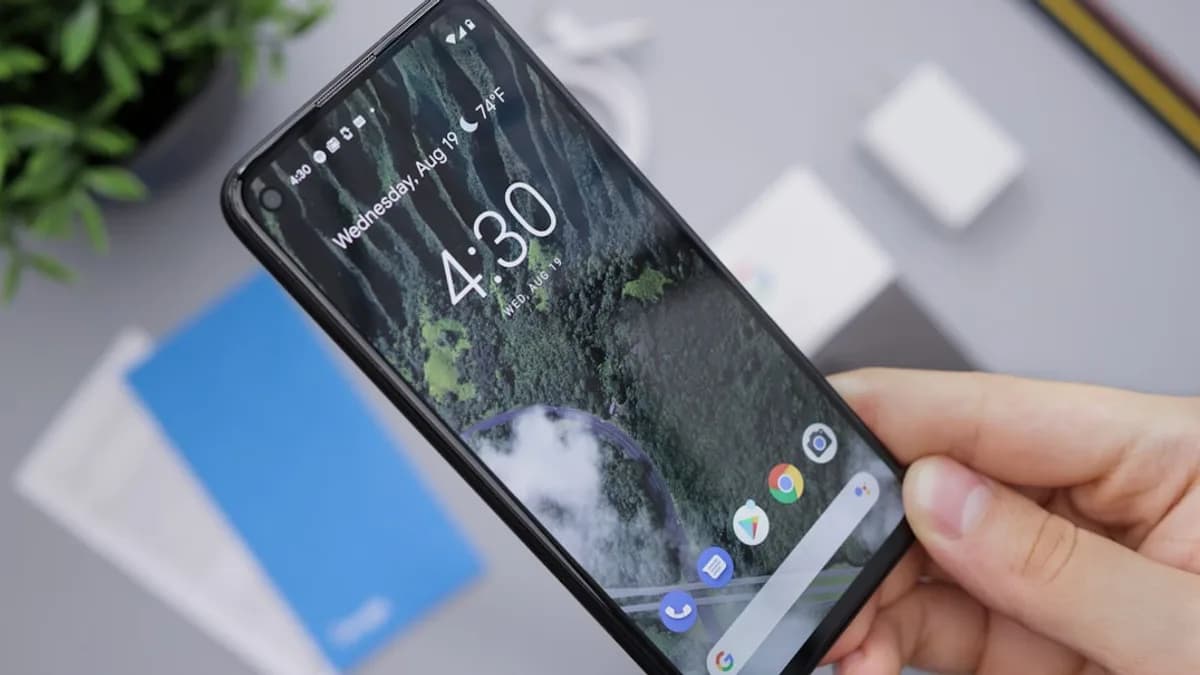
Android 17 was supposed to land first on Pixel phones as Google’s cleanest Android experience; less than one week later, some Pixel owners are reporting touch freezes and scrolling that moves in the wrong direction.
The complaints, reported by Notebookcheck, are not about a fringe feature breaking. They hit the core input layer: taps, swipes, scrolling, and navigation. That makes this more serious than a camera crash or a settings bug. If the screen cannot be trusted, the phone cannot be trusted.
Android 17 Turned Pixel’s Fast-Update Advantage Into a Touch Reliability Test
The tension is obvious. Pixel buyers get Android updates early because Google controls the software and the hardware story. That usually works as a selling point. Here, early access has exposed a basic reliability problem.
Reported symptoms include brief touchscreen lockups and vertical gestures being interpreted backward. In practical terms: a user swipes up, but the phone scrolls down. The failures have reportedly appeared in system menus and third-party apps, which points away from a single app bug.
MLXIO analysis: that matters because touch input is not a bonus layer. It is the interface. A phone can survive a broken optional feature for a few weeks. It struggles to survive a navigation bug that appears without warning.
This also cuts against the expectation Google sets for first-party devices. Pixel phones are meant to be the reference Android experience. When the reference device misreads gestures after a major OS update, the issue becomes larger than one release note.
Pixel Owners Report Freezes, Missed Gestures, and Reversed Scrolling
According to the source material, discussions on Reddit describe screens occasionally freezing for short periods. Other reports say the system reads vertical scrolling gestures backward.
The affected models named so far include:
- Pixel 10
- Pixel 9
- Pixel 8
- Pixel 7
Notebookcheck notes that the spread across several generations suggests a software-level cause rather than a hardware fault tied to one model. The Pixel 6 appears to be free of the issue for now, while Pixel 5 and earlier models are unaffected because they have not received Android 17.
Google has acknowledged the issue, but no official patch, update, or confirmed workaround has been released yet. An official Pixel Community account on Reddit suggested clearing the Pixel Launcher cache or rebooting in safe mode as temporary steps. More than one user response said those steps did not help.
That leaves users in a frustrating middle zone: the issue is real enough to be acknowledged, but not resolved enough to restore confidence.
The Model Spread Matters More Than the Raw Complaint Count
There is no public figure in the supplied source material for how many Pixel owners are affected. That absence matters.
Without clear incident data from Google, users cannot easily judge whether this is a small cluster of reports, a model-specific failure, or a wider Android 17 regression. The known signal is narrower but still useful: reports span several Pixel generations and appear across both system areas and third-party apps.
A clean way to read the current evidence:
| Signal | What the source supports | What remains unproven |
|---|---|---|
| Timing | Reports appeared less than one week after Android 17 became available for Pixel phones | Exact install-to-failure timing for each user |
| Affected models | Pixel 10, 9, 8, and 7 owners have reported problems | Whether all variants are affected equally |
| Unaffected models | Pixel 6 appears free of the issue; Pixel 5 and earlier did not receive Android 17 | Whether Pixel 6 remains unaffected after wider reporting |
| Temporary fixes | Google suggested Pixel Launcher cache clearing and safe mode | Whether either step reliably fixes the issue |
Separately, Android 17 arrived with a large set of Pixel fixes. 9to5Google reported that the June 2026 Android 17 update included 38 Pixel fixes across categories including Apps, Audio, Battery & Charging, Camera, Display & Graphics, Framework, System, Touch, and User Interface. That context is useful, but it does not prove the new touch complaints are tied to a specific build or changelog item.
The Before-and-After Gap Is the Real Story
For Pixel users, the practical shift is blunt:
- Before Android 17: Users expected a major OS upgrade with fixes, refinements, and first access to new Android behavior.
- After the reports: Some users are deciding whether basic touch reliability is stable enough to keep using the update.
- Before Google’s patch: Workarounds are unofficial, inconsistent, and user-tested.
- After Google’s patch: The key question will be whether Google identifies affected models and explains the fix clearly.
This is also why the bug lands awkwardly beside feature-focused Android coverage. MLXIO has covered Android 17 from the upgrade angle, including Android 17 Grabs Your iMessage History From iPhone. But a release can have attractive features and still lose user patience if scrolling becomes unpredictable.
The same logic applies to buyers comparing Pixel hardware against the broader Android shelf. Our coverage of $400 Freebies Make Motorola Edge 2026 a Pixel 10a Threat looked at competitive pressure around Pixel alternatives. A touch bug does not decide that contest alone, but it adds one more variable: trust in day-one software.
Google’s Workaround Advice Has Not Closed the Gap
The current advice is thin because the confirmed fix does not exist yet.
Affected owners can try the steps Google’s Pixel Community account suggested:
- Clear Pixel Launcher cache: A targeted attempt to remove launcher-side state that may be involved in some home screen behavior.
- Boot in safe mode: A way to test whether third-party apps are contributing to the problem.
- Restart the phone: A basic recovery step when touch behavior becomes unstable.
- Wait for an official fix: The only route that can resolve a system-level bug with confidence.
Notebookcheck’s source material says more than one user reported that the suggested cache and safe-mode steps did not help. So these are not fixes. They are troubleshooting attempts.
MLXIO analysis: intermittent touch bugs are especially hard to diagnose because they can impersonate several different failures at once. A missed tap can look like app lag. A frozen screen can look like hardware trouble. Reversed scrolling can feel like a gesture-recognition fault. Without a formal bug note from Google, users and support channels are left guessing.
Pixel Owners Who Have Not Updated Have the Cleanest Option
The most practical guidance in the source material is also the simplest: Pixel owners still on last year’s OS are advised to wait until Google releases an official bug-fix update.
That is not exciting advice. It is good advice.
For users already on Android 17, the situation is less clean. They can test Google’s suggested steps, monitor whether the issue appears in safe mode, and watch for an official patch. But if touch input is critical for work, travel, payments, authentication, or accessibility workflows, “try a workaround” is not a strong position.
Google’s next move will decide whether this becomes a short-lived launch bug or a trust problem for Pixel updates. The best-case version is a quick patch with clear release notes, affected-model guidance, and no reset requirement. The weaker version is weeks of scattered reports, inconsistent fixes, and users warning each other to delay Android 17.
The evidence to watch is specific: whether Google ships a targeted fix, whether Pixel 7 through Pixel 10 reports drop after that fix, and whether Pixel 6 remains outside the complaint pattern. Until then, Android 17’s touch issue is not just a bug report. It is a test of whether fast Pixel updates can still feel safe on day one.
Impact Analysis
- Pixel phones are supposed to showcase Android at its most reliable, so core touch problems weaken that promise.
- Freezes and reversed scrolling affect basic navigation, making the issue more disruptive than a minor app bug.
- Early Android 17 adoption now carries added risk for Pixel users until Google addresses the reported input problems.