If AirPods Pro 3 can come this close to Apple Watch Series 11 against a Polar H10 chest strap, is the wrist still Apple’s default fitness sensor — or just one of several?
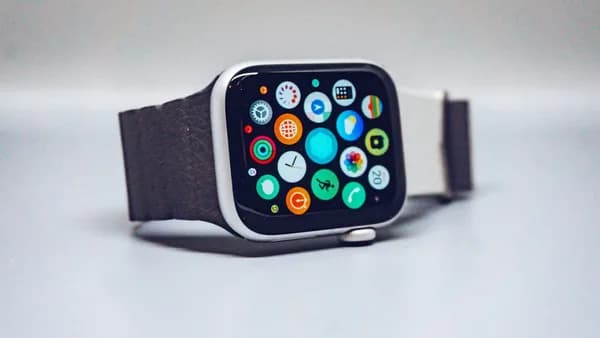
That is the real question beneath the latest test. In CNET Labs testing reported by 9to5Mac, AirPods Pro 3 finished second only to Apple Watch Series 11 for heart-rate accuracy, beating the Garmin Venu 4, Google Pixel Watch 4, Samsung Galaxy Watch 8, and Amazfit Bip 6 in the same comparison set.
Apple did not just add a workout feature to earbuds. It moved a core fitness signal from the wrist to the ear. That only matters if users trust the numbers.
Can earbuds really challenge the Apple Watch on heart-rate accuracy?
CNET’s test used the Polar H10 chest strap as the reference point. CNET describes it as its gold standard for consumer heart-rate tracking. Vanessa Orellana ran four laps around the same college track, covering 1 mile, with different intensity levels across the laps to capture multiple heart-rate zones.
The Apple Watch Series 11 still won. In this run, it posted a 0.63% average error rate and an average heart-rate difference of 0.89 BPM versus the Polar strap. That improved on Orellana’s earlier Apple Watch Series 11 result of 0.98% average error and 1.40 BPM average difference.
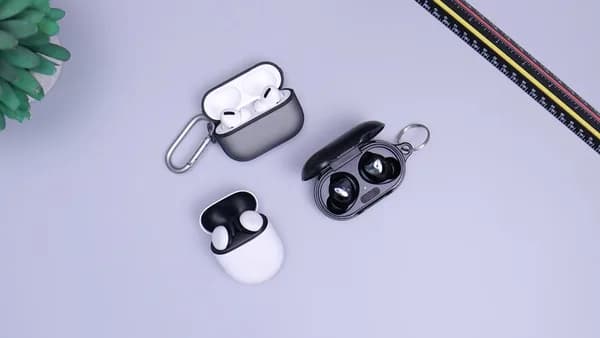
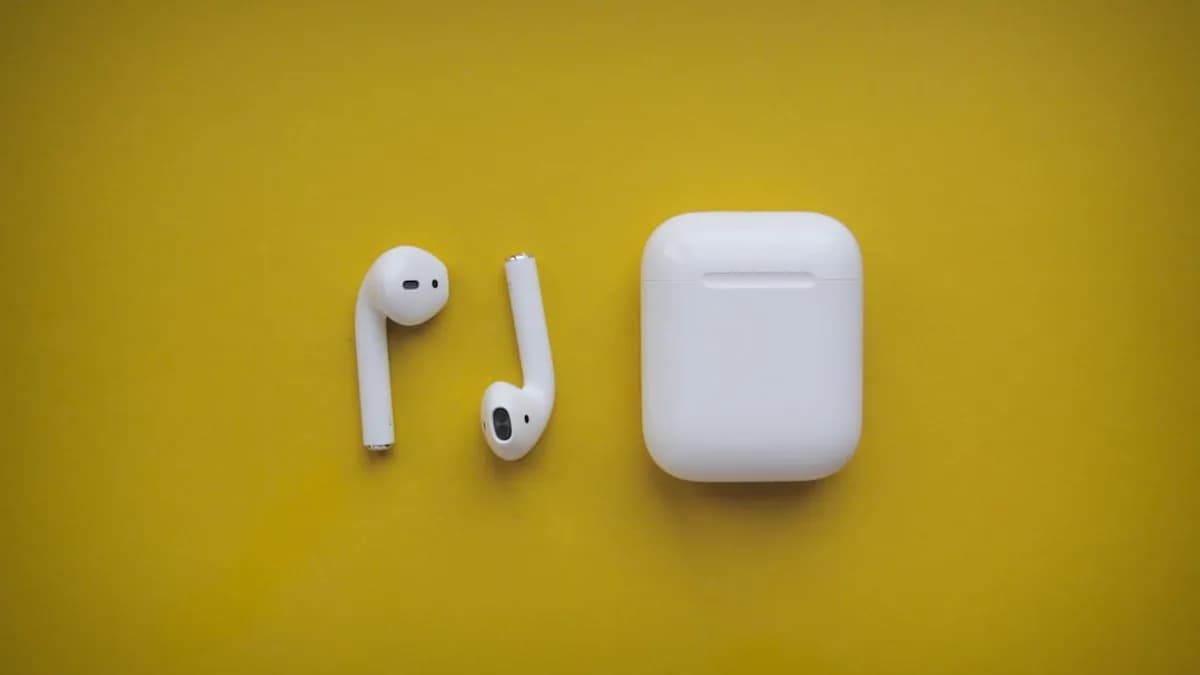
The surprise is how close the earbuds landed. AirPods Pro 3 recorded an average heart-rate difference of 2.02 BPM and an average error rate of 1.23%.
That put them ahead of every non-Apple wearable in the test.
“Whether they’re building on the Apple Watch’s groundwork, benefiting from their position in the ear, or just using really good sensors (likely all fo te [sic] above), the AirPods can hang. They go head-to-head with the Apple Watch for heart-rate tracking and beat out all the other smartwatches I’ve tested.”
There were caveats. Orellana had to run the course three times to get a complete AirPods data set. The first attempt failed to record the full workout. The second ended when a sprinkler droplet hit the stop button on her iPhone.
That matters. Accuracy is not only about the number once the file exists. It is also about whether the workout records cleanly.
Which numbers matter more: CNET’s track test or the lab validation?
The CNET result is useful because it compares AirPods Pro 3 directly against watches people actually buy. The lab data is useful because it tests the sensor under more controlled conditions.
A peer-reviewed study in PLOS Digital Health, titled “Accuracy of heart rate measurement using AirPods Pro 3 during graded treadmill exercise”, tested 40 adults against a Polar H10 reference during treadmill exercise. The protocol covered rest and progressive stages targeting roughly 40–85% of age-predicted maximal heart rate.
Across 16,735 paired epochs, the study found:
| Test source | Reference device | AirPods Pro 3 result | Main caveat |
|---|---|---|---|
| CNET Labs | Polar H10 | 2.02 BPM average difference; 1.23% average error | Needed three attempts for a complete AirPods data set |
| PLOS Digital Health | Polar H10 | 2.08 beats·min⁻¹ mean absolute error; 2.02% mean absolute percentage error | Wider variability at higher intensities |
| PLOS Digital Health | Polar H10 | Mean bias of −0.03 beats·min⁻¹ | Healthy adult sample; not clinical replacement |
The PLOS study’s most important finding is not that AirPods were perfect. They were not. The key finding is that the average bias was almost zero: −0.03 beats·min⁻¹, with a 95% CI of −0.22 to 0.17.
In plain terms, the earbuds did not meaningfully overstate or understate heart rate on average. But the same study found wider epoch-to-epoch spread at higher heart rates, with 95% limits of agreement from −10.27 to 10.22 beats·min⁻¹.
MLXIO analysis: That distinction is the whole story. For steady workouts, average error is likely what most users feel. For intervals, sprints, and rapid transitions, the moment-by-moment swings matter more.
Why does the ear give Apple a credible shot — and where can it still fail?
The AirPods Pro 3 use an in-ear optical heart-rate sensor. CNET’s source material says Apple’s sensor uses photoplethysmography and fires infrared light 256 times per second to detect changes in blood volume in the ear canal. Apple also says the sensor was trained on more than 50 million hours of Apple Health Study data and is the smallest heart-rate sensor it has built.
The ear has a real measurement argument. The PLOS material notes that ear-worn devices sit closer to central circulation and are less exposed to peripheral vasoconstriction than wrist- or finger-based systems. CNET’s discussion also points to stability during running as an advantage over the wrist.
But this is not a clean win over watches. CNET says cold can reduce blood flow and make optical readings harder, and the ears can feel that impact faster than the wrist. The AirPods test also exposed a practical weakness: workout recording depended partly on the iPhone interaction around it.
The best version of AirPods heart-rate tracking will not come from raw sensor placement alone. It will come from Apple’s software and data processing. That is also why adjacent Apple-device software changes matter; readers following that side of the story can pair this with MLXIO’s coverage of iOS 27 Hides AirPods' Best Upgrade Behind Beta Switch and watchOS 27 Finally Fixes Apple Watch's Free-Hand Problem.
Does this make AirPods a Watch replacement or just another Apple Health sensor?
For heart rate during workouts, the answer is now less dismissive than it would have been a year ago. AirPods Pro 3 can plausibly serve users who want heart-rate data without buying or wearing a smartwatch.
Orellana put it bluntly:
“If you’re already spending $250 on AirPods Pro 3, you don’t need to drop another $400 on a watch just for heart-rate data.”
That statement is narrow, and it should stay narrow. The supplied material says AirPods Pro 3 measure heart rate. It does not say they match the broader health feature set of Apple Watch.
The related TNW source material notes that AirPods are not positioned as a medical device and the heart-rate feature is not FDA-cleared for clinical use. It also notes that Apple Watch has FDA clearance for ECG and irregular rhythm notification features, which AirPods lack.
MLXIO analysis: AirPods do not dethrone Apple Watch here. They reduce the number of situations where Apple Watch is the only Apple device that can capture exercise heart rate.
Who should trust the AirPods data, and who should still use a chest strap?
Casual exercisers can take the CNET and PLOS results seriously. The numbers suggest AirPods Pro 3 are good enough for broad workout trends, zone awareness, and post-workout review, especially when the exercise is steady.
Serious athletes should be more selective. The PLOS study found low average error, but also greater dispersion at higher heart rates. That is exactly where interval training, sprint work, and aggressive pacing decisions become more sensitive to lag or variability.
Medical use is a different category. The PLOS authors state that AirPods Pro 3 “should not replace clinical-grade equipment when high precision is required.” That line should anchor the health interpretation.
Competitively, the CNET test is still only one side-by-side comparison. It placed AirPods ahead of Garmin, Google, Samsung, and Amazfit devices tested under that protocol. But broader conclusions need more labs, more workouts, and more edge cases.
Which future tests will decide whether fitness earbuds become a real category?
The next useful evidence will not be another headline average. It will be stress testing.
The thesis strengthens if independent tests show AirPods Pro 3 keep tight agreement with chest straps across repeated outdoor runs, treadmill ramps, recovery periods, and high-intensity intervals. It also strengthens if workout recording becomes boringly reliable: no missing files, no accidental stops, no fit-related gaps.
The thesis weakens if accuracy falls apart during rapid heart-rate changes, if ear fit causes inconsistent readings, or if users need too many retries to capture a clean session.
For now, the practical takeaway is sharp: Apple Watch Series 11 remains the accuracy leader in CNET’s comparison, but AirPods Pro 3 are no longer just audio hardware with a fitness gimmick. They are credible heart-rate wearables — with enough evidence behind them to force the next round of testing.
Key Takeaways
- AirPods Pro 3 came close enough to Apple Watch accuracy to make earbuds a credible fitness sensor.
- Apple may be expanding health tracking beyond the wrist and deeper into its wearable ecosystem.
- Strong ear-based heart-rate data could matter for users who do not want to wear a smartwatch during workouts.