MLXIO
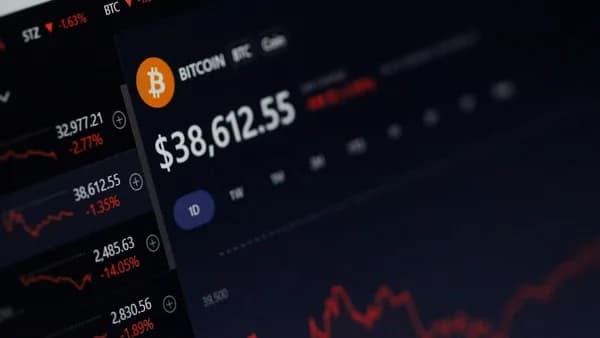
selective focus photo of Bitcoin near monitor
CryptoMay 18, 2026· 5 min read· By Ryan Park

Bitcoin Dives Below $77K as Oil Shock Sparks Risk Sell-Off

Share

MLXIO Intelligence

Analysis Snapshot

57
Moderate
Confidence: LowTrend: 10Freshness: 98Source Trust: 80Factual Grounding: 85Signal Cluster: 40

Moderate MLXIO Impact based on trend velocity, freshness, source trust, and factual grounding.

Thesis

High Confidence

Bitcoin's drop below $77,000 was triggered by macroeconomic shocks, highlighting its ongoing correlation with traditional risk assets despite low exchange balances and steadfast long-term holders.

Evidence

  • The sell-off coincided with a spike in oil prices and U.S. Treasury yields, which typically pressure risk assets.
  • Binance Research data shows Bitcoin exchange balances are near six-year lows, indicating long-term holders are not selling.
  • Short-term holders who bought near recent highs are now underwater and more likely to sell during macro shocks.

Uncertainty

  • It is unclear how severe macroeconomic pressures must become to shake long-term holder confidence.
  • The future behavior of institutional investors in response to ongoing volatility is not detailed.
  • Potential for further macro shocks remains unpredictable.

What To Watch

  • Changes in Bitcoin exchange balances indicating shifts in holder conviction.
  • Movements in oil prices and Treasury yields for further macro stress signals.
  • Short-term holder capitulation or signs of long-term holders beginning to sell.

Verified Claims

Bitcoin's drop below $77,000 coincided with a spike in oil prices and U.S. Treasury yields.
📎 The article states that Bitcoin’s decline happened alongside surging energy costs and higher Treasury yields.High
Bitcoin exchange balances are near six-year lows, according to Binance Research.
📎 Binance Research data shows exchange balances remain near six-year lows.High
Long-term Bitcoin holders are largely not selling despite recent market volatility.
📎 The article notes long-term holders are 'sitting tight' and not rushing for the exits.High
Short-term Bitcoin holders who bought recently are now underwater and more likely to sell during macro shocks.
📎 The article highlights that short-term holders are sitting on losses and are most likely to panic sell.High
Lower exchange balances can increase Bitcoin's short-term price volatility during large sell orders.
📎 With fewer coins on exchanges, large sell orders can move price more dramatically.Medium

Frequently Asked

Why did Bitcoin fall below $77,000?

Bitcoin fell below $77,000 due to a combination of rising oil prices and higher U.S. Treasury yields, which triggered a broader sell-off in risk assets.

Are long-term Bitcoin holders selling during this downturn?

No, long-term Bitcoin holders are largely holding onto their coins and not selling despite the recent price drop.

What does it mean that Bitcoin exchange balances are at six-year lows?

It means fewer Bitcoins are available on exchanges, suggesting that more holders are moving their coins to cold storage and are less likely to sell.

Who is most likely to sell Bitcoin during market shocks?

Short-term holders who bought recently and are now facing losses are the most likely to sell during market shocks.

How do macroeconomic factors affect Bitcoin's price?

Macroeconomic factors like rising energy costs and tighter financial conditions can lead investors to sell risk assets, including Bitcoin, increasing its correlation with traditional markets.

Updated on May 18, 2026

Why Bitcoin’s Drop Below $77,000 Signals More Than Just Market Volatility

Bitcoin’s tumble below $77,000 isn’t just another move in a choppy market. This drop coincided with a spike in oil prices and a sharp climb in U.S. Treasury yields—classic signals of mounting macroeconomic stress. When energy costs jump and government borrowing gets pricier, investors routinely dump risk assets. This time, Bitcoin took the hit right alongside equities and other speculative trades, reinforcing that "digital gold" is still deeply tethered to traditional market nerves.

The fact that Bitcoin responded so quickly to these macro shocks, despite its decentralized and borderless nature, exposes a stubborn reality: crypto might aspire to independence, but when global fears flare, correlation with legacy markets snaps back into focus. According to CoinDesk, the current sell-off was sparked by the one-two punch of surging energy costs and tighter financial conditions—two forces that have a history of draining liquidity from riskier corners of the market.

Crunching the Numbers: What Exchange Balances and Holder Behavior Reveal About Bitcoin’s Stability

On-chain data tells a complicated story. Binance Research reports that Bitcoin exchange balances are hovering near six-year lows, suggesting that coins are being socked away in cold storage rather than kept on trading platforms. Historically, this pattern signals strong conviction from long-term holders—they’re not rushing for the exits, even when the chart goes red.

But conviction isn’t universal. The data also highlights a growing cohort of short-term holders now underwater on their recent purchases. These are the wallets that bought at or near the top and are now sitting on losses. When macro shocks hit, this group is most likely to panic sell, amplifying volatility during downturns.

This dynamic creates a market that’s less liquid in the short run. With fewer coins on exchanges, large sell orders can move price more dramatically. Meanwhile, the steadfastness of long-term holders can act as a shock absorber—until, or unless, macro pressure gets severe enough to shake their confidence. For now, the split is clear: long-term holders are unshaken, but the marginal sellers are overwhelmingly those who bought in the past few months.

Diverging Stakeholder Perspectives: Long-Term Holders vs. Short-Term Traders in a Shaky Market

The present market is a standoff between patient capital and skittish speculators. Long-term holders—often labeled as “diamond hands”—have so far refused to blink, even as macro headwinds mount. Their willingness to hold through turbulence keeps supply off the market and can slow the pace of any sell-off.

Short-term traders don’t enjoy that luxury. Underwater and facing mounting losses, they’re forced to make quick decisions. Their anxiety is what injects volatility into the market. Every macro shock becomes a test: will the long-term base start to flinch, or will short-term capitulation be enough to reset the market?

Institutional investors, while not explicitly detailed in CoinDesk, likely pay close attention to these inflection points. If macro conditions worsen and short-term holders keep dumping, institutions may either see discounted entry points—or further risk-off signals, depending on their mandate and risk tolerance.

Bitcoin’s Price Movements in Context: Comparing Past Market Shocks and Recovery Patterns

This is not Bitcoin’s first brush with macro-driven volatility. Previous episodes—whether triggered by inflation scares, central bank tightening, or geopolitical flare-ups—have often sparked swift drawdowns, followed by equally sharp rebounds when sentiment shifts.

Patterns show that as long as long-term holders remain resolute and on-chain selling stays muted, downside moves tend to be shorter-lived. But when external shocks are deep enough to spook even the most committed holders, the path to recovery stretches out. The current episode fits the former pattern—so far. Exchange balances remain tight, and there’s no evidence of mass exodus from older wallets.

The lesson: Bitcoin’s resilience hinges on whether macro shocks are seen as temporary noise or signals of a more profound market reset. Right now, the majority of coins are parked, not panicked.

What Bitcoin’s Current Vulnerabilities Mean for Crypto Investors and the Broader Market

The split between long-term conviction and short-term pain creates both risk and opportunity. For retail investors, the signal is clear—buying into macro-driven rallies at the top leaves portfolios exposed when sentiment sours. For institutions, low exchange balances and the stickiness of long-term holders might suggest a degree of market maturity, but the presence of vulnerable short-term money means volatility is never far away.

Bitcoin’s sensitivity to oil and Treasury yield shocks also raises new questions about its portfolio role. The narrative of crypto as an uncorrelated asset is being stress-tested in real time. Investors, both retail and institutional, will need to account for these macro linkages when sizing positions and setting risk parameters.

Forecasting Bitcoin’s Trajectory: How Macro Shocks Could Shape Crypto’s Near-Term Future

As long as oil prices remain elevated and Treasury yields climb, Bitcoin is likely to stay vulnerable to risk-off waves. If macro stress eases and inflation concerns fade, the resilience of long-term holders could help fuel a sharp recovery—provided underwater short-term holders don’t capitulate en masse.

The next inflection point: watch on-chain flows for signs that long-term holders are starting to send coins back to exchanges. That would mark a shift from passive to active selling—a clear red flag for deeper downside. Conversely, if exchange balances remain low and short-term capitulation runs its course, Bitcoin could quickly regain lost ground.

The biggest unknown is how much macro pressure long-term holders are willing to withstand before they join the sell-off. That’s the signal that will define Bitcoin’s trajectory as 2026 unfolds.


Disclaimer: This MLXIO analysis is for informational and educational purposes only. It is not financial, investment, legal, tax, or professional advice. It does not provide buy, sell, hold, price-target, portfolio, or personalized recommendations. Verify information independently and consult qualified professionals before making decisions.

The Bottom Line

  • Bitcoin's sharp drop below $77,000 highlights its vulnerability to global economic shocks, including rising oil prices and Treasury yields.
  • On-chain data shows a divide between long-term holders with strong conviction and short-term investors at risk of panic selling.
  • The incident underscores that Bitcoin, despite its 'digital gold' narrative, remains closely correlated with traditional financial markets during periods of stress.

Disclaimer: Content on MLXIO is produced using AI-assisted research, drafting, and verification workflows and is intended for informational and educational purposes only. It does not constitute financial, investment, legal, tax, medical, or professional advice of any kind. All analysis reflects available information at the time of publication and may not be current. Verify information independently and consult qualified professionals before making decisions. Editorial policy

RP

Written by

Ryan Park

Crypto & Digital Assets Researcher

Ryan follows cryptocurrency markets, blockchain protocols, DeFi ecosystems, and exchange infrastructure. Focused on data-driven analysis of digital asset trends and on-chain market structure.

Crypto MarketsDeFiBlockchainWeb3Tokenomics

Related Articles

a screenshot of a video game
CryptoMay 11, 2026

Bitcoin Dumps $300M Futures as Oil Surges Past $100 on Iran Strikes

Bitcoin fell below $80K, wiping out $300M in futures as oil topped $100 on U.S. strikes in Iran, triggering a sharp crypto market sell-off.

5 min read

a woman sitting at a desk using a laptop computer
CryptoMay 8, 2026

Bitcoin Dives to $79.6K as US-Iran Tensions Spark Market Panic

Bitcoin plunged to $79.6K after US-Iran tensions sparked a rapid selloff, revealing its fragile safe-haven status despite a sixth weekly gain.

7 min read

orange and white cat on macbook pro
CryptoMay 12, 2026

Bitcoin Hits $82K as Michael Burry Warns of Nasdaq Crash

Bitcoin surged above $82K amid market volatility as Michael Burry warns Nasdaq faces a dot-com style crash, raising alarm for investors.

4 min read

orange and white cat on macbook pro
CryptoMay 8, 2026

Bitcoin Crashes Below $80K as Geopolitical Fear Sparks $550M Sell-Off

Bitcoin plunged below $80K amid geopolitical tensions, sparking $550M in liquidations and a record negative funding rate, exposing crypto's fragile safe haven s

9 min read

a bitcoin sitting on top of a pile of gold nuggets
CryptoMay 15, 2026

XRP and DOGE Surge 5% as Clarity Act Sparks Bitcoin Rally

XRP and Dogecoin surged 5%, Bitcoin topped $81K after the Digital Asset Market Clarity Act passed the Senate Banking Committee, fueling crypto optimism.

4 min read

Woman sitting on floor recording video with camera.
CreatorsMay 19, 2026

Top Creator Economy Platforms Crushing It for Niche Content in 2026

Niche creators thrive in 2026 by using platforms that maximize monetization, community, and ownership—turning expertise into steady income.

9 min read

a person with headphones on using a laptop
CreatorsMay 19, 2026

Best Podcast Hosting Platforms 2026 Reveal Hidden Costs & Gains

Choosing the right podcast hosting platform in 2026 can make or break your show's growth and revenue potential.

13 min read

Person watching video on smartphone screen of smartphone
CreatorsMay 19, 2026

Top Video Editing Software for Social Media Creators in 2026

The best video editing software in 2026 empowers social media creators to produce viral, polished videos quickly with platform-specific features.

10 min read

Apple iMac and Apple Magic Mouse and Keyboard on table
CreatorsMay 19, 2026

Free Video Editing Software in 2026 Crushes Paid Tools

Master professional video editing in 2026 with free software offering Hollywood-grade features and no watermarks—perfect for beginners and pros alike.

9 min read

person using black laptop computer
BusinessMay 19, 2026

7 ERP Systems That Crush Mid-Sized Business Challenges in 2026

Discover the 7 ERP systems that solve mid-sized business pains with integration, scalability, and cost control in 2026.

11 min read

Stay ahead of the curve

Get a weekly digest of the most important tech, AI, and finance news — curated by AI, reviewed by humans.

No spam. Unsubscribe anytime.