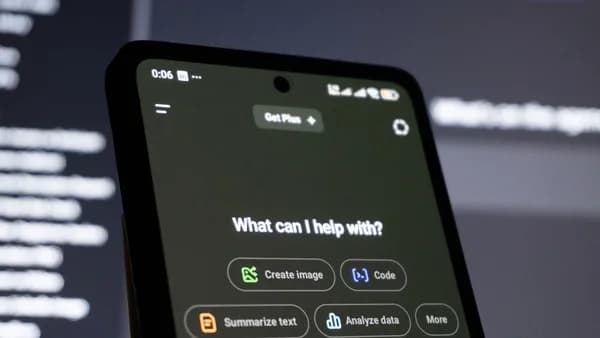
Integrating AI writing tools with LLM platforms is transforming content creation in 2026. Whether you’re a professional writer, developer, or content strategist, blending the strengths of advanced AI writing assistants with powerful large language models (LLMs) can elevate your workflow and output quality. This guide provides a practical, step-by-step approach to integrate AI writing tools with LLMs using real-world platforms, API methods, and automation strategies—grounded in current leaderboards, feature sets, and pricing.
Below, you’ll find actionable instructions, comparisons, and best practices for integrating AI writing tools with LLM platforms, customizing models, automating workflows, and ensuring security.
Overview of AI Writing Tools and LLM Platforms
To successfully integrate AI writing tools with LLMs, it’s crucial to understand the landscape of both. As of 2026, AI writing tools are intelligent assistants powered by large language models (LLMs) that help generate, edit, and refine text across various formats—from fiction and poetry to SEO blog posts and technical reports.
Leading LLM Platforms for Writing in 2026 (per Intellectual Lead):
| Model | Key Strengths | Context Window | Output Cap | API Availability |
|---|---|---|---|---|
| Claude (Opus 4.7) | Expressive, emotional writing | 1,000,000 tokens | 128,000 tokens | Anthropic, Google, AWS |
| Gemini (3.1 Pro) | Procedural, factual, SEO-focused | Not specified | Not specified | Google Vertex AI |
| Grok (4.2) | Real-time, witty, current events | Not specified | Not specified | X/Twitter API, xAI |
| ChatGPT (GPT-5.5) | General multi-task performance | Not specified | Not specified | OpenAI |
| DeepSeek (V3.2-Exp) | Open-source, multilingual, code | Up to 128,000 tokens | Not specified | DeepSeek API, open source |
| Qwen (Qwen 2.5-Max) | Enterprise, multilingual | Not specified | Not specified | Alibaba Cloud, open source |
| Mistral (Medium 3) | Not specified | Not specified | Not specified | Not specified |
| Muse 1.5 (Sudowrite) | Creative prose/fiction | Not specified | Not specified | Sudowrite |
AI Writing Tools (per Ai Miracle):
- DeepSeek: Open-source, highly customizable, strong for multilingual and technical writing.
- Grok: Integrated with X (Twitter), excels at witty, real-time, and personality-driven content.
- QwenLM: Enterprise-grade, robust multilingual support, scalable for large projects.
- Kimi.ai: Human-like, structured, accurate responses.
“DeepSeek is ideal for developers, AI enthusiasts, tech startups, and content creators who want full control over their AI writing tools. It’s perfect for those who need customizable AI chat solutions or want to integrate AI writing assistants into their own platforms.”
— Ai Miracle
Benefits of Integration for Content Creation
Integrating AI writing tools with LLM platforms offers tangible advantages for content teams and organizations:
- Enhanced Creativity and Consistency: Tools like Claude Opus 4.7 deliver expressive, emotionally resonant text, while Gemini 3.1 Pro excels in procedural, factual writing (Intellectual Lead).
- Scalability: Platforms such as QwenLM and DeepSeek allow you to scale content generation across multiple languages and formats, crucial for global businesses.
- Automation: Systems like the Nexus Research Agent (Agentic-AI-Lab) coordinate multiple agents (Planner, Writer, Editor) and integrate external sources (arXiv, PubMed, Wikipedia) for automated, publication-quality writing.
- Customization: Open-source LLMs like DeepSeek enable developers to adapt models to specific domains or brand voices.
- Efficiency Gains: AI writing assistants can structure, revise, and polish drafts in seconds, freeing human writers for higher-level strategy or complex editing.
Understanding APIs and SDKs for Integration
APIs (Application Programming Interfaces) and SDKs (Software Development Kits) are the backbone of integrating AI writing tools with LLM platforms. They allow your applications or tools to access, invoke, and interact with LLMs for generating and managing content.
Key LLM API Offerings (2026)
| LLM Platform | API/SDK Options | Pricing (as of 2026) | Features |
|---|---|---|---|
| Claude (Anthropic) | REST API, Cloud APIs | Sonnet: $3 input/$15 output per 1M tokens Opus: $5 input/$25 output per 1M tokens |
Prompt caching, batch processing, high context window |
| DeepSeek | REST API, Open Source | From $0.07 per 1M tokens | Open weights, function calling, structure output |
| Grok (xAI) | X/Twitter API | From $3 per 1M tokens; $22/mo for X Premium+ | Live data access, real-time updates |
| QwenLM (Alibaba Cloud) | Cloud API, Open Source | Input: $0.0016/1K tokens; Output: $0.0064/1K tokens |
Multilingual, enterprise-scale, open-source models |
“You can experiment with or deploy your own AI writing assistant without being locked into proprietary platforms, making [DeepSeek] a perfect fit.”
— Ai Miracle
What You Need to Know
- Authentication: Most APIs require API keys or OAuth tokens for secure access.
- Rate Limits: Free and paid tiers differ in throughput and daily request volume.
- Model Selection: Choose model variants (e.g., Claude Sonnet vs. Opus) based on cost and performance needs.
- Customizability: Open-source platforms (DeepSeek, QwenLM) enable deeper integration and model tweaking.
Step-by-Step Guide to Connecting AI Writing Tools with LLMs
Integrating an AI writing tool with an LLM platform typically involves connecting your application or workflow to the LLM’s API. Here’s a practical, API-based workflow, grounded in the features and documentation of leading platforms:
1. Choose Your LLM and Writing Tool
- For creative writing with strong voice: Claude (Opus 4.7)
- For enterprise, multilingual, or technical: DeepSeek, QwenLM
- For real-time, current events content: Grok via X/Twitter API
2. Register for API Access
- Sign up on the LLM provider’s portal (e.g., Anthropic, DeepSeek, xAI, Alibaba Cloud).
- Obtain your API key from the dashboard.
3. Install SDK or Set Up REST API Integration
- Use the provider’s SDK (if available) or standard HTTP request libraries in your programming language.
Example (Python, using requests for DeepSeek):
import requests

API_KEY = "your_deepseek_api_key"
url = "https://api.deepseek.com/v1/chat/completions"

payload = {
    "model": "deepseek-v3.2-exp",
    "messages": [{"role": "user", "content": "Draft an SEO blog post about integrating AI writing tools with LLMs."}],
    "max_tokens": 1024
}

headers = {
    "Authorization": f"Bearer {API_KEY}",
    "Content-Type": "application/json"
}

response = requests.post(url, headers=headers, json=payload)
print(response.json())
4. Configure Input and Output Parameters
- Set your model (e.g.,
claude-opus-4.6,deepseek-v3.2-exp). - Define your prompt/message (the writing instruction).
- Adjust max_tokens, temperature, and other parameters for desired output length and creativity.
5. Handle API Responses
- Parse the output (JSON format) to extract the generated text.
- Integrate the output into your writing tool, CMS, or document workflow.
6. Monitor Usage and Costs
- Track token consumption and API costs, especially for high-volume or long-context tasks.
Customizing Language Models for Specific Writing Needs
Customization is vital for aligning LLM outputs with your brand voice, domain, or audience. Here’s how top platforms support tailoring:
Claude (Opus 4.7) Customization
- Style Control: Use “style cards” or prompt engineering to guide tone and structure.
- Instruction Tuning: Provide entity targets, word-count limits, and banned phrases to steer output toward SEO or compliance needs.
- Workflow Pairing: Combine Opus for initial drafts with Sonnet for revisions.
DeepSeek and QwenLM Customization
- Open-Source Models: Download and fine-tune the model weights (subject to hardware and licensing).
- Function Calling: DeepSeek supports structured output for integrating with data pipelines or content management systems.
- Templates: Use prompt templates for consistent format (e.g., for research reports, blog posts, or technical documentation).
Muse by Sudowrite
- Creative Templates: For fiction and narrative, Muse is trained on outstanding prose and supports scene, dialogue, and character templates.
“If your content relies on storytelling, scripts, founder letters, or a more expressive brand voice, Claude is the easiest place to start.”
— Intellectual Lead
Automating Content Workflows with Integrated Tools
Automation is where integration delivers exponential value. Advanced systems like Nexus Research Agent (from the agentic-ai-lab project) demonstrate multi-agent orchestration:
Example: Multi-Agent Writing Automation Pipeline
| Agent/Step | Role | Tools/Integration |
|---|---|---|
| Planner | Outlines strategy and topic structure | LLM prompt, user input |
| Researcher | Gathers facts from arXiv, PubMed, Wikipedia, Tavily | API connections |
| Writer | Drafts content using LLM | Claude, DeepSeek, etc. |
| Editor | Refines for clarity, accuracy, and style | LLM or custom scripts |
| Output | Generates PDF/Markdown, renders LaTeX equations | PDF/Markdown libraries |
Agentic Workflow Example (CLI):
nexus-research "AI Writing Tools Integration" --model deepseek-v3.2-exp --pdf
Automation Ideas:
- Schedule daily/weekly content generation jobs.
- Auto-generate blog drafts from research findings.
- Use webhooks to trigger LLM writing tasks from form submissions or CMS updates.
Testing and Optimizing Output Quality
Quality assurance is essential when you integrate AI writing tools with LLM platforms. The top models are tested on real-world tasks, but each integration needs its own validation loop.
Benchmarking and Evaluation
- Leaderboards: Use platforms like Chatbot Arena and EQ-Bench to compare model outputs for your use case.
- Sample Analysis: Test models on your actual writing tasks—fiction, SEO, essays, or technical summaries.
- Iterative Refinement: Adopt design patterns like “reflection” (from agentic-ai-lab) where AI agents evaluate and revise their own outputs.
Sample Quality Assurance Workflow
- Generate: Create content with your chosen LLM.
- Review: Use an editing agent or human review for accuracy and style.
- Revise: Prompt the LLM for revision based on feedback.
- Evaluate: Compare with benchmarks or gold-standard examples.
“Opus 4.6 handled multi-claim structure, counter-arguments, and long reasoning chains with more control. Then Sonnet 4.6 was better for fast revisions and rewrites.”
— Intellectual Lead
Security Best Practices for API Integrations
Security should not be an afterthought. When you integrate AI writing tools with LLMs via APIs, follow these core practices:
- Protect API Keys: Store keys in environment variables or encrypted vaults, never in source code.
- Restrict Permissions: Use role-based or least-privilege principles for API accounts.
- Monitor Usage: Set up alerts for unusual API activity or cost spikes.
- Data Privacy: Ensure that sensitive or proprietary data sent to APIs complies with your organization’s privacy policies.
- Compliance: For enterprise and regulated environments, use platforms that offer compliance certifications (e.g., Alibaba Cloud for QwenLM).
Common Challenges and Troubleshooting Tips
While integration brings power, it also introduces challenges. Here’s what to watch for, according to source data and project documentation:
Common Challenges
- Model Drift: Expressive models like Claude may default to a more lyrical style even for technical or SEO writing.
- Solution: Use strict prompts, entity targets, or banned phrases to “rail” the output (Intellectual Lead).
- API Rate Limits: Free or low-tier APIs may restrict tokens or requests per day.
- Solution: Upgrade to higher tiers or optimize batch processing.
- Output Inconsistency: LLMs may not always follow templates or instructions precisely.
- Solution: Iterative prompting or post-generation scripting for cleanup.
- Integration Complexity: Open-source LLMs (DeepSeek, QwenLM) may require more setup but offer greater control.
Troubleshooting Table
| Issue | Cause | Solution |
|---|---|---|
| Output too verbose | High max_tokens or open prompt | Limit max_tokens, use concise instructions |
| API Authentication fails | Bad API key or expired credentials | Regenerate key, check environment settings |
| Slow response time | High server load, large context window | Reduce context size, check provider status |
| Data privacy concerns | Unsuitable API region or platform | Use compliant, enterprise-grade platforms |
Future Trends in AI Writing and LLM Integration
The field is rapidly evolving, with several trends emerging from research platforms and project roadmaps:
- Multi-Agent Systems: Collaborative AI agents (Planner, Writer, Editor) for autonomous research and writing, as seen in Nexus.
- Real-Time Data Integration: LLMs like Grok connect with live data streams for up-to-the-minute content.
- Domain-Specific Style Transfer: Systems are learning to mimic the style of example papers or established brand voices.
- Open-Source Expansion: DeepSeek and QwenLM are driving developer-driven innovation, enabling fine-tuned, local deployments.
- Automated Evaluation and Feedback: Agentic patterns like reflection and iterative refinement will become standard in enterprise content workflows.
- Publication-Quality Outputs: Direct PDF, LaTeX, and Markdown rendering for seamless integration into professional publishing pipelines.
“Nexus Research Agent: Generates comprehensive research reports with publication-quality output. Combines multiple AI agents (Planner, Researcher, Writer, Editor) for intelligent orchestration.”
— Agentic-AI-Lab
FAQ
Q1: What are the best LLMs for writing tasks in 2026?
A: According to Intellectual Lead, Claude (Opus 4.7) is top-ranked for expressive, creative writing. Gemini (3.1 Pro) excels in procedural and factual tasks, while DeepSeek and QwenLM are strong for technical, multilingual, and enterprise content.
Q2: Which platforms offer open-source LLMs for integration?
A: DeepSeek and QwenLM provide open-source models, allowing greater customization and self-hosting.
Q3: What are typical API costs for LLM integration?
A: Example pricing (2026): Claude Opus 4.6 API is $5 input/$25 output per million tokens; DeepSeek starts at $0.07 per 1M tokens; QwenLM input is $0.0016/1K tokens, output is $0.0064/1K tokens.
Q4: How do I customize an LLM for my brand or domain?
A: Use prompt engineering, style cards, and instruction tuning for managed APIs. For open-source models, fine-tune on your own data if resources allow.
Q5: What automation patterns are recommended for content workflows?
A: Adopt multi-agent pipelines (Planner, Writer, Editor) as in Nexus, integrate external knowledge sources (arXiv, PubMed), and generate outputs in Markdown/PDF for seamless publishing.
Q6: How can I ensure security when integrating APIs?
A: Store API keys securely, restrict permissions, monitor usage, and use compliant platforms (e.g., Alibaba Cloud for regulated industries).
Bottom Line
Integrating AI writing tools with LLM platforms is now a practical, high-impact strategy for content teams, developers, and enterprises. The best models—Claude, Gemini, DeepSeek, QwenLM, and others—offer a range of strengths from creative expressiveness to multilingual, technical scalability. API-based integration unlocks automation, customization, and efficiency, while open-source options give power users and organizations full control.
To succeed, choose the right LLM for your needs, leverage APIs for seamless integration, automate workflows with multi-agent design, and continuously test and refine outputs for quality. As the field advances toward superintelligent, context-aware writing systems, staying current with integration strategies will keep your content workflows ahead of the curve.