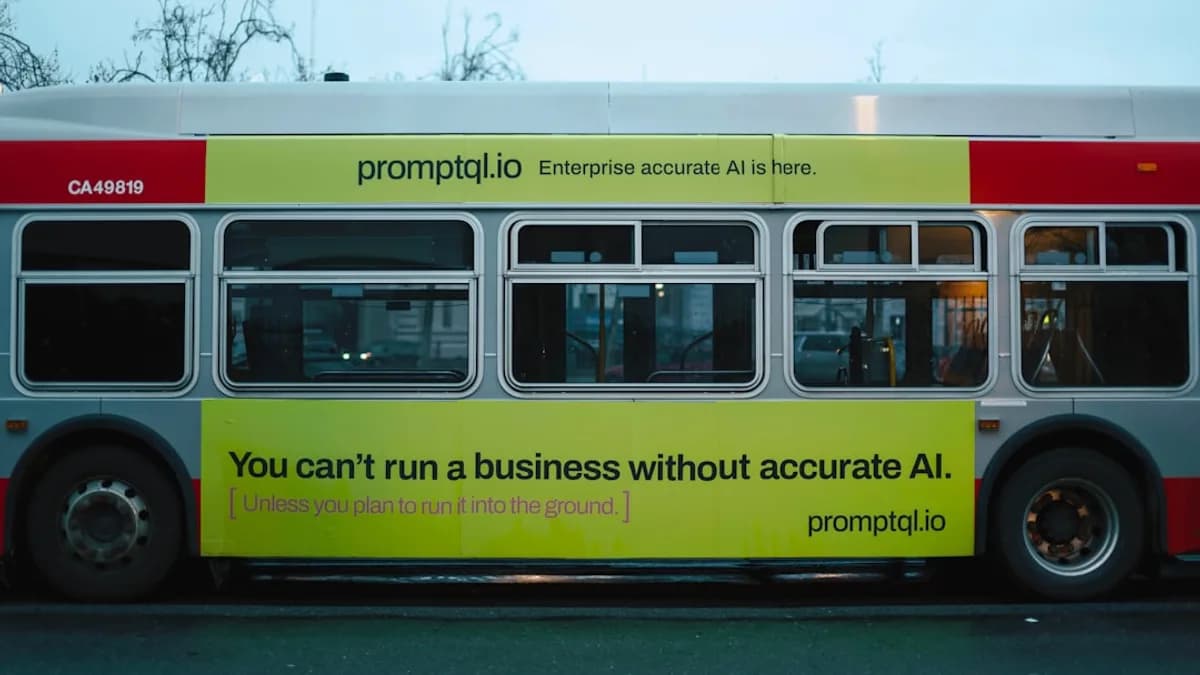
The enterprise adoption of large language model platforms has transformed how organizations automate, analyze, and interact with data in 2026. With rapid advances in generative AI, choosing the right large language model platform for enterprise applications is a critical decision. This guide provides an evidence-based comparison of the leading large language model platforms for enterprise, focusing on real-world criteria such as scalability, customization, security, and cost-effectiveness—helping business leaders make informed decisions grounded in current data.
Introduction to Large Language Model Platforms
Large language model platforms are AI systems trained on massive datasets to understand, generate, and manipulate human language. Their applications span text generation, translation, summarization, code generation, and multimodal reasoning. In 2026, these platforms—especially those tailored for enterprise—combine high-performance models with features for security, customization, and integration into organizational workflows.
The primary keyword, large language model platforms enterprise, defines a landscape where vendors like OpenAI, Anthropic, Microsoft, and Google compete to deliver robust, secure, and adaptable AI services for businesses.
Importance of LLMs for Enterprise Applications
LLMs are now a foundational component of enterprise digital transformation strategies. Their impact is evident in:
- Productivity: Automating document generation, coding, and research saves organizations significant time and cost. For example, Microsoft’s Copilot has been shown to reduce time spent on audits, research, and report-writing tasks by 30–90% (IntuitionLabs).
- Knowledge Management: LLMs can ingest and retrieve information from vast proprietary knowledge bases, enabling rapid information discovery and decision support.
- Customization: Fine-tuning LLMs on domain-specific data delivers tailored, accurate outputs for specialized industries.
- Competitive Advantage: Early enterprise adopters, such as Klarna, PwC, BNY Mellon, and Novo Nordisk, report accelerated project timelines and operational efficiencies.
“Enterprises shifting to multi-vendor strategies: 81% of Global 2000 firms now use three or more model families.”
— IntuitionLabs 2026 Enterprise Guide
Criteria for Evaluating LLM Platforms
When comparing large language model platforms for enterprise in 2026, organizations should evaluate:
- Scalability: Can the platform handle enterprise-scale workloads, large user bases, and multimodal inputs?
- Performance: Does the model deliver state-of-the-art results on language, reasoning, and coding benchmarks?
- Customization & Fine-Tuning: How easily can the model be adapted to proprietary data and business processes?
- Security & Compliance: Are enterprise data privacy and regulatory standards (e.g., HIPAA, FedRAMP) met?
- Integration & Accessibility: Can the platform connect to existing enterprise systems (e.g., M365, Salesforce, Google Workspace)?
- Cost & Licensing: What are the pricing models, and do they fit enterprise usage patterns?
Overview of Top LLM Platforms in 2026
The enterprise LLM landscape has consolidated around a few dominant platforms, each with unique strengths. Below is an overview, strictly based on current research:
| Platform | Model Family | Distinguishing Features | Enterprise Focus |
|---|---|---|---|
| OpenAI ChatGPT | GPT-5.2 | Widespread adoption, fast iteration, advanced coding, DALL·E integration | Unlimited usage, privacy controls, advanced analysis |
| Anthropic Claude | Opus 4.6, Sonnet 4.6 | Large context windows (up to 500k+ tokens), constitutional AI, tool integration | Proprietary KB ingestion, safety, role-based access |
| Microsoft Copilot | OpenAI GPT-based | Deep M365/GitHub integration, productivity ROI, Microsoft Graph data | Azure compliance, IT governance, embedded assistants |
| Google Gemini | Gemini 3.1 Pro/Flash | Multimodal, bundled with Workspace/Cloud, agent platform | Centralized governance, broad data source support |
Other notable LLMs with enterprise features (as per TechTarget):
- Cohere: Customizable, on-premises options, specialized models for vision, reasoning, translation.
- DeepSeek: Open source, advanced reasoning, supports chain-of-thought and self-verification.
- Ernie (Baidu): Open sourced, mixture-of-experts, multilingual, billions of parameters.
- Falcon: Open source, multimodal, available in multiple parameter sizes.
However, the majority of enterprise adoption, integrations, and ROI case studies focus on the “big four”: ChatGPT, Claude, Copilot, and Gemini.
Scalability and Performance Metrics
Model Architecture & Capacity
- ChatGPT (GPT-5.2): Delivers high general language and coding proficiency, with proven reliability at Fortune 500 scale.
- Claude Opus 4.6: Offers context windows up to 500,000+ tokens; excels in handling long documents and multi-step reasoning.
- Microsoft Copilot: Leverages OpenAI GPT under the hood, but is tightly integrated with corporate data via Microsoft Graph, enabling context-aware responses and broad enterprise applicability.
- Google Gemini (3.1 Pro/3 Flash): Multimodal (text, image, code), designed for broad input types and high concurrency in Google Cloud environments.
Benchmark Results
| Platform | Performance Highlight | Benchmark/Metric |
|---|---|---|
| Claude Opus 4.6 | 65.4% on Terminal-Bench 2.0 | Top-tier coding/knowledge-work score |
| ChatGPT | 81% of global chatbot traffic (2025) | Market reach and real-world usage |
| Copilot | 30–90% time reduction in tasks | Measured via enterprise productivity |
| Gemini | Broad, strong performance | Cited as “performing well broadly” |
“Claude Opus 4.6 achieves industry-leading scores on coding and knowledge-work benchmarks thanks to its huge context window.”
— IntuitionLabs 2026 Enterprise Guide
Customization and Fine-Tuning Capabilities
Enterprise deployments require that LLMs be adaptable to unique data and processes.
- Claude Enterprise: Uniquely allows ingestion of proprietary knowledge bases, enabling Claude to ground outputs in company-specific information. Features include integrations with IDEs, APIs, files API, and prompt caching (TechTarget).
- ChatGPT Enterprise: Supports advanced data analysis, DALL·E for images, and extended context. However, fine-tuning details are not specified in source data.
- Microsoft Copilot: Contextualizes outputs using Microsoft Graph data, making responses relevant to organizational context.
- Google Gemini: Via the Agent Platform, supports training, tuning, and deployment of over 200 generative models, plus the building of custom agents using the Agent Development Kit (Google Cloud).
| Platform | Customization Capability | Proprietary Data Integration |
|---|---|---|
| Claude | Proprietary KB ingestion | Yes |
| ChatGPT | Advanced analysis, DALL·E | Limited details |
| Copilot | Context from Microsoft Graph | Yes |
| Gemini | Agent Studio, custom agents | Yes |
Cohere (per TechTarget) stands out for its on-premises deployment and company-specific fine-tuning, suitable for organizations with strict data residency needs.
Security and Compliance Features
Security and compliance are non-negotiable for enterprise AI. All leading platforms emphasize robust protections:
- ChatGPT Enterprise: Data is not used for model training; advanced privacy and administrative controls.
- Claude Enterprise: Offers single sign-on (SSO), role-based access, and administrative tools.
- Microsoft Copilot: Inherits Azure Active Directory (AD) compliance and meets standards like FedRAMP and HIPAA; governed via existing IT policies.
- Google Gemini Enterprise: Centralized governance over agents, secure connections to enterprise data sources (Google Workspace, M365, Salesforce, SAP), integrated with Google Cloud’s security stack.
| Platform | SSO | Role-Based Access | FedRAMP/HIPAA | Proprietary Data Isolation | Admin Controls |
|---|---|---|---|---|---|
| ChatGPT | Yes | Yes | Not specified | Yes | Yes |
| Claude | Yes | Yes | Not specified | Yes | Yes |
| Copilot | Yes | Yes | Yes | Yes | Yes |
| Gemini | Yes | Yes | Not specified | Yes | Yes |
“Microsoft Copilot is built to leverage corporate accounts so it inherently meets MANY compliance standards (FedRAMP, HIPAA, etc.) and is governed via existing IT policies.”
— IntuitionLabs 2026 Enterprise Guide
Cohere also offers on-premises deployment for maximum data control.
Pricing Structures and Licensing Models
At the time of writing, specific per-user or per-request pricing is not published in the source data for the leading platforms. However, the following structure is observed:
- ChatGPT Enterprise: Offers “unlimited, faster GPT-5.2 usage” with all enterprise features bundled. No specific pricing figures are available.
- Claude Enterprise: Premium features include large context windows and advanced admin controls; pricing details not specified.
- Microsoft Copilot: Available as part of Microsoft 365 and GitHub subscriptions, leveraging existing enterprise agreements.
- Google Gemini: Provided as part of Google Cloud & Workspace subscriptions, with $300 in free credits for new customers on Agent Platform (Google Cloud).
Cohere, Falcon, and DeepSeek offer open source or on-prem options, potentially reducing licensing costs for organizations with in-house expertise.
| Platform | Licensing Model | Free Tier / Credits |
|---|---|---|
| ChatGPT | Enterprise subscription | Not specified |
| Claude | Enterprise subscription | Not specified |
| Copilot | M365/GitHub bundle | Not specified |
| Gemini | Google Cloud/Workspace bundle | $300 new user credits |
| Cohere | On-prem or SaaS | Not specified |
Case Studies of Enterprise Implementations
Real-world adoption illustrates the impact of these platforms:
ChatGPT Enterprise
- Klarna, PwC: Empowering employees, accelerating projects.
- Nubank, Block: Improved communication, faster coding, superior research capabilities.
- 9 in 10 Fortune 500 companies tried ChatGPT within months of launch.
Microsoft Copilot
- Buckinghamshire Council (UK): Modernized operations, improved staff satisfaction.
- BNY Mellon: 80% of developers use GitHub Copilot daily.
Claude Enterprise
- Novo Nordisk: Reduced clinical document generation from 10+ weeks to 10 minutes (90% labor reduction).
- Cox Automotive: Doubled test-drive appointments; reduced listing creation from weeks to same-day.
Google Gemini
- Figma, Gap, Macquarie Bank: Deployed Gemini Enterprise for AI-driven workflow enhancements.
“Novo Nordisk used Claude to auto-generate clinical document reports in 10 minutes vs. 10+ weeks—a 90% reduction in labor.”
— IntuitionLabs 2026 Enterprise Guide
Conclusion and Recommendations
The enterprise landscape for large language model platforms in 2026 is mature, with clear leaders offering robust, secure, and adaptable AI solutions:
- ChatGPT Enterprise is the most widely adopted for general-purpose language and coding tasks, excelling in scalability and integration into enterprise workflows.
- Claude Enterprise stands out for safety, large context handling, and deep customization, especially for organizations with proprietary data needs.
- Microsoft Copilot is ideal for enterprises deeply invested in the Microsoft ecosystem, offering productivity gains and seamless compliance.
- Google Gemini delivers multimodal capabilities and tight integration with Google Cloud and Workspace, making it a strong choice for organizations prioritizing broad AI agent deployment.
Enterprises are increasingly adopting multi-vendor strategies, balancing strengths across different models and ecosystems. When choosing a platform, prioritize alignment with business processes, security requirements, and integration capabilities.
FAQ: Large Language Model Platforms for Enterprise
Q1: Which LLM platform is best for highly regulated industries?
A1: Microsoft Copilot offers the deepest compliance stack (FedRAMP, HIPAA, etc.) and is governed via existing enterprise IT policies, making it a strong choice for regulated sectors (IntuitionLabs).
Q2: Can I use these platforms with my own proprietary data?
A2: Yes. Claude Enterprise uniquely enables ingestion and querying of proprietary knowledge bases. Microsoft Copilot and Google Gemini can securely connect to enterprise data sources (e.g., M365, Salesforce, Google Workspace).
Q3: Are open source LLMs viable for enterprise?
A3: Platforms like Cohere, Falcon, and DeepSeek provide open source or on-premises deployment, suitable for enterprises with in-house AI expertise and strict data residency needs (TechTarget).
Q4: What are the context window sizes for enterprise LLMs?
A4: Claude Opus 4.6 offers context windows up to 500,000+ tokens—industry-leading for handling large documents and multi-step reasoning.
Q5: Is there a free tier for trying these platforms?
A5: Google Gemini offers $300 in free credits for new Agent Platform customers. Other platforms may offer trials, but specific details are not provided in source data.
Q6: How do these platforms handle multimodal inputs?
A6: Gemini and Claude natively support multimodal data (text, images, code). ChatGPT extends multimodality mainly via plugins and GPT enhancements.
Bottom Line
In 2026, large language model platforms for enterprise are a key driver of business innovation, with OpenAI, Anthropic, Microsoft, and Google leading the market. Each platform offers distinct advantages—whether it’s ChatGPT’s ubiquity, Claude’s customization, Copilot’s compliance, or Gemini’s multimodal prowess. Enterprises should assess their specific needs around security, integration, customization, and scale, leveraging the strengths of each platform—often in combination—to maximize ROI and future-proof their AI investments.
“The enterprise AI landscape is converging on a two-platform paradigm: essentially Microsoft/OpenAI vs. Google/Gemini. Each ecosystem incorporates third-party and custom models, but the default choices are polar.”
— IntuitionLabs 2026 Enterprise Guide