Google I/O 2026 was expected to be another Gemini-heavy developer keynote; Google turned it into a pitch for Gemini as an action layer across Search, Android, Workspace, shopping, eyewear, and developer tools. That is the real thread tying the announcements together.
The event’s keynote was slated for 10AM PT / 1PM ET on May 19th, with Gemini expected to sit front and center, according to The Verge. Google’s own I/O recap later framed the shift more bluntly: it said the company is moving from AI that helps users write toward agents that help users act.
“We've transitioned from AI that simply assists you, to agents that can independently navigate complex tasks across your entire workflow,” Google said in its developer keynote recap.
That is useful. It is also risky. The more Gemini shows up everywhere, the more Google has to prove it is not building another assistant users learn to dismiss.
Google wanted Gemini everywhere — I/O made that strategy explicit
The assumption going into Google I/O 2026 was that Google would show new models and more Gemini integrations. The reality was broader: Google announced Gemini Omni, Gemini 3.5, updates to Google Antigravity, agentic experiences in Search, Gemini Spark, Daily Brief, Universal Cart, Google Pics, and intelligent eyewear.
Google described Gemini Omni as a model that “can create anything from any input,” starting with video. It described Gemini 3.5 Flash as part of a model family combining “frontier intelligence with action.” That wording matters because the company is not pitching Gemini as a chatbot upgrade. It is pitching Gemini as infrastructure.
The tension is simple:
- Before: Gemini was a visible AI product inside Google’s services.
- After I/O 2026: Gemini is being positioned as the connective tissue across Google’s products.
- Risk: If every surface becomes an AI surface, usefulness can blur into clutter.
- Winner if it works: Google’s core apps become more proactive without users switching tools.
- What breaks next: User trust, control, and clarity over what the agent is doing.
Gemini 3.5 and Omni push Google closer to always-on agentic AI
The expected I/O story was “new Gemini models.” The actual story was models built around action. Gemini 3.5 is described by Google as built for “complex, agentic workflows,” while Gemini Omni is framed around multimodal creation and editing.
That moves Gemini closer to a system that can interpret context, generate content, and take steps across workflows. Google also said Antigravity, its “agent-first development platform,” is getting new capabilities to orchestrate and build agents.
This is where the “full Copilot” warning becomes relevant. The Verge flagged the risk that Gemini could become Copilot-like: persistent, embedded, and hard to avoid. Google’s challenge is not adding more Gemini buttons. It is making those buttons feel optional, precise, and worth the interruption.
For readers tracking the developer side, Google’s push around native Android support in Google AI Studio connects directly with our earlier coverage of Gemini AI Studio and Android app-building tools.
Android 17’s AI widgets were the preview, not the main event
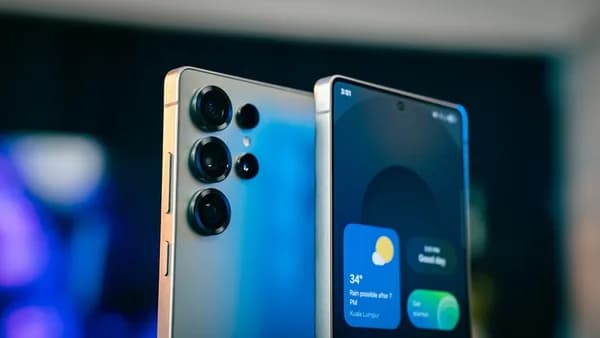
Before the keynote, Google had already shown AI features coming to Android 17 during the Android Show, including AI-generated widgets. That preview now looks less like a side announcement and more like the phone-level version of the I/O strategy.
Widgets are not just decorative if Gemini can generate or adapt them. They could turn the Android home screen into a more active interface, where information and actions surface before a user opens an app. That is the promise.
The unresolved question is control. If Android becomes a distribution layer for Gemini-powered surfaces, developers will want to know where their apps fit, how much context Gemini can access, and when AI-generated UI crosses from helpful into noisy. Google’s I/O material points toward deeper Android intelligence, including Android Halo, which brings agent intelligence to the status bar.
Search is becoming less like a results page and more like an agent interface
Search was expected to get more Gemini. Google’s own I/O page confirms a bigger shift: Information agents in Search, a “new era for AI Search,” and more agentic experiences across Google products.
That changes the center of gravity. Traditional Search asks users to refine queries and choose links. Agentic Search tries to understand the task, synthesize the path, and potentially move the user closer to an action. Google also announced Universal Cart, described as an intelligent shopping cart and part of its foundation for agentic commerce.
The gap between promise and risk is sharp. A more capable Search agent can reduce friction for research and shopping. It can also make the boundary between answer, recommendation, and action harder to see. The supplied material does not detail ad changes or publisher effects, so the practical watch item is narrower: how clearly Google labels AI-generated output and how much user approval remains before an agent acts.
Workspace and Chrome are becoming Gemini’s productivity test bed
Google also pushed Gemini deeper into work tools. Its I/O recap lists new voice capabilities in Gmail, Docs, and Keep, a new design tool called Google Pics, updates to AI Inbox, and Chrome updates tied to what Google calls the “agentic web.”
This is the productivity version of the Copilot tension. If Gemini summarizes, drafts, designs, searches, and nudges across every work surface, it has to save more time than it consumes. Otherwise, it becomes another layer of prompts on top of already busy software.
Enterprise users will care less about stage demos and more about controls. The source material points to features, not deployment details. So the open issues are practical: admin settings, reliability, data boundaries, audit trails, and whether users can easily turn agentic behavior down instead of being pushed into it.
For context on the Gmail side of this shift, see our earlier look at Gemini voice features in Gmail.
Smart glasses give Gemini a body — and a harder trust problem
The pre-I/O expectation included possible updates on Google XR and smart glasses, with Samsung-linked models and even Gucci reportedly in the works. Google’s I/O page later said intelligent eyewear is coming this fall, with frames and features for directions, texts, photos, and other phone-free tasks.
CNET’s live coverage added more detail from the keynote floor: Google showed Android XR glasses using Gemini to react to what the glasses were seeing, play music, navigate to a cafe, open DoorDash on the phone in a pocket, and prepare a usual nitro cold brew order for approval. The user still had to approve the order before Gemini placed it.
That last step is important. Approval is the difference between an assistant and an autonomous actor.
Smart glasses make Gemini’s pitch more concrete: see, hear, navigate, translate, answer, and act in the moment. They also make the trust problem harder because face-worn AI has fewer margins for ambiguity. Our earlier coverage of camera-based Android XR smart glasses gets at why “AI eyes” are powerful and sensitive at the same time.
Developers got the real I/O message: build agents, not demos
I/O is still a developer conference, and Google’s developer announcements were built around turning Gemini into usable infrastructure. Google highlighted Antigravity, an enhanced Gemini API, native Android support in Google AI Studio, Workspace integrations, and an AI Studio mobile app.
That is the less flashy but more important layer. Developers do not just need a better model. They need predictable APIs, latency, model choice, safety rules, tool calling, Android hooks, and a clear path from prototype to production.
Google’s pitch is that agents can help build Android and web apps, not just generate snippets. The unanswered question is whether developers treat Gemini as dependable infrastructure or as another impressive demo layer they still have to wrap, constrain, and verify.
The bigger picture
Google I/O 2026 signals a clear product direction: Gemini is moving from assistant to operating layer. Android 17, Search, Workspace, Chrome, Universal Cart, Google AI Studio, and intelligent eyewear all point to the same bet.
The benefit is obvious. If Gemini can act across Google services with user permission, it can collapse multi-step tasks into shorter flows. Search can become more task-aware. Android can become more adaptive. Workspace can become less manual. Glasses can make AI contextual instead of trapped inside a text box.
The risk is just as clear. Gemini could become too present, too eager, or too vague about what it is doing. I/O 2026 did not answer every control, privacy, or reliability question. It did show where Google is heading.
The practical watch item now is execution: whether Google can make agentic AI feel controlled and useful across its products, or whether Gemini becomes another omnipresent assistant users click past.
The Bottom Line
- Google is trying to turn Gemini from a chatbot into an action layer across its ecosystem.
- The strategy could make Google products more useful if agents reliably complete complex tasks.
- The risk is that overloading every surface with AI could make Gemini feel intrusive or easy to ignore.