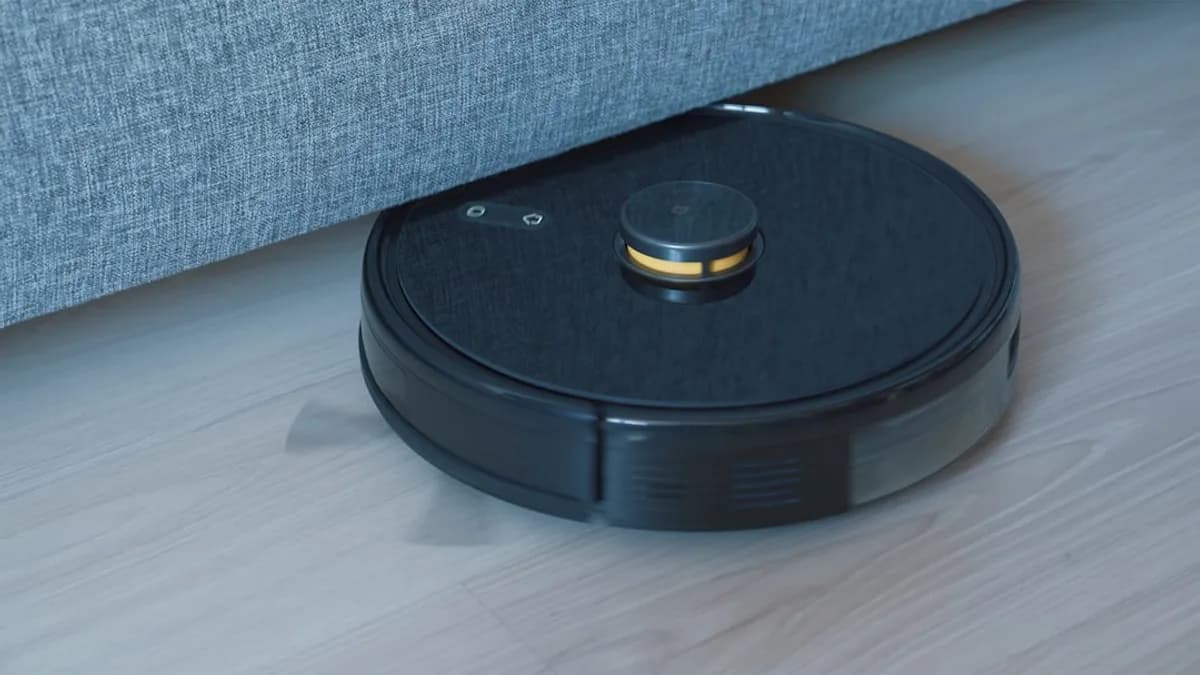
Xiaomi is preparing to take a camera-heavy, self-washing vacuum-mop global before it has confirmed U.S. availability. The Xiaomi Robot Vacuum 6 Max is now listed on Xiaomi’s global website, signaling a launch beyond China, according to Notebookcheck.
That listing matters because this is not a basic floor bot with a stronger motor. Xiaomi is packaging 35,000 Pa suction, an actively cleaned mop roller, a separate round mop for edges, an extendable side brush, and a multi-camera obstacle detection system into one premium cleaning platform. MLXIO analysis: the real pitch is not “more suction,” much as Xiaomi’s power bank safety focus is not simply about speed. It is whether buyers will trust a robot to identify messes, change behavior, and maintain its own cleaning hardware with less intervention.
Xiaomi is selling intelligence, not just suction
The Robot Vacuum 6 Max sits in the higher-end part of Xiaomi’s smart appliance lineup. In China, the model is priced at around $680, while U.S. pricing is expected to be higher. It is not yet available in the United States, and the source material does not confirm a U.S. launch date.
The device’s global listing points to Xiaomi’s familiar hardware pattern: push high-spec products across regions, then let pricing, app support, and local availability determine how aggressively the product can compete. MLXIO has tracked that broader global hardware rhythm in phones too, including the LOFIC Camera Leak Puts Xiaomi 18 Pro on Global Stage and the Redmi K90 Ultra gaming phone. The product categories differ, but the signal is similar: Xiaomi wants global attention around hardware features before every market detail is locked.
For robot vacuums, that creates a sharper question. A vacuum can advertise huge suction, but it still has to cross thresholds, avoid cables, clean edges, manage dirty water, and not smear a spill through a room. The 6 Max is Xiaomi’s attempt to answer that with a combination of mechanical cleaning and AI detection.
The roller mop makes the dock part of the product
The most important mechanical feature is the mop roller. Xiaomi says the roller is continuously cleaned and supplied with fresh water during operation. That shifts the mop from a passive pad dragged behind a vacuum into a more active wet-cleaning system.
The base station then performs a deeper cleaning cycle using hot water. That matters because the dock is no longer just a charging point. It becomes part of the cleaning loop: water delivery, mop maintenance, and post-run cleaning all shape whether the robot remains useful after the first few impressive demos.
Xiaomi also includes a separate round mop for edge and furniture cleaning, backed by an extendable side brush. That design choice addresses a common physical limitation of round robot vacuums: walls, corners, chair legs, and cabinet edges are hard to reach with a central mop system alone.
MLXIO analysis: this is where the product’s premium positioning is clearest. The Robot Vacuum 6 Max is trying to reduce the number of manual steps after each run. But that promise only holds if the dock, roller, app, and removable cleaning parts work cleanly together over months of use.
Three cameras create both the pitch and the trust problem
The headline AI feature is Xiaomi’s triple-camera obstacle detection system. The robot uses multiple cameras to distinguish between different object types and detect liquids. When it identifies a liquid, it performs a more intensive clean in that area. If it sees both liquid and solid debris, the Xiaomi Home app issues a warning.
That is a meaningful escalation from simple obstacle avoidance. The robot is not just trying to avoid getting stuck. It is being asked to classify a problem and decide whether cleaning should continue, intensify, or pause for user attention.
The upside is obvious. Shoes, furniture legs, pet items, toys, cables, and spilled liquids are the real-world hazards that decide whether a robot vacuum feels autonomous or needy. Suction does not help if the robot drags something across the floor or gives up halfway through a room.
The risk is trust. Camera-equipped home robots operate in private spaces. Buyers will want to know how images are processed, whether detection runs locally or through cloud-connected systems, how long data is retained, and what permissions the companion app requires. The source material does not answer those questions for the Robot Vacuum 6 Max.
The Xiaomi Home app listing on Google Play says the app has 50M+ downloads, a 4.2 star rating from 1.56M reviews, and may collect Location, Personal info and 8 others. It also says data is encrypted in transit and users can request deletion. That does not settle the privacy question for this vacuum, but it shows why the app layer deserves scrutiny before purchase.
The 35,000 Pa claim is only one number buyers should test
Xiaomi advertises maximum suction power of 35,000 Pa. It also says the robot can overcome obstacles up to 6 cm (2.4 in) high. Those are the two confirmed performance numbers that matter most from the supplied material.
| Area | Confirmed for Robot Vacuum 6 Max | Still not confirmed in supplied material |
|---|---|---|
| Suction | 35,000 Pa maximum | Real-world pickup across carpet types |
| Climbing | Up to 6 cm (2.4 in) | Performance on thick rugs and uneven thresholds |
| Obstacle detection | Multiple cameras; object and liquid detection | Miss rate, false positives, low-light accuracy |
| Mopping | Self-cleaned roller with fresh water; hot-water dock cleaning | Water capacity, drying behavior, maintenance intervals |
| Availability | Listed globally; not yet available in U.S. | U.S. launch date and final U.S. price |
The climbing number deserves attention. A robot that cannot move across room transitions becomes a partial-home cleaner. The source says the 6 Max has “limited climbing capability,” despite the stated 6 cm figure. Buyers should treat threshold handling as a practical test, not a spec-sheet victory.
Camera count also needs caution. Three cameras sound stronger than one, but the useful metrics are harder: missed obstacles, mistaken detections, map accuracy, room completion rate, and behavior around mixed wet-and-solid debris. Xiaomi’s warning through the app is smart in theory. The test is whether it warns at the right moments without turning routine cleaning into a notification stream.
Xiaomi’s premium smart-appliance bet depends on the app layer
The Robot Vacuum 6 Max is part appliance, part software product. Its value depends on scheduled cleaning, object detection, alerts, maintenance prompts, and firmware behavior. That makes the Xiaomi Home app central to the experience, not an accessory.
This is where smart home buyers should be disciplined. The hardware list is strong: suction, roller mop, edge mop, extendable brush, hot-water base station, camera detection. But daily satisfaction will come from less glamorous details: clean maps, reliable alerts, clear maintenance instructions, available parts, and local warranty support.
For readers comparing robot-vacuum pricing and feature bundles, our earlier coverage of the €200 Cut Puts Mova Z70 Robot Vacuum Buyers on Clock is a useful reminder that headline specs and purchase timing can move separately. Xiaomi has not confirmed U.S. pricing for the 6 Max, so any buying decision still depends on final regional terms.
Different buyers will stress-test different weaknesses
Homeowners and renters will judge the 6 Max by layout. Open floors favor autonomous cleaning. Tight furniture, rugs, raised thresholds, and cluttered rooms expose navigation limits quickly.
Pet owners will focus on three things: hair pickup, object recognition around bowls and toys, and whether liquid detection prevents a bad mess from becoming worse. Xiaomi’s app warning for combined liquid and solid debris is one of the more practical features on paper, but it needs real-world validation.
Privacy-conscious buyers will ask a different question: do the cameras make the robot useful enough to justify bringing more machine vision into the home? The source does not provide enough detail to answer that. Until Xiaomi publishes clearer information on processing and data handling for this model, that remains an open diligence item.
The next proof is price, support, and messy floors
The Robot Vacuum 6 Max signals Xiaomi’s premium direction: stronger suction, active mopping, self-cleaning dock hardware, and AI-assisted detection in one package. If the global model ships close to the China price, it could make camera-based cleaning robots feel less exotic. If U.S. pricing lands much higher, Xiaomi will need the software and dock performance to justify the gap.
The evidence to watch is simple: confirmed regional pricing, U.S. availability, warranty terms, replacement-part access, independent obstacle tests, and how the robot handles liquids mixed with solid debris. Those results will decide whether the Xiaomi Robot Vacuum 6 Max is a genuinely smarter cleaner or just a spec-heavy robot with more ways to disappoint in a real home.
Key Takeaways
- Xiaomi’s global listing signals the Robot Vacuum 6 Max is moving beyond China, though U.S. availability is still unconfirmed.
- The vacuum targets the premium segment with 35,000 Pa suction, a self-cleaning mop roller, edge cleaning, and multi-camera AI obstacle detection.
- Its roughly $680 China price suggests global buyers should expect premium pricing, especially if it reaches the U.S.