Why Native Contrast Ratio Is a Game-Changer in Laser TV Technology
Laser TVs have spent years chasing OLED-level black performance, but Xgimi’s Aura 3 Max claims a native contrast ratio that finally pushes the segment closer to true cinematic standards. Display makers have leaned on tricks like dynamic contrast and software processing, yet those always crumble in challenging scenes—bright subtitles over dark backgrounds, for example. Native contrast ratio, measured as the difference between the darkest and brightest output a panel can produce without digital manipulation, is the real arbiter of picture depth and realism. High native contrast separates washed-out grays from true blacks, making shadow detail pop and colors appear more vibrant.
Aura 3 Max’s reported leap in native contrast, according to Notebookcheck, is not just marketing fluff. Most laser projectors struggle to hit even 2,000:1 natively, while traditional LCD models often languish below 1,500:1. Xgimi’s new model targets figures closer to 3,000:1 and above—territory typically reserved for high-end DLP or OLED. That’s a tangible upgrade for anyone who cares about HDR performance or watches content in dark rooms.
The technical hurdles are nontrivial. Laser light engines, unlike LED or traditional lamp systems, have to balance brightness, color fidelity, and contrast. Achieving high native contrast without sacrificing brightness requires meticulous optical engineering, precise light blocking, and advanced coatings. Xgimi’s willingness to invest in these refinements signals a strategy: they’re betting that visual quality, not just screen size or price, will become the main battleground for laser TVs.
Decoding the Ultra-Short Throw Ratio: What It Means for Home Entertainment Setup
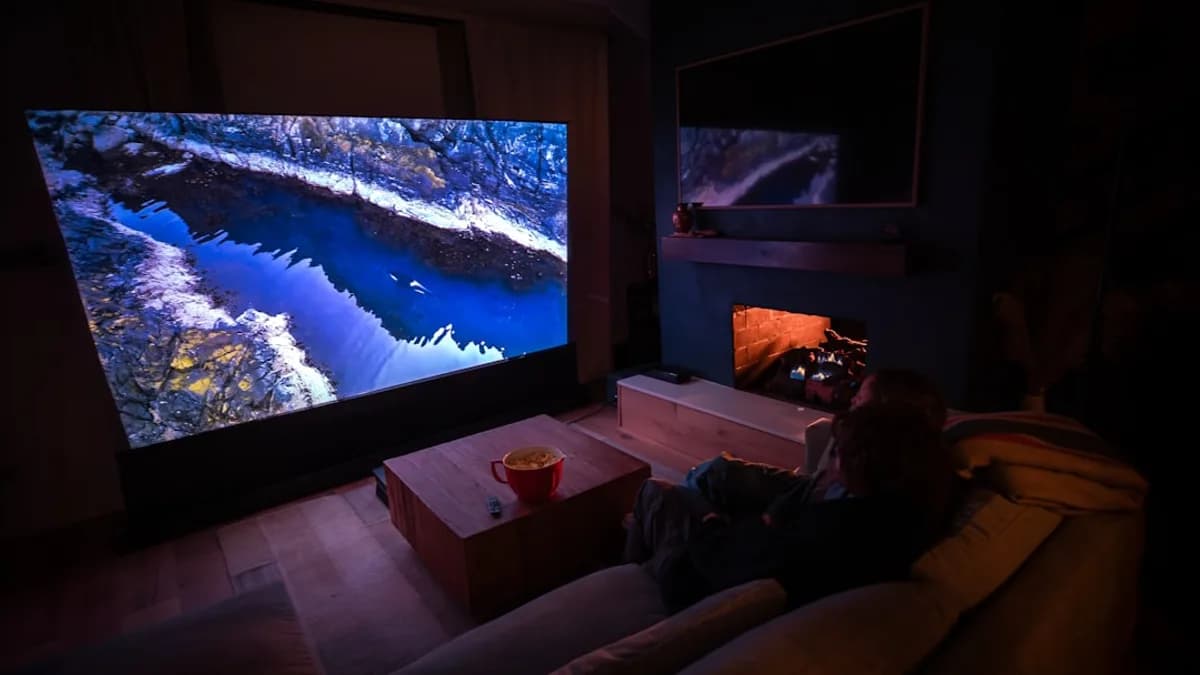
Xgimi’s Aura 3 Max isn’t just a visual upgrade—it’s a logistics win. The ultra-short throw ratio means the TV can sit just inches from the wall and still project a massive image. For most consumers, this is the feature that turns laser TV from a nice-to-have into a practical replacement for large-format LCDs.
Ultra-short throw ratios, typically below 0.25:1, enable a 100-inch image from less than 30cm away. Compare that to standard projectors, which need two to three meters of distance for the same size, and the space-saving implications are obvious. Aura 3 Max’s throw ratio is reported to be among the tightest in its class, which matters for apartments, smaller homes, and anyone unwilling to dedicate a whole room to a projector setup.
The convenience is not just about space. Ultra-short throw models cut down on setup complexity, reduce cable clutter, and minimize risk of image distortion from obstacles. While rivals like Hisense and Samsung have pushed similar ratios, Xgimi’s engineering focus—combining high contrast with ultra-short throw—addresses a gap: most competitors force consumers to choose between image quality and installation flexibility. Aura 3 Max aims to deliver both.
Quantifying Performance: Key Specifications and How Aura 3 Max Stacks Up
Numbers tell the story. Xgimi’s Aura 3 Max touts a native contrast ratio above 3,000:1, a wide color gamut covering over 95% of the DCI-P3 spectrum, and a brightness rating north of 2,400 lumens. Integrated Harman Kardon speakers, rated at 40W, round out the package. These specs don’t just look good on paper—they mark a substantial leap from Xgimi's previous Aura Max (which offered ~2,000:1 contrast and 2,000 lumens) and outpace most direct rivals in the category.
Let’s benchmark against the competition. Hisense’s L9G flagship, widely regarded as a segment leader, offers a native contrast ratio around 2,500:1 and DCI-P3 coverage of 90%. Samsung’s Premiere LSP9T, another contender, posts similar color but lags on contrast at roughly 2,000:1. Most sub-$3,000 laser TVs stick to Rec.709 color (limited saturation) and rarely crack 2,000 lumens—meaning Aura 3 Max’s specs put it in an upper tier, especially for HDR and color-rich content.
Integrated speakers are often an afterthought in projectors, but Aura 3 Max’s 40W system is a meaningful upgrade. Many competing models ship with tinny, 20W speaker arrays, pushing users to external audio. For casual viewers or those prioritizing minimalist setups, built-in sound matters: it makes the Aura 3 Max a plug-and-play experience, not a project requiring a surround sound system.
The wide color gamut is more than window dressing. Covering over 95% of DCI-P3 means that vibrant reds, greens, and blues actually show up as intended—especially in premium streaming content mastered for HDR. Color accuracy is a weak spot in many laser TVs; Xgimi’s focus here suggests they’re targeting users who care about film fidelity, not just size.
Diverse Stakeholder Perspectives on Xgimi’s Latest Laser TV Innovation
Consumers are split. Tech enthusiasts are likely to celebrate the Aura 3 Max’s high native contrast, which finally brings laser TVs closer to OLED and high-end DLP performance. For cinephiles, the combination of deep blacks, wide color, and robust brightness means fewer compromises compared to traditional TVs. Casual buyers, meanwhile, are drawn to the ultra-short throw setup—no ceiling mounts, no complex calibration, just a big screen from the corner of the room.
Industry experts see this launch as a signal: the laser TV segment is moving out of niche territory. Xgimi’s focus on native contrast and color accuracy addresses persistent criticisms that laser TVs, while convenient, lagged when it came to picture quality. The integration of high-powered speakers is a nod to the all-in-one trend, mirroring Apple’s approach to hardware simplicity.
Retailers and distributors expect a shakeup. As Xgimi pushes specs upward while keeping pricing competitive (Aura 3 Max is expected to land around the $2,500–$3,000 mark in global markets), it gives them a selling point against OLEDs and high-end LCDs. The space-saving appeal is especially potent in urban markets—where floor space is at a premium and buyers want minimal setup hassle.
The only caveat: some home theater purists still see laser TVs as a compromise, citing persistence of subtle rainbow effects, motion blur, or color banding in fast-moving scenes. But for the mainstream, Aura 3 Max’s specs suggest those trade-offs are shrinking.
Tracing the Evolution of Laser TVs: How Aura 3 Max Reflects Industry Progress
Laser TV tech has evolved from a curiosity to a legitimate challenger in just six years. Early models, like LG’s 2018 HU80KA, struggled with mediocre contrast (~1,000:1), narrow color coverage, and cumbersome setups. Adoption was slow, with global laser TV shipments hovering under 200,000 units in 2019. But the pandemic era saw a spike—home entertainment spending surged, and laser TVs gained traction.
Aura 3 Max is a product of this second wave. Compared to first-gen units, today’s models feature triple-laser systems (RGB lasers for richer color), wider color gamuts, and ultra-short throw designs. Xgimi’s jump to high native contrast is the latest milestone: it tackles the Achilles heel of the category, enabling laser TVs to compete on picture depth rather than just size.
The broader trend is clear. Laser TVs are moving from “good enough” to “premium alternative.” High native contrast, integrated sound, and flexible installation are now baseline expectations. Xgimi’s rapid innovation pace—launching new models annually, tweaking optics and audio each cycle—mirrors the pattern seen in smartphones and smart TVs. The segment now attracts not just tech hobbyists but mainstream buyers, with Chinese brands (Hisense, Xgimi) leading and global players scrambling to catch up.
Implications of Aura 3 Max’s Features for Consumers and the Laser TV Market
Aura 3 Max’s native contrast and ultra-short throw setup shift consumer expectations. It’s no longer a question of whether laser TVs can compete on size—they’re now measured against image quality standards set by OLED and premium LCD. For buyers, this means a wider range of choices: whether you want a minimalist setup, deep blacks for movie nights, or vibrant colors for sports, Aura 3 Max covers all bases.
Pricing will be pressured downward. As Xgimi pushes high-end features into mid-tier price points, competitors will be forced to either match specs or cut margins. This accelerates market adoption, making laser TVs accessible beyond luxury buyers. Expect increased price competition in the $2,000–$3,500 range—a segment historically dominated by 75-inch OLEDs and QLEDs.
Accessibility improves. With ultra-short throw ratios, consumers don’t need dedicated home theater rooms. Apartment dwellers and renters can finally get a 100-inch experience without drilling holes or buying blackout curtains. This democratizes big-screen viewing and broadens the market for laser TVs, especially in Asia and Europe where living spaces are tighter.
Manufacturers will need to respond. As native contrast and color gamut become expected, brands that stick to legacy specs risk irrelevance. Aura 3 Max sets a new standard: future models will need to match or exceed these benchmarks to remain competitive.
Predicting the Future of Laser TVs: Trends and Innovations Beyond Aura 3 Max
The next phase for laser TVs is clear: higher contrast, richer color, and smarter integration. Expect triple- and even quad-laser systems, pushing DCI-P3 coverage past 98% and possibly reaching Rec.2020 territory. Contrast ratios will creep toward 5,000:1, closing the gap with OLED. AI-powered image processing may address lingering issues like motion blur and color banding.
Competitors won’t sit idle. Hisense and Samsung are likely to accelerate their own innovation cycles, targeting both higher contrast and better on-board audio. We may see hybrid models that integrate ambient light sensors, adaptive brightness, and even modular screen surfaces for improved black level performance.
Challenges persist. Laser TVs still lag in true black reproduction compared to OLED, especially in uncontrolled lighting. Cost is a factor—while prices are dropping, premium models remain out of reach for many. And the category faces the threat of micro-LED, which promises both high contrast and flexible sizing.
Opportunities abound. As living spaces shrink and consumers demand both convenience and quality, ultra-short throw laser TVs become compelling. If Xgimi’s Aura 3 Max delivers as promised, expect a surge in market share, especially among urban buyers and design-conscious consumers. Ultimately, the segment’s future depends on sustained innovation—not just incremental upgrades, but radical improvements in contrast, color, and usability. The real test will be whether these advances translate into mainstream adoption, pushing laser TVs from niche to norm within the next two years.
Why It Matters
- Xgimi’s Aura 3 Max laser TV delivers native contrast ratios that rival high-end OLED and DLP displays.
- Improved contrast means better shadow detail and more vibrant colors for movie and sports fans.
- Higher native contrast sets a new standard for picture realism in the laser TV segment, raising expectations for future models.