Red Sea Flashpoint: French Carrier Group Deployment Triggers 300% Spike in Geopolitical Search Interest
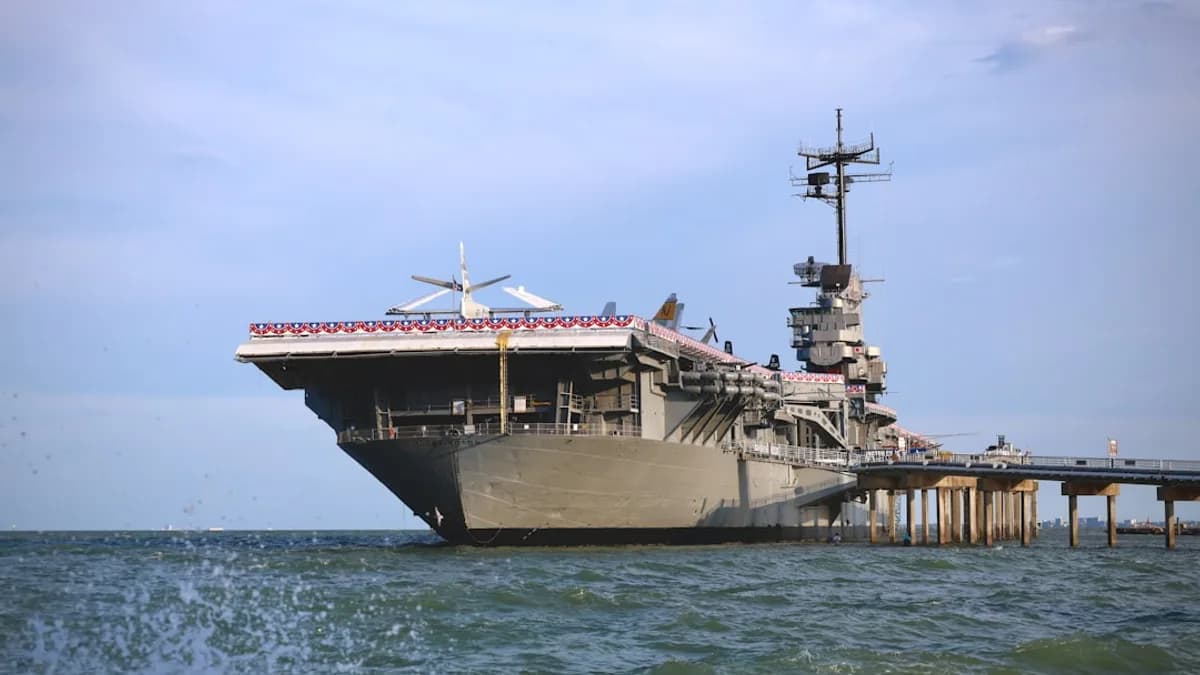
French military maneuvers in the Red Sea and Gulf of Aden have ignited a surge in global search and social chatter, with Google Trends data showing “Red Sea security” and “Hormuz Strait crisis” queries up over 300% week-over-week. France’s flagship aircraft carrier group is now repositioned in the region, as confirmed by Reuters and Bloomberg, signaling Paris’s intent to actively police critical maritime chokepoints alongside partners. Macron’s demand for U.S.-Iran negotiations to keep the Strait of Hormuz open—while France pledges direct naval escort missions—has fueled speculation about escalating military and economic risk in one of the world’s most vital energy corridors.
This wave of attention isn’t limited to policy wonks. Institutional risk desks and commodities traders are recalibrating models: the Red Sea handles roughly 12% of global trade, and the Strait of Hormuz sees 20% of daily oil supply—nearly 21 million barrels per day—move through its narrow waters. The cluster of headlines this week, tracked by at least four major outlets and amplified by a spike in X (formerly Twitter) mentions, reflects a market now pricing in the probability of further disruption, not just sabre-rattling.
Maritime Security Moves: What’s Shifting in the World’s Most Critical Chokepoint
The French carrier group’s movement isn’t a routine exercise. France’s explicit shift from “observer” to “enforcer” in the Red Sea and Gulf of Aden comes as attacks on commercial vessels have jumped 62% year-on-year, according to the International Maritime Bureau. Since late 2023, Houthi-linked drone and missile strikes have driven up insurance premiums for tankers by 400% on some routes. France’s commitment to direct escorts in the Strait of Hormuz—announced in coordination with the U.S. and UK—marks a rare, hard-power response from a European power traditionally focused on diplomatic mediation.
Historical Context: From Suez Crisis to Modern Multinational Patrols
The last time a major Western military deployed carrier-based air power in the Red Sea for sustained maritime protection was the Suez Crisis of 1956. That episode triggered a decade of market volatility and rewired global tanker routes. Today’s context is more complex—actors include not only Iran and proxy militias but also a web of state and non-state cyber threats, with at least three ransomware attacks on port infrastructure traced to the region since January, according to Recorded Future.
Consequences for Global Supply Chains
The immediate impact: Maersk, MSC, and other shipping giants have already diverted dozens of vessels, rerouting around the Cape of Good Hope, adding up to 14 days and $1.1 million in extra fuel per round trip. The French Navy’s presence may dampen some insurance spikes but won’t erase the underlying risk premium traders are now baking in. Container spot rates from Asia to Europe surged 40% in Q1 2024, and futures markets are now pricing in elevated volatility through year-end, according to Bloomberg.
Key Players: France’s Military, Macron’s Calculus, and the Oil Majors’ Risk Playbook
President Emmanuel Macron is betting that a muscular French response will buy him leverage in both Washington and Tehran. His call for U.S.-Iranian talks—framed as a prerequisite for maritime security—signals a push to revive France’s relevance as both a NATO and EU security actor. The Charles de Gaulle carrier group, France’s most potent naval asset, is now at the center of joint patrols with the U.S. Fifth Fleet, creating a de facto multinational task force.
The Oil and Shipping Giants
TotalEnergies, Shell, and BP have all flagged “heightened operational risk” in Q2 filings, with TotalEnergies specifically citing “regional naval activity” as a factor in its updated guidance. Insurers such as Lloyd’s of London have responded by raising war risk premiums to 0.5% of cargo value—up from 0.12% in December 2023. This quadrupling of rates translates into an extra $500,000 in costs for a VLCC on a single Hormuz passage.
Middle Eastern Stakeholders
Iran, facing internal economic stress and ongoing sanctions, has not escalated direct naval confrontations but continues to posture via the Islamic Revolutionary Guard Corps Navy, which staged three live-fire exercises in the last six weeks. Regional rivals UAE and Saudi Arabia, both aiming to cement their roles as “security exporters,” have quietly boosted intelligence sharing with Paris and London—while also increasing their own petroleum exports via alternative pipelines.
Market Implications: Energy, Insurance, and Shipping Volatility Surge
The market impact is already visible in three distinct metrics. Brent crude spot prices climbed 7% in the past 30 days, trading above $88/bbl as of May 10, 2024, with the forward curve steepening in anticipation of persistent risk. War risk insurance for the region now represents an estimated $2.3 billion annualized drag on shipping margins—up from $750 million pre-crisis. Publicly traded shipping firms such as Maersk and Evergreen have underperformed the broader MSCI World Index by 9% YTD, as investors discount for rerouting and security costs.
Derivative Markets and Volatility
Options contracts on major tanker stocks and crude futures have seen implied volatility jump by 30% since March, with open interest in “tail risk” contracts (deep out-of-the-money puts) at a 24-month high. This signals not just hedging but outright speculation that the Red Sea/Hormuz situation could worsen or trigger spillover into adjacent maritime routes.
Tech and Cybersecurity Spillovers
Logistics and port operators are accelerating cybersecurity spend, with DP World and PSA International reporting 20% quarter-on-quarter increases in IT security budgets. The region’s kinetic risk is now intertwined with cyber threats: at least two vessel navigation systems were compromised in April in attacks attributed to Iranian-linked groups, highlighting an urgent new attack vector for supply chain disruption, according to The Times of Israel.
Next 12 Months: Multipolar Security, Persistent Premiums, and AI-Driven Risk Modeling
Expect the French-led multinational presence to become semi-permanent, not episodic. The Charles de Gaulle group will likely rotate with UK and U.S. carrier assets, maintaining a visible deterrent but also introducing a new layer of operational complexity and cost. Insurance premiums are unlikely to return to pre-crisis levels in 2024—even a modest de-escalation will leave a “risk memory” baked into rates and futures contracts.
Maritime Tech Adoption and AI Intelligence
Shipping and logistics firms will accelerate adoption of AI-powered route optimization and threat detection tools. Expect at least three major carriers to roll out real-time risk scoring platforms, integrating satellite data, open-source intelligence, and cyber probes. The market for maritime security tech is set to exceed $4.2 billion by Q2 2025, up from $2.9 billion in 2023, with startups and defense primes alike chasing a slice of this growth, according to Bloomberg.
Geopolitical Stakes and Energy Transition
France’s gambit could catalyze a shift in EU energy security strategy, accelerating diversification away from Middle Eastern oil and triggering new LNG infrastructure investments. The window for “quick fixes” is closing: any sustained disruption will force both European and Asian refiners to lock in alternative supply contracts, likely at a premium.
Prediction: By Q2 2025, the Red Sea/Hormuz corridor will remain a high-tension, high-cost passage. War risk insurance will stabilize at 2-3x pre-crisis levels, and at least one major oil major will announce a permanent rerouting of a significant volume—over 10% of its Middle East exports—outside the Hormuz route. AI-powered risk modeling will become table stakes for global shippers, and France’s maritime assertiveness will cement its position as the EU’s indispensable security actor in the region. Markets betting on a quick normalization will be left flat-footed.