Vertu is trying to sell the most sensitive layer of corporate work — approvals, schedules, sales signals, travel, reporting, and executive communications — as a $6,880 AI foldable phone.
The Vertu Alphafold, unveiled Thursday, is not pitched as another luxury Android handset with exotic leather on the back. It is pitched as a portable command center for executives, according to TechCrunch, with an AI agent that connects to enterprise software and coordinates workflows through natural-language prompts.
That makes the launch more interesting than the price tag alone. Vertu is testing whether the next luxury phone can justify itself not only through scarcity, craftsmanship, and status, but through access to business systems. The company wants CEOs to see the device less as a gadget and more as an operational layer.
That is a bold pitch. It also creates a hard trust problem. An AI agent that can help summarize context is useful. An AI agent that touches ERP, CRM, approvals, and operational reporting becomes part of the company’s control surface.
Vertu’s $6,880 AI foldable turns the executive phone into an approval machine
The Alphafold starts at $6,880 for a calfskin version. Vertu told TechCrunch its highest-end standard model is currently priced at $46,800, with further customization available. Higher-end versions include alligator leather, 18K gold, natural diamond accents, and customized detailing.
That keeps Vertu inside its traditional lane: luxury status devices for affluent buyers. But the software pitch changes the frame. The company is now selling the idea that a senior executive can manage business operations from a foldable handset, with AI coordinating the handoffs.
The core promise is simple: an executive issues a natural-language request, and Hermes Agent routes work across enterprise tools, phone functions, and AI models. Vertu says the agent can help with approvals, scheduling, sales tracking, travel planning, and operational reporting.
MLXIO analysis: this is not really about replacing a laptop. It is about compressing the moments between meetings, flights, messages, and decisions. If the Alphafold works as advertised, the device becomes a kind of executive inbox with action rights — not just a screen for reading updates.
That is also where the risk sits. A luxury phone can be forgiven for being expensive. An enterprise AI agent cannot be forgiven for being sloppy with a contract approval, a customer record, or a sensitive internal prompt.
Hermes Agent is Vertu’s real product, not the leather or gold
The Alphafold comes with Hermes Agent, built on top of the open-source Hermes project by Nous Research. In practice, that positions Vertu around customizable agent workflows rather than a closed voice-assistant experience.
Vertu says Hermes Agent can connect with systems such as ERP and CRM, then coordinate tasks across enterprise software. The company also says the phone can route requests across OpenAI’s GPT, Anthropic’s Claude, Google’s Gemini, and selected open-source models.
That multi-model routing matters because Vertu is not claiming a single in-house model will do everything. It is presenting the phone as an orchestration layer. The handset becomes the place where business intent, enterprise permissions, phone functions, and third-party AI models meet.
The company says the Alphafold integrates with more than 80 apps and dozens of native phone functions for cross-platform workflows. Related reporting from Android Authority says the listed app categories include productivity and social apps such as Gmail, Google Calendar, Drive, Maps, Chrome, WhatsApp, Telegram, Facebook, X, and TikTok.
A useful executive-agent workflow could look like this:
- Scheduling: Coordinate meetings and travel around shifting executive availability.
- CRM updates: Pull sales context and prepare follow-ups from customer records.
- Approvals: Surface requests that require signoff and route them to the right system.
- Reporting: Summarize operational signals into a mobile dashboard.
- Cross-app actions: Move from message to calendar to document to approval flow without manual app switching.
The technical challenge is not whether these actions can be demonstrated. It is whether they can be trusted when edge cases appear. Executives operate in ambiguous context. A vague instruction can have legal, financial, or reputational consequences if the system acts too aggressively.
This is where Vertu’s pitch intersects with a broader anxiety around AI demos and executive decision-making. As we covered in AI Psychosis Pushes Tech CEOs to Bet Jobs on Demos, flashy AI capability can pull leaders toward premature confidence. Vertu’s agent strategy will need proof beyond stage-ready workflows.
The pricing math only works if Alphafold saves executive time
The Alphafold’s price is far outside mainstream phone economics. TechCrunch cites IDC data showing that as many as 20 million foldable smartphones shipped globally in 2025, accounting for less than 2% of total smartphone shipments. IDC said foldables sold at an average price of about $1,300 last year — roughly three times the price of non-foldable smartphones.
Vertu starts at more than five times that foldable average.
| Device category or model | Price / market data from source | What it implies |
|---|---|---|
| Average foldable smartphone in 2025 | About $1,300 | Foldables are already premium devices |
| Vertu Alphafold calfskin version | $6,880 | Vertu is pricing far above the foldable category |
| Vertu highest-end standard model | $46,800 | Luxury materials and exclusivity dominate the upper tier |
| Global foldable shipments in 2025 | As many as 20 million, less than 2% of total smartphone shipments | The category remains niche despite major investment |
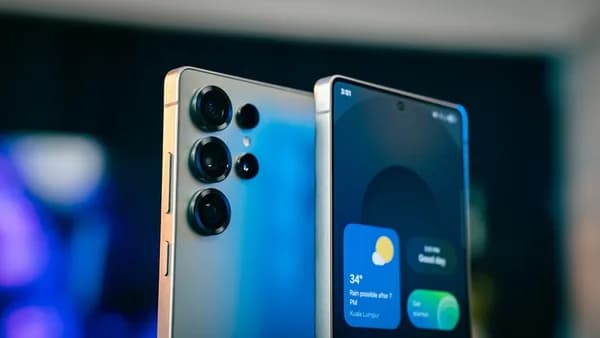
The hardware does not explain the premium by itself. The Alphafold has flagship-style components: Qualcomm Snapdragon 8 Gen 4, an 8.05-inch foldable display, a 6.53-inch outer screen, a 6,500mAh battery, satellite communication capabilities, and a triple rear camera setup with 50-megapixel primary and ultrawide cameras plus a 5-megapixel telephoto lens.
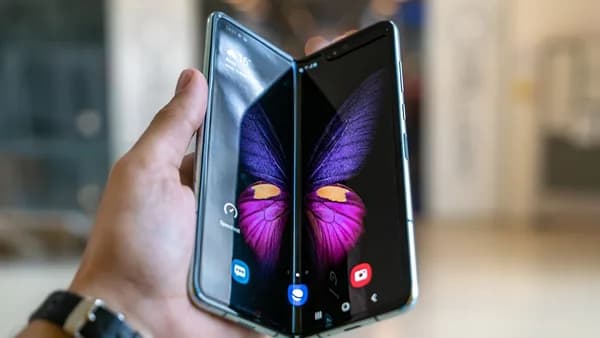
Vertu also says the hinge uses metal, titanium, and carbon-fiber components and is rated for up to 650,000 folds. That supports the luxury-durability story, but it does not turn a phone into a $46,800 business tool.
The ROI argument has to come from somewhere else. Vertu must convince buyers that the Alphafold cuts administrative drag for people whose time is unusually expensive. If the device reduces decision latency, centralizes business context, or keeps a traveling executive inside the approval loop, the purchase can be framed as productivity infrastructure.
MLXIO analysis: that argument is plausible for a narrow audience. It is not a mass-market AI phone thesis. It is a scarcity thesis wrapped around workflow automation.
Vertu is trying to replace concierge nostalgia with AI access
Vertu’s historical identity was built around luxury handsets, affluent buyers, exotic materials, and concierge services. TechCrunch notes the Hong Kong-headquartered company was known for luxury handsets and concierge services before the rise of the iPhone, then changed ownership multiple times as mainstream smartphone makers dominated the market.
The Alphafold is an attempt to rewrite that playbook. Instead of selling only craftsmanship and service access, Vertu is adding enterprise AI as the software differentiator.
That matters because luxury phones have often struggled when the underlying software experience failed to match the price. A phone can be covered in premium materials, but if the software layer feels ordinary, the device becomes jewelry with cellular radios.
The Alphafold tries to avoid that trap by making AI workflows central to the product. Vertu CEO Molly Ma told TechCrunch that existing AI features on smartphones from major manufacturers remain largely focused on consumer tools such as image editing and voice assistance. Her argument is that enterprise AI-agent workflows tied to business systems are still open territory.
There is logic in that positioning. Foldables offer more screen space for multitasking and productivity. IDC’s Kiranjeet Kaur told TechCrunch that foldables could eventually benefit from AI-agent workflows because larger displays are better suited for multitasking and productivity-oriented experiences.
But Kaur also added a constraint that cuts directly into Vertu’s pitch: enterprise AI adoption on smartphones still lags behind computers, and most enterprise smartphone decisions remain driven by ecosystem integration and device management support rather than AI capabilities.
That is the central tension. Vertu wants the executive device to be AI-native. Enterprise buyers still tend to care first about control, integration, and manageability.
CEOs, CIOs, and security teams will not see the same Alphafold
For a CEO, the Alphafold is easy to understand. It promises a premium foldable screen, luxury finishes, satellite communication, and an AI assistant that can act across business systems. It is a status object with utility attached.
For a CIO, the device raises a different set of questions. Which systems can Hermes Agent access? How are permissions scoped? How are actions logged? How does the phone fit into existing mobile device management policies? What happens when an external model receives a prompt derived from enterprise context?
Vertu says its answer starts with privacy architecture. The Alphafold includes a proprietary A5 security chip designed to isolate authentication keys, biometric credentials, and sensitive enterprise information from the main operating system. The company also says commercially sensitive data can be processed locally, while prompts sent to external AI models are redacted or tokenized before leaving the phone.
That is a serious claim. But it is not yet independently proven.
Vertu told TechCrunch that independent audits and certification remain on its security roadmap “as an explicit next-stage commitment,” and said it would “communicate the progress and the results publicly” once the product matures further.
That admission is important. Vertu is asking enterprises to trust an agentic device before third-party security audits or independent certification are complete. For sensitive workflows, that may slow adoption even among executives who like the concept.
The employee and shareholder optics are also mixed. A device that helps leaders move faster could benefit the company. A five-figure executive phone could also read as extravagance if the AI tools are limited to the top of the org rather than deployed where workflow bottlenecks actually occur.
| Stakeholder | Likely attraction | Likely concern |
|---|---|---|
| CEO | Faster mobile decisions, premium design, AI support | Whether the agent can be trusted with real authority |
| CIO | Potentially centralized executive workflows | Integration, audit trails, permissions, device management |
| Security team | Local processing and A5 chip claims | No completed third-party audit or certification yet |
| Employees/shareholders | Possible efficiency gains | Optics of luxury executive-only AI tooling |
Alphafold tests whether enterprise mobility moves from apps to agents
The Alphafold’s most useful signal may be category-level. Vertu is treating AI agents as the center of the business phone, not as an app-layer add-on.
If that framing proves useful, larger device makers and enterprise vendors will have a clear path to copy the concept at lower prices. The executive command-center idea does not require alligator leather or diamond accents. It requires secure integrations, reliable model routing, strong permissions, and workflows that fail safely.
The foldable form factor helps the story. A larger inner display can show dashboards, approvals, documents, and messages with less friction than a standard phone screen. That aligns with IDC’s view that foldables could benefit from productivity-oriented AI workflows.
But foldables remain a niche. The IDC data cited by TechCrunch — less than 2% of total smartphone shipments in 2025 — suggests that form factor alone will not carry the product. Vertu has to prove the AI layer changes the value proposition.
This also lands as the broader smartphone industry prepares for more foldable experimentation. Our coverage of the foldable iPhone Ultra case leak showed how much attention still goes to hardware shape. Vertu is pushing a different question: what should a foldable do when the screen opens?
MLXIO analysis: the answer cannot just be “show more apps.” For enterprise users, the stronger answer is “coordinate work across systems.” That is the opportunity Vertu is chasing.
Trust, not titanium, will decide whether CEO AI phones become real
Vertu’s Alphafold could inspire copycats. Mainstream foldable and enterprise-device vendors may borrow the executive AI command-center concept without the luxury pricing. The idea is portable: secure agent orchestration, corporate system access, and a large mobile screen.
But the decisive factor will not be leather, titanium, diamonds, or exclusivity. It will be whether AI agents can operate safely across corporate systems with transparent permissions, dependable guardrails, and verifiable security claims.
Vertu begins shipping the first 115-unit batch of Alphafold devices this week across major markets including the U.S. That limited batch fits the luxury playbook. It also gives the company a controlled proving ground.
The practical watch item is whether Vertu can move from premium demo to enterprise trust. Evidence that would strengthen the thesis includes completed independent audits, public certification progress, clear enterprise deployment case studies, and proof that Phone-to-ERP integrations work across real customer systems. Evidence that would weaken it includes vague security disclosures, narrow integrations, unreliable agent actions, or corporate IT resistance.
The Alphafold does not need to become a mass-market phone to matter. It only needs to show whether executives will pay luxury prices for AI that can touch real business workflows — and whether their companies will let that AI anywhere near the systems that matter.
The Bottom Line
- Vertu is trying to redefine luxury phones as executive workflow tools, not just status devices.
- The AI agent’s access to ERP, CRM, approvals, and reporting raises major enterprise trust and security questions.
- The pricing shows Vertu is targeting a narrow CEO-class market willing to pay for both exclusivity and operational convenience.