On July 13, 2026, Tesla’s next autonomy computer shifted from distant roadmap item to near-term manufacturing question: Samsung has reportedly finished taping out the production version of Tesla AI5 and is preparing it for a 2 nm process, with Model Y potentially among the first vehicles to receive it.
That timing matters because the current 2026 Model Y uses AI4 hardware built on a 5 nm process, while the reported AI5 move would jump Tesla’s in-car FSD computer to Samsung’s most advanced node sooner than many expected, according to Notebookcheck.
July 13: why a 2 nm AI5 chip would be more than a routine Model Y refresh
The reported AI5 FSD computer is not just another chip swap. Notebookcheck says Elon Musk previously described AI5 as offering 5x the useful computing power of today’s AI4 processor and a ninefold increase in memory capacity. For a car whose driver-assistance stack depends on neural-network inference, that is the meaningful jump.
The reader impact is straightforward, but still conditional. More onboard compute could give Tesla room to run heavier FSD models, process more driving context, and support future software features that may not fit comfortably on older hardware. The source also says standard workloads may average 150 W to 250 W per chip, which puts power and heat firmly in the engineering equation.
What it does not prove yet: that an AI5 Model Y will immediately drive better, qualify for new FSD capabilities, or carry any resale premium. Hardware opens the door. Software validation, fleet behavior, and Tesla’s rollout choices decide what owners actually feel.
The Model Y matters because Notebookcheck frames it as a likely early candidate, not because Tesla has officially confirmed a launch order. The current Tesla robotaxi fleet, per the source, consists entirely of Model Y vehicles. That makes the vehicle strategically relevant if Tesla wants AI5 in cars tied to its autonomy ambitions before the dedicated Cybercab arrives at scale.
April-to-July tape-out milestone: what AI5 is, and what it is not
AI5 is Tesla’s next-generation custom computer for Full Self-Driving and related in-car AI workloads. It processes the data Tesla’s autonomy software uses to understand road scenes and decide how the vehicle should respond.
A foundry engineer’s now-deleted LinkedIn post, cited by Electrek, said the chip had reached tape-out and was headed for Samsung’s Taylor fab:
“the Tesla-Samsung AI5 chip has reached tape-out” and is “scheduled to be manufactured at the Taylor fab using our latest 2nm process and will soon be integrated into Tesla’s newest products,” according to Electrek.
Tape-out is the point where the design is locked and handed to manufacturing. It is a major milestone, but not the same as vehicle deployment. Chips still need validation, boards need to be built, and vehicles need to leave the factory with the new computer installed.
Here is the grounded comparison from the supplied reporting:
| Tesla autonomy hardware | Reported process | Reported role | Reported performance context |
|---|---|---|---|
| AI4 | 5 nm | Current FSD computer in the 2026 Model Y | Baseline for current Tesla FSD hardware |
| AI5 | Reported 2 nm at Samsung | Next-generation FSD computer | 5x useful compute and 9x memory capacity versus AI4, per Notebookcheck |
| AI6 | Previously rumored for 2 nm first | Later-generation chip | Not expected in Tesla vehicles or robots before 2028, per Notebookcheck |
The key caution: AI5 hardware does not equal autonomy by itself. The source does not establish that any AI5-equipped car will be approved for unsupervised driving, or that Cybercab permits will follow automatically.
Samsung’s 2 nm move raises the stakes for Tesla’s FSD roadmap
A 2 nm process matters because advanced nodes can pack more transistors into less space and improve performance per watt. In a vehicle, that can matter as much as peak speed. Sustained AI inference creates heat, and every watt has to be managed inside a moving product rather than a data center rack.
Notebookcheck says the 2 nm detail “raises some eyebrows” because AI5 had been expected to use a 3 nm production method, while AI6 was the chip rumored to get Samsung’s 2 nm process first. That makes the report more consequential — and more uncertain.
Samsung’s role here is manufacturing. Tesla designs the AI computer, while Samsung turns that design into silicon. If the post from the Samsung engineer was accurate, Samsung has moved its version of AI5 from design handoff toward production readiness. If the post was premature, the practical rollout could still be limited.
Notebookcheck adds another constraint: Musk previously said Samsung would have samples and even “a small number of units” ready in 2026, while actual volume production would start next year. That language points to a narrow early ramp rather than an immediate fleet-wide Model Y transition.
Samsung’s advanced-node credibility is also relevant beyond Tesla. MLXIO has tracked how much pressure sits on Samsung silicon decisions in other categories, including Galaxy M67 Leak Rattles Samsung’s Flagship Chip Bet and Samsung AI Chip Talks Put Anthropic’s Nvidia Bet on Edge. The AI5 report fits that broader foundry question: can Samsung deliver advanced chips at the volume and reliability customers need?
Model Y or Cybercab: the first AI5 vehicle may come down to permits and volume
Notebookcheck names two likely early destinations: Model Y and Cybercab.
The Cybercab logic is obvious. A purpose-built robotaxi would benefit most from the advanced inference AI5 promises. But the source also notes that Cybercab is still being road-tested without human drivers using AI4, and that it may face a harder permitting path because its concept excludes brake and acceleration pedals and even a steering wheel.
The Model Y logic is more practical. Tesla often introduces new technology on a rolling basis, according to Notebookcheck, rather than waiting for a facelift. If that pattern holds, Tesla could begin installing AI5 computers in upcoming Model Y or Model 3 batches once hardware supply allows.
A limited first run would fit the sourcing better than a clean model-year switchover.
Possible rollout paths grounded in the report include:
- Small batches: Musk’s “small number of units” comment for 2026 points to early availability before volume.
- Factory-first builds: The source discusses vehicles coming out of the factory with AI5, not retrofits.
- Vehicle sequencing: Model Y could receive AI5 before Cybercab if Cybercab’s driverless design slows robotaxi approval.
- Delayed scale: Volume production is described as starting next year, not immediately.
That means buyers should be careful with the phrase “Model Y gets AI5.” It may not mean every Model Y gets AI5 at once.
A dense commute shows where AI5 could matter — if software keeps up
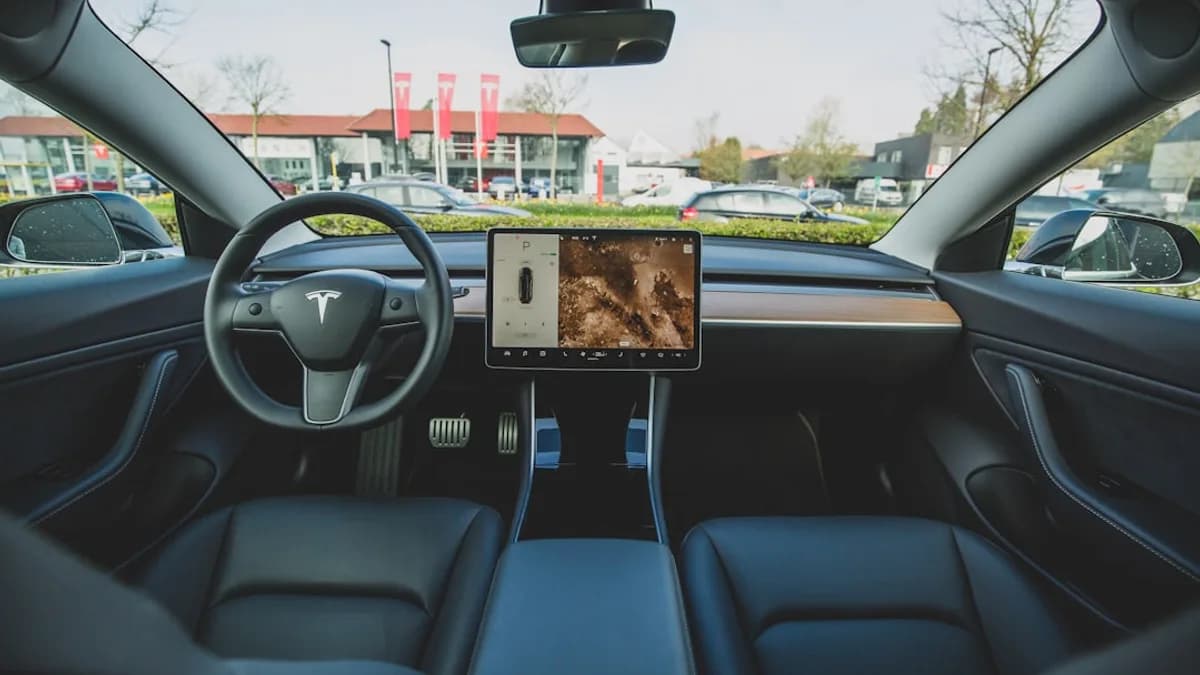
Consider a Model Y navigating a dense urban commute: pedestrians stepping off curbs, cyclists filtering between lanes, parked cars blocking sight lines, traffic lights, construction cones, and a sudden lane change by another vehicle.
A stronger onboard FSD computer could process camera inputs with more headroom, evaluate more possible paths, and run larger neural-network models without hitting the same compute limits. In plain terms, the car may have more room to decide whether to slow, hold, merge, or reroute around obstacles.
That is the promise. The caveat is just as important.
If Tesla’s deployed FSD software does not use the extra compute effectively, the owner may not see much difference at first. If local rules or Tesla’s own release policy still require supervision, the driver remains responsible regardless of the chip under the dash.
The most realistic near-term benefit is not a sudden switch to hands-off autonomy. It is optionality: more hardware capacity for future FSD updates, more memory for larger models, and more compute margin for difficult scenes. As with Samsung’s mobile silicon questions in Galaxy S27 Pro Chip Split Could Burn Global Buyers, the spec sheet only matters once it survives production and real-world use.
The next decision point for buyers: wait for AI5, or buy the Model Y that exists now?
Tesla buyers now face a familiar but sharper trade-off. Waiting for an AI5 Model Y could mean better future-proofing. It could also mean waiting through uncertain timing, unknown regional availability, possible configuration differences, and no confirmed retrofit path for older vehicles.
Notebookcheck does not report Tesla pricing, launch dates, or an official vehicle-by-vehicle rollout plan. It also does not confirm whether current AI4 owners will be offered an upgrade. That policy question may matter as much as the chip itself for existing Tesla customers.
The practical watch list is narrow:
- Tesla confirmation of which vehicle gets AI5 first.
- Samsung ramp progress on the reported 2 nm process.
- Factory build changes for Model Y and Model 3 batches.
- FSD claims tied specifically to AI5 rather than AI4.
- Retrofit policy, if Tesla addresses older vehicles.
AI5 on 2 nm silicon could become a major step in Tesla’s autonomy hardware strategy. But the useful question is not whether the chip sounds powerful. It is when Tesla can ship it at scale, which vehicles get it first, and whether the software turns that silicon into driving behavior owners can actually notice.
The Bottom Line
- AI5 could give Tesla more headroom to run larger FSD models and future autonomy features.
- A move from 5 nm to 2 nm would make the Model Y one of Tesla’s first vehicles with next-generation in-car AI hardware.
- The upgrade does not guarantee immediate FSD improvements, since software validation and rollout decisions still determine owner benefits.