MLXIO
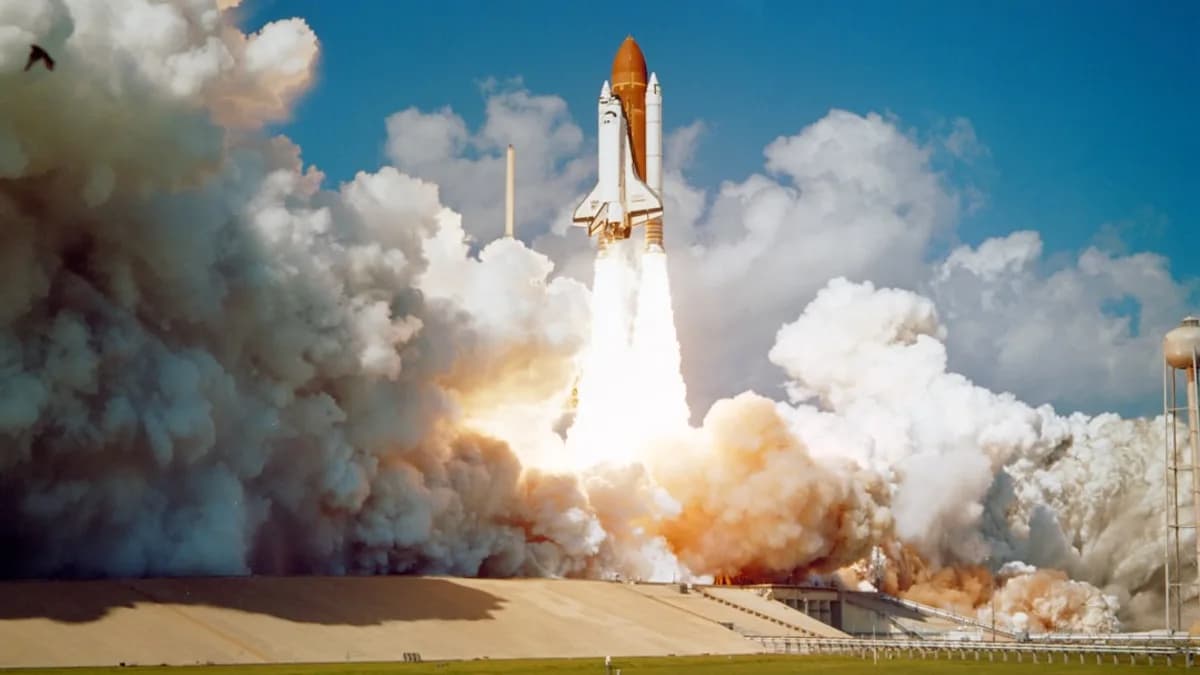
Space Shuttle Challenger launches from Kennedy Space Center
TechnologyMay 22, 2026· 6 min read· By MLXIO Insights Team

Starship V3 Reaches Space — Then SpaceX Loses Booster

Share

MLXIO Intelligence

Analysis Snapshot

57
Moderate
Confidence: LowTrend: 10Freshness: 99Source Trust: 85Factual Grounding: 88Signal Cluster: 20

Moderate MLXIO Impact based on trend velocity, freshness, source trust, and factual grounding.

Thesis

High Confidence

SpaceX’s first Starship V3 flight showed meaningful progress by reaching space and deploying test payloads, but the loss of the Super Heavy booster keeps the upgraded system short of a clean validation.

Evidence

  • Starship V3 launched from Starbase, Texas, at 5:30 p.m. local time.
  • The flight completed stage separation and the upper stage continued toward space despite losing one of six Raptor engines.
  • Starship deployed 20 Starlink satellite simulators and two modified Starlink satellites.
  • The Super Heavy booster’s engines did not properly re-ignite during the return sequence, and the booster tumbled into the Gulf of Mexico where it likely exploded.

Uncertainty

  • The precise cause of the booster loss is not yet clear from the supplied reporting.
  • It is not yet confirmed whether debris created safety issues.
  • SpaceX has not yet publicly classified the anomaly in a post-flight review.

What To Watch

  • SpaceX’s post-flight review of the Super Heavy return failure.
  • Whether Starship V3’s upper-stage engine loss requires hardware or software changes.
  • Timing and objectives of the next Starship V3 test flight.

Verified Claims

SpaceX launched the upgraded Starship V3 for the first time from Starbase, Texas.
📎 SpaceX launched the upgraded third version of its 407-foot Starship rocket for the first time from Starbase, Texas, at 5:30 p.m. local time.High
The Starship V3 test completed stage separation and the upper-stage vehicle continued toward space.
📎 A few minutes after liftoff, the upper-stage Starship vehicle separated from the Super Heavy booster and kept flying toward space.High
SpaceX lost the Super Heavy booster during its return sequence after its engines failed to properly re-ignite for the sustained burn.
📎 The booster’s engines did not properly re-ignite for the sustained burn needed for the return profile, and the vehicle tumbled into the water, where it likely exploded.High
The Starship upper stage lost one of its six Raptor engines during ascent but continued the mission.
📎 Starship lost one of its six Raptor engines while ascending, but it continued flying and remained on a trajectory that allowed the mission to proceed.High
Starship V3 deployed 20 Starlink satellite simulators and two modified Starlink satellites during the test flight.
📎 Starship deployed 20 Starlink satellite simulators plus two modified Starlink satellites designed to record footage of Starship’s exterior.High

Frequently Asked

Did Starship V3 reach space on its first launch?

The upper-stage Starship separated from Super Heavy and continued flying toward space on a trajectory SpaceX described as within analyzed bounds.

What happened to the Super Heavy booster during the Starship V3 test?

The booster began its return sequence for a simulated Gulf of Mexico landing, but its engines did not properly re-ignite for the sustained burn, and it tumbled into the water where it likely exploded.

Did Starship V3 lose an engine during flight?

Yes. The upper-stage Starship lost one of its six Raptor engines during ascent, but it continued flying and the mission proceeded.

What payloads did Starship V3 deploy during the test?

Starship deployed 20 Starlink satellite simulators and two modified Starlink satellites designed to record footage of Starship’s exterior.

Why is Starship V3 important to SpaceX?

The article says SpaceX plans to use Starship for NASA moon missions, eventual Mars missions, and deployment of more advanced Starlink satellites.

Updated on May 22, 2026

If Starship V3 can reach space while losing critical hardware on both stages, how much failure can SpaceX still count as progress?

SpaceX launched the upgraded third version of its 407-foot Starship rocket for the first time from Starbase, Texas, at 5:30 p.m. local time, but lost the Super Heavy booster during its return sequence, according to TechCrunch. The flight still hit several major test goals: stage separation, continued upper-stage flight, and deployment of Starlink test payloads.

Did Starship V3 prove enough before Super Heavy fell into the Gulf?

The first Starship V3 test was not clean. It was not a failure in the simplest sense either.

A few minutes after liftoff, the upper-stage Starship vehicle separated from the Super Heavy booster and kept flying toward space. The booster pitched away as planned and began its return toward Earth, where it was supposed to perform a simulated landing in the Gulf of Mexico.

That return sequence broke down. The booster’s engines did not properly re-ignite for the sustained burn needed for the return profile, and the vehicle tumbled into the water, where it likely exploded.

The upper stage had its own problem. Starship lost one of its six Raptor engines while ascending, but it continued flying and remained on a trajectory that allowed the mission to proceed.

“I wouldn't call it nominal orbital insertion, but we're in on a trajectory that we had analyzed, and it's within bounds,” SpaceX spokesperson Dan Huot said during live commentary, according to Space.com.

The payload phase was the cleaner part of the test. Starship deployed 20 Starlink satellite simulators plus two modified Starlink satellites designed to record footage of Starship’s exterior.

Flight element Planned test Reported result
Liftoff Launch Starship V3 from Starbase Completed at 5:30 p.m. local time
Stage separation Separate Ship from Super Heavy Completed
Booster return Simulated Gulf of Mexico landing profile Engines failed to properly re-ignite; booster likely exploded
Upper-stage ascent Continue toward space Continued despite losing one Raptor engine
Payload deployment Deploy Starlink test payloads Completed: 20 simulators plus two modified satellites

The precise cause of the booster loss is not yet clear from the supplied reporting. It is also not yet confirmed whether debris created safety issues or how SpaceX will classify the anomaly in its post-flight review.


This was the first real shakedown of Starship V3 hardware, which SpaceX has been developing for months. It also tested a new launchpad at Starbase that the company has been building for years.

The vehicle matters because SpaceX has loaded several future ambitions onto Starship. The company plans to use it for NASA missions to the moon, eventually Mars, and near-term deployment of more advanced Starlink satellites.

That last point may be the most immediate business pressure. TechCrunch reported that Starlink is the only profitable part of SpaceX’s business, making Starship’s ability to launch larger Starlink payloads a practical financial issue, not just a Mars narrative.

The new version includes third-generation Raptor engines, described in the source material as having more thrust and a simpler design. The booster is also designed for faster takeoffs and easier catches by the launch tower.

The mixed result fits SpaceX’s iterative testing model: fly, break hardware, analyze, modify. But V3 changes the stakes. This was not another flight of the older configuration; it was the first test of the version SpaceX needs for the next phase of its launch plans.

For MLXIO readers tracking how execution risk shows up across tech launches, the same scrutiny around timing and hardware readiness appears in consumer-tech coverage such as Nothing Delays CMF Phone 3 Pro, Shifts to Budget Phones First and product-development cadence stories like Johny Srouji Sparks Faster Apple Product Launches. Starship is a very different machine, but the market question is familiar: can the schedule survive first-run hardware problems?

Where did the booster loss hit SpaceX’s reuse strategy hardest?

The booster failure cuts straight into the central promise of Starship: rapid reuse.

SpaceX does not just need Starship to fly. It needs both stages to return reliably, be inspected quickly, and fly again on a cadence that makes the system useful for satellite deployment, lunar missions, and eventually deeper-space plans.

The failed sustained burn will likely draw engineering focus to several areas:

  • Engine behavior: why the booster engines did not properly re-ignite during the return sequence.
  • Guidance and control: how the booster transitioned from pitch-away to uncontrolled tumble.
  • Thermal and structural loads: whether the return environment contributed to the loss.
  • Ground and tower systems: how the new launchpad performed during its first real Starship V3 launch.
  • Landing-burn logic: whether software, timing, or propulsion conditions drove the failed return profile.

SpaceX had already faced delays getting V3 into the air. A prior launch attempt was scrubbed after issues with a launch tower component triggered holds, leaving the company to wait for another window before Friday’s flight.

That makes Friday’s launch both a breakthrough and a warning. Starship V3 flew, but the recovery system still has to prove it can work with the upgraded hardware.

How will SpaceX’s IPO timing change the way future Starship tests are judged?

The test landed at a sensitive moment for SpaceX as a company.

Supplementary reporting from NBC News said Musk has confirmed plans to take SpaceX public, while also raising questions about how voting control could be structured. That does not change the engineering facts of this launch, but it may change the audience watching future Starship tests.

That means upcoming flights could be judged less as isolated engineering milestones and more as events tied to a company preparing for public-market scrutiny.

The immediate next steps are likely technical before they are financial. SpaceX will need to review telemetry, confirm how the upper stage performed after the engine loss, assess the new launchpad, and determine what changes are required before the next V3 attempt.

Regulators may also need to review the booster loss before another launch license or modification proceeds, depending on safety findings and the final anomaly assessment.

The near-term watch items are clear: SpaceX’s post-flight statement, any FAA update, confirmation of Starship’s final flight outcome toward the Indian Ocean, and the timing of the next V3 launch window. A successful V3 campaign would move Starship closer to operational use; another booster loss would keep the hardest question on the table — whether SpaceX can make the most powerful rocket ever built reusable on the schedule its ambitions now require.

The Bottom Line

  • Starship V3 achieved major test milestones despite losing critical hardware on both stages.
  • The booster failure shows SpaceX still has major recovery and reuse challenges to solve.
  • Successful payload deployment moves Starship closer to supporting future Starlink and deep-space missions.

Starship V3 Test Outcomes by Stage

StageKey Test ObjectiveOutcome
Super Heavy boosterReturn sequence with simulated Gulf of Mexico landingEngines did not properly re-ignite; booster tumbled into the water and likely exploded
Starship upper stageContinue flight after stage separationReached planned trajectory within analyzed bounds despite losing 1 of 6 Raptor engines
Payload deploymentDeploy Starlink test payloadsDeployed 20 Starlink satellite simulators and 2 modified Starlink satellites

Starlink Test Payloads Deployed

Satellite simulators
satellites20
Modified satellites
satellites2
MLXIO

Written by

MLXIO Insights Team

Algorithmic Research & Human Oversight

Powered by advanced algorithmic research and perfected by human oversight. The Insights Team delivers highly structured, cross-verified analysis on emerging tech trends and digital shifts, filtering out the fluff to give you high-fidelity value.

Related Articles

white and red flag under blue sky during daytime
TechnologyMay 22, 2026

Netflix Grabs F1 Canadian Grand Prix in Apple TV Twist

Netflix gets a one-race F1 simulcast in the US, giving Canadian Grand Prix viewers a rare choice beyond Apple TV.

8 min read

black metal tower under blue sky
TechnologyMay 22, 2026

$99 UniFi 5G Backup Makes Internet Outages Expensive

Ubiquiti’s $99 UniFi 5G Backup turns cellular failover into a cheap add-on for UniFi sites.

7 min read

a black tablet sitting on top of a yellow table
TechnologyMay 21, 2026

Huawei Sparks Buzz Revealing Kirin T93 Pro in MatePad Pro Max

Huawei names the Kirin T93 Pro chipset powering the MatePad Pro Max, breaking years of silence and signaling a strategic shift amid US sanctions.

5 min read

Teacher guiding students on computer in classroom.
TechnologyMay 20, 2026

Kansas City Ditches 30,000 PCs for Apple in Bold School Tech Shift

Kansas City Public Schools will replace 30,000 Windows PCs and Chromebooks with Apple devices, aiming for a unified tech ecosystem across the district.

4 min read

Young woman talking on a cell phone at home.
TechnologyMay 20, 2026

AT&T Sparks Backlash with New $2.63 Fee for Prepaid Users

AT&T adds a $2.63 monthly administrative fee to prepaid plans, ending prepaid customers' exemption from recurring surcharges and raising their bills.

4 min read

cable network
AI / MLMay 23, 2026

$2.8B Gas Turbine Bet Escalates xAI's Data Center Fight

xAI plans $2.8B in gas turbines while fighting a lawsuit over generators at its Memphis AI data center.

7 min read

people walking on sidewalk near white concrete building during night time
CybersecurityMay 22, 2026

Leaked AWS GovCloud Keys Drag CISA Into Congress Fight

CISA faces congressional scrutiny after a contractor exposed agency credentials and AWS GovCloud keys on GitHub.

7 min read

unpaired red Nike sneaker
BusinessMay 22, 2026

30% Nike Promo Codes Expose the Sneaker Price Fight

Nike’s May 2026 deals are a stack, not a single code: APP15, 10% verified perks, free shipping and markdowns up to 33%.

7 min read

A close up of a cell phone on a table
FinanceMay 23, 2026

GameStop’s 2.5B Share Bet Puts eBay and GME in Play

GameStop wants a 2.5B-share ceiling, giving it far more acquisition firepower as its eBay stake raises GME dilution fears.

8 min read

cable network
AI / MLMay 23, 2026

6.4× Claim Puts Nemotron-Labs Diffusion in AI Fast Lane

NVIDIA says Nemotron-Labs Diffusion targets the one-token bottleneck with parallel generation for faster AI apps.

7 min read

Stay ahead of the curve

Get a weekly digest of the most important tech, AI, and finance news — curated by AI, reviewed by humans.

No spam. Unsubscribe anytime.