Updated: Refreshed with added sanctions-era context, Huawei’s recent Kirin comeback in phones, and clearer caveats around what Huawei has — and has not — disclosed about the Kirin T93 Pro.
Huawei Breaks Silence: Kirin T93 Pro Powers MatePad Pro Max
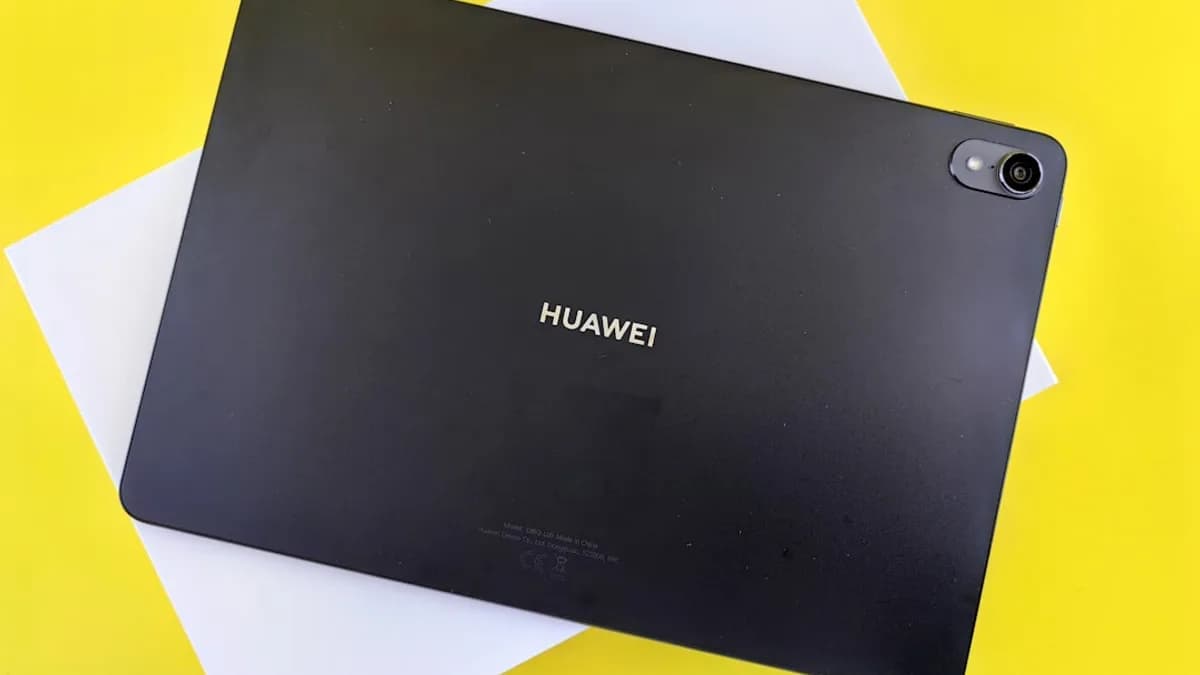
Huawei has taken an unusually direct step for a post-sanctions product launch: it publicly named the chipset inside its latest flagship tablet. At a HarmonyOS event in China, the company confirmed that the MatePad Pro Max runs on the Kirin T93 Pro SoC. That detail was first highlighted by GSMArena, and it matters because Huawei has often avoided full chipset transparency since U.S. trade restrictions disrupted its access to advanced semiconductor manufacturing and components.
This is not a full technical disclosure. Huawei named the silicon, but it has not released a complete public spec sheet with CPU configuration, GPU details, process node, modem information, or benchmark targets. Still, after years of cautious or incomplete processor disclosures, even confirming the chip’s name is enough to spark industry attention. For once, the question “what’s under the hood?” has an official answer — even if the more important follow-up questions remain open.
Why the Kirin T93 Pro Name Reveal Actually Matters
For Huawei, chip details have been a sensitive subject since the company was added to the U.S. Entity List in 2019, followed by tighter export controls that limited access to advanced foundry capacity and key semiconductor technologies. Before that, Huawei and its HiSilicon division regularly promoted Kirin chips as proof that the company could compete with Apple, Qualcomm, and Samsung on in-house silicon. After the restrictions, Huawei’s public messaging changed. Devices still launched, but processor details were often vague, delayed, or absent.
The Kirin T93 Pro reveal is therefore a strategic signal. Huawei appears to want the market to know that the MatePad Pro Max is not running an anonymous off-the-shelf chip or an older platform hidden behind branding silence. The company is attaching a Kirin name to a flagship tablet again, which helps reinforce the narrative that its domestic hardware ecosystem is still moving forward.
That said, the announcement is carefully controlled. Huawei has shown a willingness to name the chip, but not enough to invite easy comparisons against Apple’s M-series iPads, Qualcomm Snapdragon-powered tablets, or MediaTek Dimensity-based Android competitors. MLXIO analysis: this is transparency with guardrails — enough to create confidence and buzz, but not enough to expose the chip to detailed public scrutiny.
The Kirin T93 Pro: Known Unknowns
Here’s what is public: the MatePad Pro Max uses the Kirin T93 Pro. Beyond that, Huawei has not provided the kind of technical breakdown buyers and analysts would normally expect from a flagship SoC launch.
There is no official confirmation of CPU core layout, clock speeds, GPU architecture, NPU capabilities, memory support, modem integration, or manufacturing process. Huawei has also not published direct performance comparisons or efficiency claims. That leaves several key questions unanswered: Is the T93 Pro a new tablet-focused Kirin design? Is it related to Huawei’s recent phone chipsets, such as the Kirin 9000S and later Kirin 9010-class platforms? Is it tuned primarily for HarmonyOS multitasking, stylus latency, media creation, or battery life?
Without teardown analysis, sustained performance testing, or third-party benchmarks, the T93 Pro remains more of a market signal than a fully understood semiconductor product. MLXIO analysis: the chip name itself is the announcement. The specs are still the story Huawei is choosing not to tell.
Chipset Development in the Sanctions Era
Huawei’s silicon strategy has been reshaped by U.S. restrictions over the past several years. The company’s HiSilicon unit was once one of the most visible examples of China’s ability to design premium mobile chips. Then came restrictions that cut Huawei off from many advanced chipmaking options, including access to leading-edge manufacturing through TSMC.
The Mate 60 Pro’s arrival with the Kirin 9000S in 2023 marked a major turning point, showing that Huawei could still ship a domestically backed high-end smartphone platform despite sanctions. Later devices continued that theme, though often with limited official detail about the underlying silicon. The Kirin T93 Pro now extends that broader comeback narrative into the tablet category.
Still, Huawei’s situation remains complicated. Designing competitive chips is only one part of the challenge; manufacturing them at scale, improving power efficiency, securing advanced packaging, and matching global rivals on process technology are separate hurdles. Naming the T93 Pro does not prove Huawei has solved all of those issues. It does show, however, that the company is increasingly comfortable putting the Kirin brand back into the spotlight.
Industry and Consumer Reactions: Early Signals
Early reactions have centered less on the name itself and more on what Huawei did not reveal. For consumers, “Kirin T93 Pro” sounds like a premium in-house chip, but the label is only useful if the MatePad Pro Max delivers strong performance, battery life, thermals, and app compatibility in real-world use. For analysts, the missing technical data makes it difficult to judge where the tablet sits against iPad Pro models, Samsung’s Galaxy Tab Ultra line, and other high-end Android or HarmonyOS devices.
The muted but curious response is understandable. Huawei has a strong domestic audience and a loyal user base, especially in China, but global tech watchers now tend to wait for teardowns and benchmarks before drawing conclusions about Kirin hardware. MLXIO inference: the Kirin T93 Pro name will help Huawei’s marketing, but credibility will depend on independent testing. If the tablet performs well under sustained workloads — video editing, multitasking, gaming, AI features, and stylus-heavy productivity — the chip branding will carry more weight.
Comparing Today’s Transparency to Huawei’s Past Playbook
Before the sanctions era, Huawei treated Kirin chips as a major selling point. The company frequently promoted CPU performance, AI processing, photography pipelines, and modem capabilities. After sanctions intensified, Huawei became far more guarded. In some cases, device spec pages avoided processor details entirely or offered only broad performance claims.
The MatePad Pro Max’s explicit Kirin T93 Pro confirmation is a break from the most secretive version of that playbook, but it is not a return to full pre-2019 transparency. Huawei is now selectively disclosing what benefits its product story while withholding details that could expose manufacturing limits or invite direct comparison with rivals on advanced process nodes.
MLXIO analysis: this looks like a trial balloon for controlled openness. If the market response is positive and no supply chain sensitivities emerge, Huawei may continue naming more Kirin chips across tablets, phones, wearables, and PCs. But unless the company starts publishing real specifications, its silicon messaging will remain more symbolic than technical.
What Huawei’s Move Means for Tablets and Chip Sourcing
A named Kirin SoC in a flagship tablet sends a clear message to consumers, developers, and domestic suppliers: Huawei wants to be seen as a serious in-house silicon player again. That matters in China’s high-end tablet market, where ecosystem integration is becoming just as important as raw hardware specifications. HarmonyOS, Huawei’s stylus and keyboard accessories, cross-device continuity, and productivity features all benefit when the company can claim tighter hardware-software optimization.
For competitors, the move reinforces how important chip sourcing has become as a marketing issue. Apple already uses custom silicon as a core iPad advantage. Samsung, Lenovo, Xiaomi, and Honor rely on a mix of Qualcomm and MediaTek platforms. Huawei is positioning Kirin as part of a more self-reliant stack, even if outside observers still lack the technical details needed to rank it precisely.
MLXIO inference: if the Kirin T93 Pro proves competitive, it could strengthen Huawei’s tablet story in China and encourage more domestic component alignment around HarmonyOS devices. If performance lags, the chip name alone will not be enough.
What to Watch: Will Huawei Double Down on Openness?
The next signals will come from three places: Huawei’s own spec updates, independent benchmarks, and teardown analysis. If Huawei releases more details about the Kirin T93 Pro — CPU layout, GPU, NPU, process node, memory bandwidth, or efficiency claims — that would suggest a genuine shift toward transparency. If not, the company is likely using the chip name primarily as a branding tool.
Future HarmonyOS events will also be important. If Huawei continues naming Kirin chips across new tablets, phones, and laptops, the T93 Pro reveal may be part of a broader communications reset. If this remains an isolated disclosure, it will look more like a tactical move designed to generate attention for the MatePad Pro Max specifically.
For now, the safest conclusion is that Huawei has reopened the door to Kirin branding without fully reopening the spec sheet. That is meaningful — but incomplete.
Why It Matters
- Huawei’s confirmation of the Kirin T93 Pro marks a notable moment of chip transparency after years of guarded silicon disclosures.
- The move strengthens Huawei’s message that it remains active in in-house chip development despite ongoing U.S. restrictions.
- Key technical details are still missing, so performance claims must wait for benchmarks, teardowns, and real-world testing.
- The announcement could help Huawei reinforce its HarmonyOS tablet ecosystem and broader push for semiconductor independence.