Six microphones, Bluetooth 6.1, IP57 earbuds, and a claimed 70% distortion cut are the real story behind Shokz’s OpenDots 2 launch — not the fact that the earbuds look almost unchanged.
Shokz has followed the OpenDots One with a same-price successor at $199.95, a positioning that now sits above the OpenDots Air at $70 less, according to Notebookcheck. MLXIO analysis: that pricing choice matters because Shokz is not just polishing a niche fitness gadget. It is trying to make clip-on open-ear earbuds feel like a credible daily alternative to sealed wireless earbuds.
Shokz OpenDots 2 turns clip-on earbuds into a mainstream open-ear bet
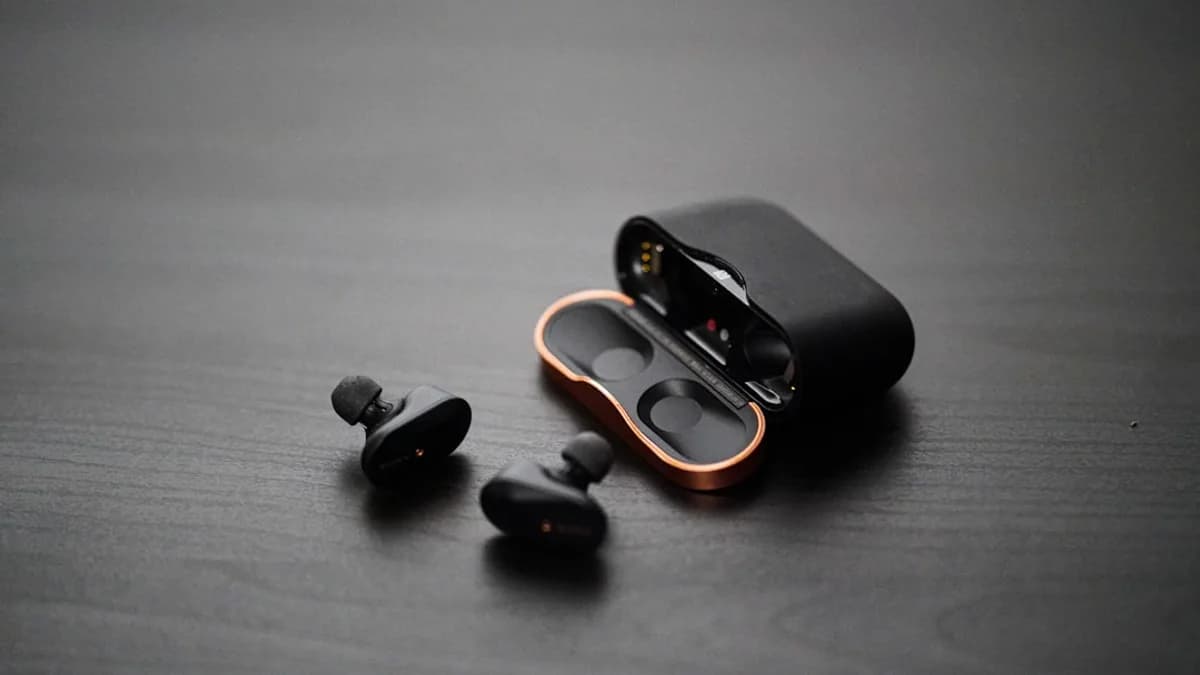
The OpenDots 2 keep the same clip-on, open-ear shape as the OpenDots One. The case also looks familiar. Shokz is clearly not trying to reset the design language.
The change is inside the product. The company has targeted the three weak spots that usually define open-ear audio: sound weight, voice pickup, and everyday durability.
“Light clip. Incredible sound.”
That official Shokz pitch is short, but it captures the strategy. The company wants buyers to see open-ear comfort as the headline feature, not a compromise they tolerate because they dislike ear tips.
The tension is obvious. Open-ear earbuds do not seal the canal, so they usually cannot isolate like in-ear ANC models. That trade-off is also the point: users can keep hearing traffic, coworkers, or announcements while listening.
This makes OpenDots 2 less of a pure audio product and more of a wearable communication device. That separates it from room-audio hardware we have covered, such as £159 Xiaomi Soundbar Drops 300W Sub Into UK Fight and £79 Xiaomi Desktop Speaker Pro Ditches the Cheap Upgrade, where the pitch is output power rather than all-day wear.
Bluetooth 6.1, six microphones, faster charging, same $199.95 price
The spec sheet is unusually aggressive for a same-price refresh. OpenDots 2 add Bluetooth 6.1, Bluetooth MultiPoint, EQ customization, and a six-microphone system with three microphones per earbud.
Two of those microphones are bone-conduction mics, which work with air-conduction microphones and AI noise reduction. The goal is more precise voice pickup during calls. In practical terms, Shokz is prioritizing speech detection as much as music playback.
The audio system also changes. OpenDots 2 use Shokz Bassphere 2.0, where dual 11.8mm drivers operate as one 16mm driver. Shokz says the redesigned diaphragm cuts distortion by 70%. The earbuds also carry upgraded Dolby Audio.
Battery life has not moved. Shokz still claims up to 10 hours on a charge and 40 hours with the case. The case supports USB-C wired charging and Qi wireless charging, while a 5-minute charge is rated for up to 2 hours of use.
Durability improves in a more concrete way. The earbuds are rated IP57, while the charging case is now IP54 for dust and water resistance. That matters for a product designed to sit exposed around the ear rather than tucked inside it.
The OpenDots 2 spec sheet shows where Shokz thinks open-ear earbuds fail
The upgrade pattern is revealing. Shokz did not change the form factor because fit was already the bet. It changed the parts that make open-ear products easier to dismiss.
| Product | Price | Battery rating | Charging case | Notable trade-off |
|---|---|---|---|---|
| OpenDots 2 | $199.95 | 10 hours / 40 hours with case | USB-C + Qi wireless | Premium clip-on model with Dolby Audio and six mics |
| OpenDots Air | $129.95 | Up to 9 hours / 36 hours with case | USB-C | Lower-cost model without the same premium feature set |
| OpenDots One | $199.95 | Source says prior price was unchanged | USB-C | Replaced by a more capable same-price successor |
The six-mic setup is the clearest signal. Open-ear earbuds are often used in motion: walking, commuting, training, moving between rooms, joining calls from a laptop. Shokz appears to be treating call quality as the feature that can make or break the category.
Bluetooth 6.1 is more complicated. It gives Shokz a future-facing spec, but real consumer benefit will depend on implementation, paired devices, codec behavior, stability, and power management. A newer Bluetooth number alone does not prove better daily performance.
Reviewers should test the boring things first: voice samples in wind, multipoint switching between phone and laptop, leakage in quiet rooms, real battery drain, and comfort after several hours. Those tests will say more than the launch sheet.
Open-ear audio moves beyond the workout lane
Shokz has credibility here because its brand is already tied to bone-conduction and open-ear listening. Its own lineup includes sports headphones, workout and lifestyle earbuds, and communication headsets.
That history gives OpenDots 2 a clearer reason to exist than a random earbud variant. Shokz is extending a familiar idea — awareness plus comfort — into a smaller clip-on design.
The open-ear bargain remains the same:
- Comfort: No ear tip pressing into the canal.
- Awareness: Users can hear surrounding sound.
- Calls: Microphone processing becomes critical because the product may be worn for work.
- Isolation: Sealed ANC earbuds still have the advantage in loud environments.
- Bass: Open designs must work harder to deliver low-end impact.
MLXIO analysis: OpenDots 2 does not need to beat premium ANC earbuds at silence. It needs to be good enough at music while beating them on wearability, awareness, and call comfort.
Runners, remote workers, audiophiles, and rivals will read this product differently
Runners and cyclists are the easiest audience to understand. Open-ear awareness has a practical safety appeal, and the IP57 earbud rating gives Shokz a stronger outdoor-use story than a fashion-first clip-on.
Remote workers may care less about Dolby Audio and more about the six microphones. If the bone-conduction mics help isolate speech, OpenDots 2 could become a more plausible all-day call device.
Audiophiles and frequent travelers will be harder to convince. Open-ear designs generally cannot match sealed earbuds for passive isolation, bass depth, or blocking cabin and train noise. That is not a failure; it is the design trade.
Rivals should notice the price. Shokz is adding hardware, connectivity, and durability without lifting the $199.95 tag. If buyers respond, the pressure will be on other open-ear brands to justify their feature gaps or pricing.
OpenDots 2 makes comfort a serious alternative to ANC
For buyers, the choice is no longer just “best ANC for the money.” It is about how the earbuds will be used.
OpenDots 2 makes sense for users who dislike silicone tips, need environmental awareness, switch between devices, or spend long stretches on calls. Sealed ANC earbuds still look better for flights, subways, and immersive listening.
The same-price upgrade also makes the OpenDots One harder to recommend unless it gets discounted. On paper, OpenDots 2 offers more microphones, newer Bluetooth, stronger water resistance, and improved audio claims at the same list price.
The forward-looking question is whether Shokz can prove the claims in messy real life. Evidence that would support the thesis: clearer calls in wind, stable multipoint, limited leakage, and sound that feels full enough without a seal. Evidence that would weaken it: thin bass, unreliable voice pickup, or Bluetooth 6.1 behaving like a spec badge rather than a user benefit.
OpenDots 2 may not replace premium ANC earbuds. It could define a parallel lane where awareness, comfort, and communication matter more than silence.
The Bottom Line
- Shokz is keeping the $199.95 price while upgrading core features, making the OpenDots 2 a stronger value proposition.
- Bluetooth 6.1, six microphones, and bone-conduction mic support target common open-ear weaknesses around calls and reliability.
- The launch signals a push to make clip-on open-ear earbuds a mainstream daily alternative to sealed wireless earbuds.