Amazon is taking Ring into doors where renters can’t drill, wire, or permanently alter anything — and that makes the new Ring Peephole Camera 2K more interesting than another resolution bump.
The device turns an existing peephole into a 2K security camera without new holes or cables, with installation taking around ten minutes, according to Notebookcheck. It launches alongside the second-generation Ring Outdoor Cam, a more conventional exterior camera aimed at yards, driveways, balconies, and other perimeter spaces.
According to the manufacturer, the Ring Peephole Camera 2K installs into an existing door peephole “without requiring holes to be drilled or cables to be installed.”
That is the real story. Ring is not just improving camera specs. It is designing around the physical and contractual limits of modern housing.
Ring’s peephole design targets the door Amazon could not easily reach
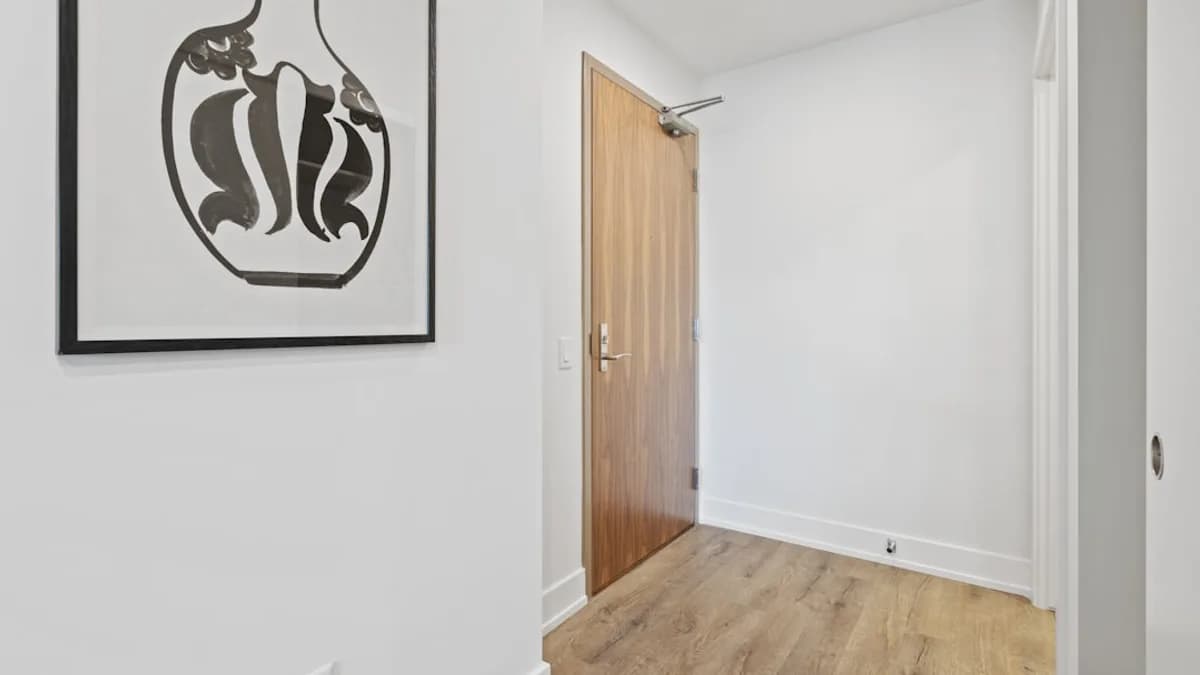
The Ring Peephole Camera 2K is built for a specific problem: many apartment doors already have peepholes, but many renters cannot install a standard video doorbell without changing the doorframe, running wires, or asking for permission.
This camera sidesteps that by replacing the existing peephole. The exterior module has a speckled gray finish, while the interior module sits inside the home. Power comes from a removable Quick Release Battery Pack, with support for the Ultra version of that battery.
MLXIO analysis: the commercial logic is clear. A smart camera that feels temporary, removable, and low-effort can appeal to households that would avoid a wired or drilled product. That does not prove landlords will approve it in every building. It does mean Ring has reduced one of the most obvious barriers: physical modification.
This follows a broader hardware pattern we have tracked at MLXIO, where placement constraints matter as much as specs. A different version of that idea showed up in Xiaomi Solar Security Camera Ditches Wi-Fi for 4G, where connectivity, not drilling, was the limiting factor.
2K video helps, but the no-drill install is the product
The Peephole Camera 2K uses Ring Retinal 2K resolution with 6x zoom and a square 140-degree by 140-degree field of view. Ring says that gives a head-to-toe view, which also helps show packages left near the floor.
The square framing is more important than it sounds. Many entry cameras prioritize width. This one is built for vertical context: a visitor’s face, body, and anything sitting below the door line.
Core specs include:
- Resolution: Ring Retinal 2K with 6x zoom
- Field of view: 140 degrees x 140 degrees
- Power: Removable Quick Release Battery Pack
- Installation: Existing peephole, no drilling, around 10 minutes
- Dimensions: Interior module 2.07 x 5.08 x 1.20 inches; exterior module 2.20 x 1.64 x 5.55 inches
- Operating range: -4.9°F to 119.3°F
- Connectivity: Wi-Fi 4 on 2.4GHz, plus Bluetooth Low Energy
The resolution upgrade matters. But the convenience matters more. A 2K peephole camera that requires drilling would compete like any other security camera. A 2K peephole camera that uses hardware already in the door becomes a different proposition.
Outdoor Cam 2K extends Ring beyond the entryway
The second-generation Ring Outdoor Cam is the more traditional product in this launch. It is designed for yards, driveways, balconies, and exterior approaches where a peephole camera cannot see.
Including its stand, the Outdoor Cam measures 2.76 x 2.76 x 5.39 inches and comes in black and white. It has a 140-degree horizontal and 85-degree vertical field of view, plus 2K resolution, color night vision, two-way talk with active noise cancellation, and a siren that can be triggered remotely through the app.
Its night vision behavior is more nuanced than a simple spec line. Ring says the camera reproduces natural colors in low light, then switches automatically to a high-contrast black-and-white mode in darkness.
| Feature | Ring Peephole Camera 2K | Ring Outdoor Cam 2nd Gen |
|---|---|---|
| Primary use | Existing door peephole | Yards, driveways, balconies |
| Resolution | 2K | 2K |
| Field of view | 140° x 140° | 140° horizontal, 85° vertical |
| Power | Quick Release Battery Pack | Source material does not specify runtime |
| Night vision | Not specified in Notebookcheck source | Color night vision, then B&W in darkness |
| Siren | Not specified in Notebookcheck source | Remote-activated siren |
| Weather resistance | Operating range listed | Weather-resistant, -4°F to 122°F |
MLXIO analysis: Amazon is splitting the use cases cleanly. The peephole model is about entry monitoring with minimal alteration. The Outdoor Cam is about broader perimeter coverage where placement flexibility matters more than invisibility.
The numbers reveal what Ring is — and is not — disclosing
Amazon’s two new Ring cameras start at $99 in the US, according to the supplied source. Both connect over the 2.4GHz band using Wi-Fi 4 and Bluetooth Low Energy. For smooth Outdoor Cam streaming, the manufacturer recommends at least 5Mbps upload speed.
Both models also get one year of theft protection and at least four years of software security updates from the start of sales.
The battery setup is still a practical consideration. The Peephole Camera 2K uses a removable Quick Release Battery Pack, and the Outdoor Cam is positioned as flexible exterior hardware. That matters because flexible camera placement can shift some effort from installation to maintenance. Buyers avoid wiring, but they still need to think about charging access, placement, and whether a spare battery makes sense.
There is also an ownership-cost gap in the available facts. The source mentions configurable custom motion zones and privacy zones in the app, but it does not provide subscription pricing or a full breakdown of which features require paid plans. TechRadar’s related coverage says Ring Protect can add intelligent alerts and the ability to scroll back through footage, but pricing details are not in the supplied material.
MLXIO has seen similar buyer math in connected hardware: small upfront price differences can change the whole value case, as in €30 Gap Turns Xiaomi Washer-Dryer Into Europe’s Smart Bet. For Ring, the comparable question is simpler: what does the buyer get at $99, and what becomes more useful only after ongoing service costs?
The same camera looks different to renters, homeowners, and neighbors
For renters, the Peephole Camera 2K solves the obvious hardware problem. No drilling. No wiring. No permanent doorframe change described in the source. If building rules allow peephole replacement, the camera is easier to justify than a mounted device.
For homeowners, the Outdoor Cam is the more relevant addition. It extends monitoring away from the front door to driveways, balconies, yards, and side approaches. The remote siren and low-light behavior make it a more active exterior camera than a passive peephole replacement.
Neighbors and building managers may see it differently. Even a no-drill camera can face questions if it records shared hallways, adjacent doors, or common areas. The source confirms that privacy zones can be configured in the app. That feature becomes especially important in apartments, where the camera’s view may include more than the user’s own doorway.
MLXIO analysis: Ring’s renter-friendly design reduces installation friction, but it does not remove the social friction around residential recording. The product may be physically easier to install than earlier door cameras. Placement still matters.
Ring’s next test is trust, not resolution
The Ring Peephole Camera 2K and Outdoor Cam show Amazon pushing security cameras into more specific living situations: one for the door you cannot modify, one for the outdoor space you want to watch.
The evidence to watch next is practical, not flashy. Does the peephole model fit enough apartment doors? Do users accept battery charging as the trade-off for no wiring? Do privacy zones prove easy enough for shared spaces? Does the Outdoor Cam’s 5Mbps upload recommendation become a real constraint for households with weaker connections?
If Ring’s bet works, the winning feature will not be 2K alone. It will be the absence of friction: no drilling at the door, flexible placement outside, and enough software support to keep both cameras viable for at least four years. If that trade-off feels too maintenance-heavy or too intrusive in shared buildings, the hardware upgrade will matter less than Amazon hopes.
Key Takeaways
- Ring is targeting renters who often cannot drill, wire, or permanently modify their doors.
- The peephole-based design lowers installation friction by using existing door hardware.
- Amazon is expanding Ring beyond traditional video doorbells into more housing-friendly security devices.