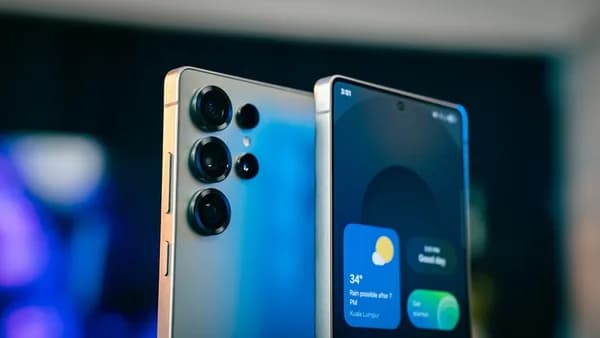
The Poco X8 Pro Max gets the hard part right — an 8,500 mAh battery that nearly reaches 20 hours in a Wi-Fi runtime test — and still fails the all-rounder test. That matters most for buyers who see “Pro Max” and expect more than stamina and speed.
According to Notebookcheck, Poco’s new X-series flagship brings a real SoC upgrade, a bright 6.83-inch AMOLED panel, and premium-feeling construction. It also brings weak cameras, muffled speakers, USB 2.0, no 6 GHz Wi-Fi, pre-installed ads in HyperOS, and only a twelve-month warranty. My view: this is not a bad phone. It is a badly named one.
Buyers get a battery monster, not a complete flagship
The headline spec is obvious. 8,500 mAh is the Poco X8 Pro Max’s best argument, and it is a persuasive one. Notebookcheck recorded nearly 20 hours in its Wi-Fi test, while 100-watt charging fills the phone in under an hour. For heavy users, that changes the day. Streaming, gaming, maps, travel, long commutes — fewer battery rituals, less charger anxiety.
So who should actually care about this phone?
The answer is not “everyone who wants a flagship” like the Oppo Find X9s Pro. It is the buyer who ranks endurance and raw speed above camera flexibility, wireless charging, clean software, and refined audio. That is a legitimate preference. Poco has long traded on performance-per-dollar, and the X8 Pro Max appears built for people who want the biggest battery and a fast chip before anything else.
But battery life is not the same as a premium daily experience. A phone is not used once in a benchmark run. It is unlocked hundreds of times, used for calls, photos, videos, music, payments, messaging, maps, and late-night scrolling. Endurance solves one problem. It does not automatically solve the rest.
“Everything you need, nothing you don’t”
That POCO store-style pitch sounds neat. Notebookcheck’s review suggests the reality is messier: buyers get a lot they want, but also several things they should not have to excuse in a phone wearing this name.
Poco’s engineers won the chip upgrade, then lost the balance test
The MediaTek Dimensity 9500s is a real step up from the X7 Pro generation. Notebookcheck credits it with high CPU and NPU performance, which should help with multitasking, app launches, AI-heavy features, and gaming. That part of the X8 Pro Max story works.
Where it weakens is sustained behavior. Under longer load, the chip throttles noticeably, and Notebookcheck observed occasional dropped frames during gaming. That does not erase the performance story, but it dents the promise. A gaming-friendly phone has to stay fast after the first few minutes, not just look strong at the start.
Can Poco call this “Pro Max” if the performance ceiling drops under pressure?
The storage story has a similar shape. The phone uses UFS 4.1, which sounds excellent on paper, but limited memory bandwidth keeps it from reaching its potential. That is exactly the kind of spec-sheet trap Poco should avoid. Buyers see the label. Reviewers test the implementation. The implementation is what matters.
| Area | Poco X8 Pro Max strength | Compromise that changes the experience |
|---|---|---|
| Battery | 8,500 mAh, nearly 20 hours Wi-Fi runtime | No wireless charging |
| Charging | 100-watt charging, under one hour | Wired-only convenience |
| Chip | Strong CPU and NPU performance | Noticeable throttling under sustained load |
| Storage | UFS 4.1 on paper | Held back by limited memory bandwidth |
| Connectivity | Modern flagship-style positioning | USB 2.0, no 6 GHz Wi-Fi |
This is the central problem. Poco did not build a weak device. It built a device whose best parts are easy to market and whose weaker parts show up after purchase.
End users will feel the compromises in cameras, sound, and software
The camera system is where the Poco X8 Pro Max most clearly undercuts its own branding. Notebookcheck calls it the phone’s Achilles’ heel, citing no optical zoom, a weak ultra-wide-angle lens prone to aberrations, and an over-sharpening front camera.
Why does that matter if the buyer mainly wants speed?
Because camera reliability is no longer a luxury feature. It is daily infrastructure. A phone that performs well in games but disappoints when taking portraits, travel shots, group photos, or quick front-camera images is not a complete “Pro Max” device. It is a specialist with a fancy badge.
The speakers add another daily-use penalty. Despite their size, Notebookcheck found them muffled and prone to distortion. That affects calls on speaker, videos, games, podcasts, and casual music. Audio flaws are not as photogenic as benchmark charts, but they become annoying fast.
Then there is HyperOS with pre-installed ads. A fast chip can make apps open quickly, but it cannot make intrusive software feel premium. This is where the cost of compromise becomes psychological. If the phone feels cluttered or pushy, the hardware feels less expensive than it is.
Practical buyer read:
- Choose it: If battery life and raw performance sit above everything else.
- Pause: If camera quality, clean software, and speaker quality matter every day.
- Avoid assumptions: “Pro Max” does not mean complete.
- Check warranty needs: Notebookcheck reports only twelve months of coverage.
Rivals do not need a bigger battery if Poco leaves obvious gaps
The strongest defense of the Poco X8 Pro Max is also the reason it exists. Many buyers do not care about optical zoom. They do not use wireless charging. They will tolerate ads if the price is low enough. For gamers, students, commuters, and power users, this phone could be rational at its reduced price.
But what opening does Poco leave for competing phones?
It gives rivals a simple target: match enough performance, then beat Poco on polish. They do not need an 8,500 mAh cell if they offer better cameras, cleaner software, stronger speakers, faster external connectivity, or longer support. Notebookcheck also notes that the Dimensity 9500s cannot keep pace with current Snapdragon flagships, so even Poco’s performance argument has a ceiling.
That does not make the X8 Pro Max irrelevant. It makes it narrower. It is best understood as a performance-and-battery specialist, not a full flagship killer.
For readers tracking battery-first phones as a buying category, our coverage of the 8,000mAh OnePlus Turbo 6X Pro and 7,500 mAh Honor X7e shows why big cells keep dominating spec-sheet conversations. The lesson here is sharper: battery capacity can win attention, but it cannot hide every weakness.
The market signal is simple: stop rewarding inflated names
The 6.83-inch AMOLED display is one of the X8 Pro Max’s better pieces. Notebookcheck reports peak brightness above 3,500 cd/m² and a PWM frequency exceeding 3,000 Hz, both impressive. The caveat is that the panel likely uses temporal dithering — rapidly alternating colors to simulate intermediate shades — which can work against the eye-comfort story.
So what should Poco fix before the next X-series “Max” device?
Not the headline. The foundation. Keep the battery. Keep the fast charging. Keep the strong SoC. But stop shipping a phone with weak cameras, distorted audio, USB 2.0, no 6 GHz Wi-Fi, software ads, and a short warranty while asking buyers to treat it as a complete premium alternative.
To Poco’s credit, the chassis sounds convincing: aluminum frame, IP68 certification, and solid build quality. That makes the rest more frustrating. The company clearly knows how to make parts of the phone feel premium. It now needs to make the whole experience match the label.
The practical takeaway is blunt: buy the Poco X8 Pro Max only if you know exactly which compromises you are accepting. If you want a battery tank with strong peak performance, it has a case. If you want a true all-rounder, the name is doing more work than the phone.
Big batteries and fast chips win the spec-sheet argument. Balanced phones win loyalty.
The Bottom Line
- The Poco X8 Pro Max delivers standout endurance with an 8,500 mAh battery and nearly 20 hours of Wi-Fi runtime.
- Its weak cameras, muffled speakers, USB 2.0, missing 6 GHz Wi-Fi, ads in HyperOS, and 12-month warranty undermine the “Pro Max” positioning.
- It is best suited to buyers who prioritize battery life and performance over a polished flagship experience.