A 6.32-inch compact phone with 20x zoom, an XXL battery, and IP69 protection should be an easy flagship win — but the Oppo Find X9s Pro instead shows how unforgiving the premium smartphone bar has become.
That is the tension in Notebookcheck’s review. Oppo’s mini flagship beats high-profile Apple and Samsung rivals in the areas buyers notice most — camera and endurance — yet stumbles on connectivity, USB performance, GPS reliability, and software behavior. The result is not a bad phone. It is a warning: specs can now win the headline and still lose the ownership story.
Oppo Find X9s Pro proves the mini flagship race is no longer about who has the biggest phone
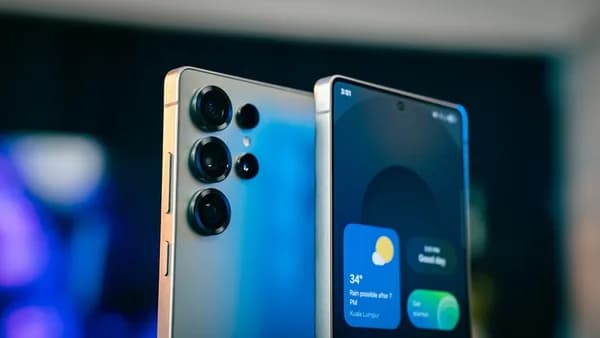
The Oppo Find X9s Pro looks, at first glance, like the compact flagship many Android buyers keep asking for. It has a premium build, thin bezels around its 6.32-inch OLED panel, and hardware that does not read like a compromised smaller model.
Notebookcheck says the phone starts at around $940 through its loan partner Trading Shenzhen. That price places it in serious flagship territory, where buyers expect the small form factor to be the feature — not an excuse for missing basics.
The strongest part of the review is that Oppo appears to break one of the usual compact-phone assumptions. Smaller premium phones often get judged through the lens of trade-offs: less battery, less camera hardware, less thermal room. The Find X9s Pro pushes back with a large battery and Hasselblad cameras that Notebookcheck says perform “in a different league” compared with the iPhone 17 or Galaxy S26 in its review.
“In these areas, the Oppo phone performs in a different league compared to the iPhone 17 or Galaxy S26 in our review.”
That makes the disappointment sharper. Oppo did not fail because it lacked ambition. It failed because several everyday details undercut the flagship pitch.
Battery and Hasselblad camera wins give Oppo rare leverage over iPhone and Galaxy rivals
The review’s most important claim is not just that the Find X9s Pro has strong battery life and a good camera. It is that a compact Oppo phone outclasses named Apple and Samsung competitors in those two categories.
For a mini flagship, that matters. Battery endurance and camera output are not side features in this segment. They are the two areas where compact designs are most vulnerable, because physical space limits battery capacity and camera module design. Oppo’s result suggests the company found room for meaningful hardware gains without stretching the phone into a large flagship body.
The camera system is especially notable because Notebookcheck highlights 20x zoom as impressive for a compact smartphone. That does not mean Oppo has solved every imaging problem. The supplied review excerpt does not include full camera scores, sensor specifications, or side-by-side image data. But the direction is clear: in this test, the Find X9s Pro’s Hasselblad cameras were not merely competitive.
Battery is more complicated. Notebookcheck praises the phone’s XXL battery, yet also says the endurance of the Dimensity 9500-powered mini flagship is not on the level of Oppo’s larger flagship. That is the core contradiction. The Find X9s Pro can beat Apple and Samsung in the tested comparison while still leaving performance on the table inside Oppo’s own lineup.
MLXIO analysis: that distinction matters for buyers. A compact phone does not need to beat the biggest model in the same family to be good. But if a phone sells itself as “Pro,” and carries premium hardware, gaps in energy management become part of the value judgment.
The numbers behind Oppo’s compact flagship claim are impressive — and incomplete
The available data points support Oppo’s premium positioning, but they also show where the review leaves open questions. Notebookcheck’s excerpt does not provide full runtime figures, charging speeds, weight, dimensions, RAM, or storage configurations, so those should not be assumed.
| Category | Oppo Find X9s Pro evidence from source | Readout |
|---|---|---|
| Price | Around $940 via Trading Shenzhen | Premium, but framed as budget-friendly for the class |
| Display | 6.32-inch OLED panel with very thin bezels | Compact flagship format |
| Durability | IP69 dust and water resistance | Stronger protection claim than many phones advertise |
| Camera | Hasselblad cameras, impressive 20x zoom | Major review strength |
| Battery | XXL battery | Strong against iPhone 17 and Galaxy S26 in review, weaker than Oppo’s larger flagship |
| Chip | Dimensity 9500 | Flagship-class positioning in the review context |
| Wireless | Wi-Fi 7 | Modern connectivity strength |
| Cellular bands | Missing LTE bands 20 and 32 | Europe coverage concern outside urban areas |
| USB | Probably USB 2.0 | Major mismatch with Pro branding |
| Software | China version with ColorOS 16 and multilingual package | Usable, but not frictionless |
| Positioning | GPS data in motion not recorded reliably | Serious issue for navigation and tracking use |
The USB point is one of the clearest own goals. Notebookcheck calls the likely USB 2.0 port “particularly hard to understand,” especially because the normal Find X9 achieved better performance with a 3.2 standard in its review.
That is not a niche complaint for a premium phone. USB speed affects local file transfer, media workflows, backups, and accessory behavior. A buyer who chooses a Pro model because of camera capability may also be the buyer most likely to move large files off-device.
For readers tracking premium hardware trade-offs across categories, this is the same kind of spec-versus-experience tension we often see in adjacent device coverage, from OLED Report Signals Apple's Pricier MacBook Ultra Era to 7.8-Inch iPhone Fold Leak Puts iPad Mini on Notice: the headline component is only part of the product.
LTE gaps, USB 2.0, and GPS dropouts weaken the Find X9s Pro’s daily case
The Find X9s Pro’s weaknesses are not all equal. Some are annoying. Some could change the buying decision depending on region and use case.
The missing LTE bands 20 and 32 matter most for European users. Notebookcheck says those bands are essential for optimal coverage outside urban areas in Europe. That makes the phone less suitable as a frictionless import, even if the hardware looks compelling and the multilingual China ROM works without major restrictions.
The GPS issue may be more serious. Notebookcheck says its test data showed significant dropouts in positioning, with GPS data in motion not recorded reliably. That affects navigation, fitness tracking, ride logs, and any app that depends on clean location traces.
There is also uncertainty around the cause. The review says these could be early-stage issues that future updates address. But it also raises the possibility that the GPS tracking problems stem from restrictive power-management policies in the China ROM.
That caveat cuts both ways. If software updates fix the issue, the Find X9s Pro becomes easier to recommend to import buyers. If the problem is tied to deeper ROM behavior, the hardware win becomes harder to convert into a dependable daily device.
Compact flagship buyers are not just buying small — they are buying fewer excuses
The supplied source does not provide enough factual basis to build a detailed history of Sony’s Xperia Compact line, Apple’s iPhone mini models, or Samsung’s smaller Galaxy phones. So the useful analysis here is narrower: the Find X9s Pro shows the recurring compact flagship problem through one current device.
Oppo appears to have solved some of the hardest physical constraints. It fits a large battery, premium cameras, modern wireless connectivity, and a high-end OLED into a compact body. That is the part compact-phone enthusiasts will notice first.
But the weaker parts are not about size. USB 2.0, missing LTE bands, China ROM caveats, and unreliable GPS tracking are product execution issues. They are not inevitable consequences of a smaller chassis.
That distinction is important. The Find X9s Pro does not disappoint because compact flagships are impossible. It disappoints because Oppo’s strongest hardware choices are paired with compromises that make the phone feel less globally polished than its spec sheet suggests.
Buyers, reviewers, and rivals will read Oppo’s win very differently
For compact-phone enthusiasts, the Find X9s Pro is evidence that small no longer has to mean weak. A 6.32-inch flagship beating the iPhone 17 and Galaxy S26 in Notebookcheck’s battery and camera assessment is not a minor result.
For mainstream buyers, the story is less clean. Import pricing through Trading Shenzhen, missing European LTE bands, and China ROM behavior all add friction. Strong hardware matters less if the phone cannot deliver predictable coverage, reliable GPS logs, and clean software behavior in the user’s region.
Photographers may be more forgiving. The Hasselblad system and 20x zoom give Oppo a clear attraction point. But the likely USB 2.0 port undercuts that audience if fast local transfer is part of the workflow.
MLXIO analysis: Apple and Samsung do not need to lose sleep over one import-oriented Oppo model. But Notebookcheck’s results do show that Chinese Android hardware can pressure premium incumbents in compact formats, at least on camera and battery metrics. That is relevant even if Oppo’s global usability story remains uneven.
Oppo’s next test is turning lab wins into a phone people can trust daily
The Find X9s Pro raises the ceiling for compact flagships, but it does not settle the category. The evidence points to a device with exceptional strengths and avoidable weaknesses.
The next signal to watch is software. If updates improve GPS reliability and energy management, the review’s harshest caveats become less damaging. If they persist, the phone remains a specialist pick: exciting on paper, powerful in testing, but risky as a daily import.
The second signal is whether Oppo aligns the rest of the hardware with the Pro label. A compact flagship with Wi-Fi 7, IP69, strong cameras, and a large battery should not leave reviewers questioning its USB standard or regional band support.
The Find X9s Pro disappoints because it gets so close. It proves a compact phone can challenge Apple and Samsung where it counts, then reminds buyers that flagship status is not awarded by battery and camera wins alone.
The Bottom Line
- The Oppo Find X9s Pro shows compact phones can now deliver flagship-level battery life and camera hardware.
- Its flaws highlight that premium buyers expect reliability beyond headline specs.
- At around $940, small flagship phones must justify their price with polished everyday performance.