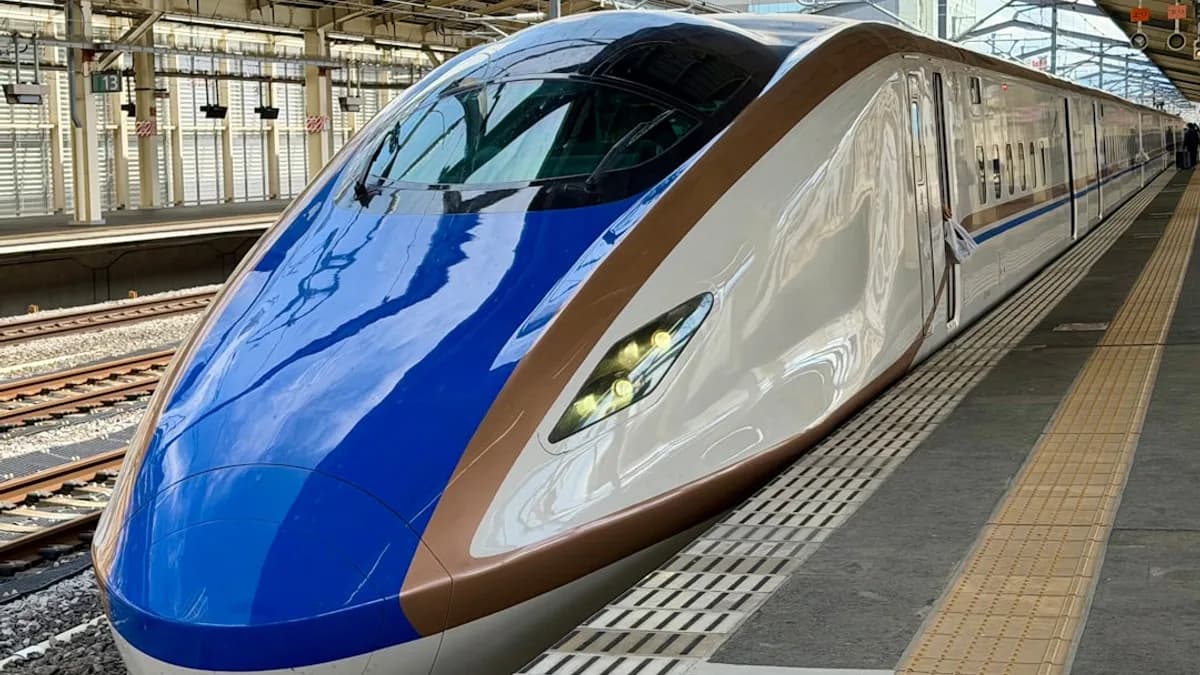
Taiwan High Speed Rail’s next fleet addition has moved from procurement to hardware, with the new N700ST Shinkansen trainsets now officially unveiled. The new trains, supplied by Hitachi and Toshiba, are meant to relieve a network that the source says is already constrained by a shortage of rolling stock, according to Notebookcheck.
The headline is not just that Taiwan is getting new high-speed trains. It is that THSR is adding new trainsets based on Japan’s Shinkansen N700S design, adapted as the N700ST for Taiwan’s high-speed rail network. The supplied material frames the unveiling as a concrete step toward future capacity, while leaving some delivery and service-entry details to be confirmed.
THSR unveils Taiwan’s N700ST Shinkansen trains with Hitachi and Toshiba
The N700ST unveiling marks a major fleet update for a rail system that has been running on its original high-speed backbone for more than two decades. THSR has now shown the new trainsets publicly, turning what had been a procurement and manufacturing program into visible hardware.
That distinction matters because the reveal is both ceremonial and operational. A train unveiling does not immediately create passenger capacity; the fleet still has to move through delivery, testing, acceptance and service preparation before it can be used in regular operation.
Hitachi and Toshiba are central to the new train program. The source frames the N700ST as derived from the N700S, meaning Taiwan is continuing with a Japanese Shinkansen-based platform rather than shifting to another high-speed rail architecture.
The route is sometimes loosely referred to as the "Silicon Island Artery" because of the technology companies along the corridor, particularly in semiconductors.
That phrase captures the operational stakes. THSR links Taipei Nangang in the north with Kaohsiung in the south, serving the island’s key urban and industrial corridor. When rolling stock runs short, the constraint is not abstract. It hits booking flexibility, train availability and the ability to add service.
New N700ST fleet targets urgent capacity pressure on Taiwan High Speed Rail
The strongest case for the N700ST is capacity, not novelty. Notebookcheck reports that THSR is already operating at its limits because of a rolling-stock shortage, even though the underlying rail infrastructure still has capacity because it was built with future demand in mind. That makes the new trains a direct operational fix: more trainsets give THSR more room to expand service without first rebuilding the railway itself.
The source does not provide new seat counts, planned frequencies or timetable changes. That is the counterpoint. Until THSR discloses deployment plans, the practical improvement for riders remains hard to quantify.
Still, the direction is clear. THSR expects the additional rolling stock to allow it to expand service, and the trains are intended to operate between Taipei Nangang and Kaohsiung. For passengers, the relevant question is how quickly the new fleet can be tested, accepted and folded into regular operations.
The supplied material supports a capacity-focused reading of the N700ST program, while leaving several passenger-facing and technical details unspecified:
| Area | Current context from source | N700ST detail supported by supplied material |
|---|---|---|
| Fleet capacity | THSR is constrained by rolling-stock shortage | Additional N700ST trainsets are intended to add capacity |
| Deployment | Service expansion depends on available rolling stock | Specific timetable changes are not provided |
| Passenger features | Rider impact will depend on final deployment | New seat counts and amenity details are not specified |
| Technical performance | The train is based on the N700S platform | Quantified efficiency or noise claims are not provided |
This is where the unveiling becomes more than a train photo. If the rail infrastructure can handle more traffic but the fleet cannot, then each delivered and certified trainset is a potential capacity unlock. MLXIO readers tracking how hardware plans become real-world capacity may also find context in our broader technology coverage, including Key Trends Reveal the Future Bets Leaders Can't Ignore and No New Look: Apple Watch Series 12, Ultra 4 Bet on Speed, though THSR’s timeline is tied to rail testing and service integration rather than consumer product cycles.
N700S-based design gives Taiwan a platform for high-speed rail expansion
The N700ST is also a long-term expansion tool, not just a near-term crowding fix. The source says the trains are meant to support future expansion, which links the fleet order to the next phase of the network. The question is not only how many trains THSR can run today, but whether it can support growth beyond the current pattern of demand.
That context matters because it focuses the problem. The pressure point identified in the source is rolling stock. If THSR can add trains without first waiting for a wholesale rebuild of the system, then the N700ST program becomes a practical bridge between current crowding and longer-term expansion.
The counterpoint is that a proven platform does not remove integration risk. The N700ST still needs delivery, acceptance work, testing and operational preparation before it carries passengers. The supplied material does not establish every step of that schedule, so there remains a gap between unveiling the hardware and turning it into daily service capacity.
Delivery schedule, testing and service entry will determine THSR’s capacity gains
The next test is execution: delivery, testing, certification and deployment. The unveiling shows that the program has entered a more tangible phase, but the less visible work now matters more. THSR still has to prove that the N700ST can run reliably inside its timetable and maintenance system.
Several details remain undisclosed. THSR has not provided, in the supplied material, a full breakdown of how quickly the new trainsets will arrive, how service frequencies may change, or how the fleet will be phased onto specific services. It also has not quantified passenger-facing improvements or technical performance gains.
That does not weaken the central point. The N700ST reveal shows that Taiwan’s high-speed rail capacity plan has entered the hardware stage, giving riders and operators something concrete to track as testing and integration proceed.
The practical watch item is simple: if delivery, testing and acceptance hold, THSR gets new room to expand service on its busiest north-south corridor. If delivery or testing slips, the network’s rolling-stock shortage remains the binding constraint even if the tracks themselves still have headroom.
Impact Analysis
- Taiwan High Speed Rail’s N700ST unveiling signals progress toward easing rolling-stock shortages on a constrained network.
- The trains extend Taiwan’s use of Japanese Shinkansen-based technology through a design derived from the N700S.
- Passengers will not see immediate capacity gains because delivery, testing, acceptance and service preparation still need to happen.