Apple and Google Are Quietly Dismantling One of Mobile's Longest-Standing Walls
The wall between Android and iOS file sharing is crumbling. File transfers between Android and iPhones—long the bane of mixed-device households and offices—are about to get a lot easier. Google is expanding AirDrop interoperability in Quick Share to more Android brands, including OnePlus, Oppo, and Honor, as announced at The Android Show: I/O Edition, according to Gsmarena. The move signals a shift: seamless, native file sharing across the two platforms is no longer a distant ideal but a fast-arriving reality.
This isn’t just a technical upgrade. It rewrites the rules of everyday collaboration, puts pressure on third-party workarounds, and chips away at the “walled garden” mentality that has defined the mobile landscape for over a decade.
Why Cross-Platform File Sharing Between Android and iPhone Is a Game-Changer
For years, sharing a photo or document from Android to iPhone meant jumping through hoops—emailing yourself, uploading to cloud storage, or wrangling clunky third-party apps. AirDrop worked perfectly within Apple’s universe. Android had its own solutions, but the two worlds refused to touch.
That’s why Google’s Quick Share-AirDrop interoperability matters. It attacks the core pain point: the inability to send files directly, quickly, and reliably between the two dominant mobile OSes. As Google rolls this out to more manufacturers, it’s not just smoothing a workflow; it’s erasing a line in the sand that frustrated millions.
This matters in a fragmented mobile ecosystem where device choice should not dictate basic communication. For users, it promises the convenience of sharing vacation photos at a family gathering without asking, “Who’s got an iPhone?” For businesses, it removes friction in BYOD environments and cross-platform teams. Each step toward interoperability is a step away from the petty annoyances that drive users to hacky solutions and, sometimes, from one platform’s loyalty to another.
Tracking the Expansion of Quick Share’s AirDrop Compatibility Across Android Brands
Google’s rollout strategy has been methodical. Interoperability first appeared on the Pixel 10 series last year. From there, Google backported support to older Pixel models and Samsung’s Galaxy S26 lineup. In recent months, flagships like the Oppo Find X9 Ultra and vivo X300 Ultra joined the list. Now, with the latest announcement, OnePlus, Oppo, and Honor are next in line—signaling Google’s intent to push beyond its own hardware and Samsung’s premium tier.
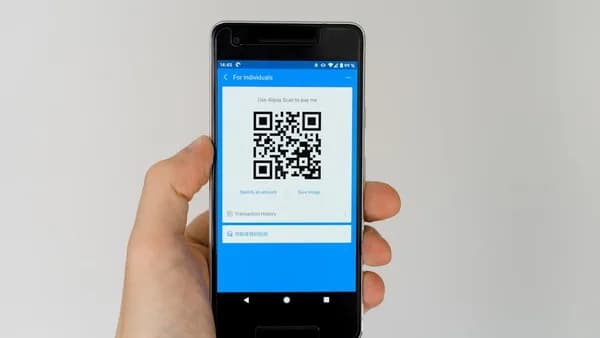
Currently, the feature is also live on the Pixel 8a and certain Oppo models, as confirmed by Gsmarena. The pace of adoption suggests Google is prioritizing partnerships with manufacturers willing to move quickly on cross-platform features, perhaps nudging the rest of the Android field to follow. This development recalls the recent Android Cracks iPhone File Sharing With QR Code Magic, which also aimed to simplify cross-platform sharing.
Technical requirements remain largely opaque. The source does not specify whether older devices from OnePlus, Oppo, and Honor will get the update or if it’s limited to new and future models. There’s also no mention of underlying standards, bandwidth requirements, or backward compatibility—in other words, whether mid-range and budget devices will benefit, or if this remains a premium feature for now.
Quantifying the Impact: Adoption Rates and User Engagement with Quick Share-AirDrop
Here, the trail goes cold. The source does not provide numbers on adoption rates, usage frequency, or success rates for Quick Share-AirDrop interoperability. No file transfer speed benchmarks or comparisons to traditional methods—Bluetooth, Wi-Fi Direct, or cloud-based sharing—are supplied.
That leaves us with a major gap: we cannot quantify how many users are actually taking advantage of this feature, nor how transformative it has been in practice. Without device penetration data, the potential user base is a matter of speculation. This is a critical omission, because the ultimate impact of cross-platform file sharing hinges not just on technical capability but on real-world uptake.
MLXIO analysis: The limited rollout—Pixel, Samsung, Oppo, now OnePlus and Honor—suggests a deliberate, staged approach, likely intended to surface bugs and polish UX before a wider release. The absence of usage data may mean that interoperability is still in its infancy, with awareness and discoverability as the next hurdles.
Diverse Stakeholder Perspectives on Cross-Platform Sharing Innovations
Consumers stand to gain the most. For the first time, mixed-platform families, friends, and workgroups can send files without a second thought. Native integration means no more QR codes, no more “install this app” detours, and less risk of accidental data exposure through insecure workarounds.
For app developers, the move is a double-edged sword. Those who built their businesses on file-sharing bridges may see usage drop as native options take over. Developers reliant on platform lock-in as a moat may find it harder to differentiate.
Device manufacturers face a choice: embrace Google’s interoperability push and offer parity with Apple, or risk being left behind as users demand seamless experiences. The fact that OnePlus, Oppo, and Honor are on board signals momentum toward broader Android alignment on cross-platform basics.
Privacy and security concerns are inevitable. Native file sharing—especially between rival operating systems—raises questions about data visibility, transfer encryption, and user consent prompts. The source material does not detail how Google and Apple are addressing these issues, nor if any new controls are being introduced.
Carriers and third-party app makers have the most to lose. If Quick Share and AirDrop become the default, the market for SMS/MMS file sharing and cross-platform sharing apps could shrink. MLXIO inference: Expect resistance or differentiation efforts from players whose value proposition relies on filling these gaps.
How Quick Share-AirDrop Interoperability Compares to Past Cross-Platform Efforts
Previous attempts at bridging the Android-iOS gap were mostly kludges. Apps like SHAREit, Send Anywhere, and cloud services like Google Drive or Dropbox offered a workaround, but at the cost of extra steps, account creation, or intrusive ads. Bluetooth and Wi-Fi Direct had their own issues: inconsistent pairing, slow speeds, and limited file size support.
Quick Share-AirDrop integration marks a clear technical leap. It’s not a third-party fix or a cloud-dependent relay; it’s a system-level handshake between two of the world’s most entrenched mobile stacks. The source does not spell out the protocol details, but the fact that it’s now shipping on new devices and being backported signals that Google and its partners have solved—or at least mitigated—major technical and UX challenges.
In short: Where past solutions were workarounds, this is the beginnings of a native bridge. That’s a fundamentally different proposition.
What Quick Share-AirDrop Integration Means for Mobile Users and the Industry
For individual users, the upside is immediate: sharing a high-res video, a folder of work documents, or a set of photos with an iPhone or Android device in the room no longer requires planning or platform-specific hacks. Productivity rises, friction drops, and the platform someone happens to use becomes less of a barrier.
On the industry level, this tilts the competitive dynamic. Apple’s walled garden has long been a selling point, but also a source of frustration for those living in mixed-OS environments. Google’s push for interoperability is a gambit: win over fence-sitters by making Android devices feel less isolated and more “friendly” to iPhone owners. MLXIO analysis: If this trend gains traction, platform lock-in weakens, and the basis for device loyalty shifts from what you can’t do to what you can do—across brands.
There’s also a potential ripple effect for device purchase decisions. If cross-platform convenience becomes widely available, buyers might be less inclined to stick with one platform for the sake of compatibility alone. This dynamic is reminiscent of recent market shifts following Apple's iPhone price cuts in China before the 618 Festival, which influenced consumer behavior significantly.
Future Prospects: Predicting the Evolution of Cross-Platform Sharing Technologies
The expansion to OnePlus, Oppo, and Honor is likely just the start. The source does not forecast specific timelines or next steps, but the trajectory is clear: broader device support is coming as Google persuades more OEMs to implement the feature.
Emerging technologies like ultra-wideband (UWB) and 5G are not mentioned in the source, so it’s unclear whether future iterations will push for even faster transfers or enhanced spatial awareness. For now, the focus is on getting the basics right—reliable, fast, native file sharing that “just works” between Android and iOS.
What would confirm the thesis that this is a real paradigm shift? Widespread rollout to mid- and low-tier devices, public usage metrics showing mass adoption, and visible reactions from Apple—either in the form of further opening or tightening iOS’s own sharing protocols. Conversely, if the feature stalls at the high end or remains poorly publicized, it risks being another niche tool that never catches fire.
What We Know, What Matters, and What to Watch
What we know: Quick Share-AirDrop interoperability is expanding to more Android brands, with OnePlus, Oppo, and Honor joining the roster. The rollout began with the Pixel 10 series and is gradually broadening. Technical specifics and adoption metrics remain scarce.
Why it matters: This is a concrete step toward dissolving one of the mobile industry’s most persistent barriers. Seamless cross-platform file sharing increases user convenience, enhances productivity, and weakens the rationale for platform lock-in.
What is still unclear: The exact technical requirements, privacy safeguards, and the scale of user adoption are not disclosed. It’s also unknown how quickly the feature will reach older or lower-tier devices.
What to watch: Will other Android OEMs sign on? Will Apple respond with greater openness, or reinforce its own protocols? And most crucially, will users discover and embrace this new capability at scale, or will it languish as an underused feature? The answers will determine whether this is a blip or the beginning of a new era in mobile interoperability.
Why It Matters
- Cross-platform file sharing removes longstanding barriers between Android and iOS users.
- Users will no longer need clunky workarounds or third-party apps to transfer files between devices.
- This change enhances convenience and collaboration for families, businesses, and mixed-device environments.