What happens when waterfront infrastructure is no longer built as one big object, but assembled by dinner-plate-size robot boats that can split apart and reform?
That is the question behind FloatForm, an MIT system of small square aquatic robots that self-assemble into larger floating structures with minimal human direction, according to MIT News AI. The immediate result is a lab-scale swarm. The larger implication is more provocative: water could become reconfigurable public space, not just a boundary around cities.
Why could FloatForm robot boats change how we build on water?
FloatForm matters because it shifts floating construction from fixed assets toward modular assembly. Instead of building one dock, bridge, platform, or barge for one job, the system points to a model where many smaller robotic units organize into the structure needed at that moment.
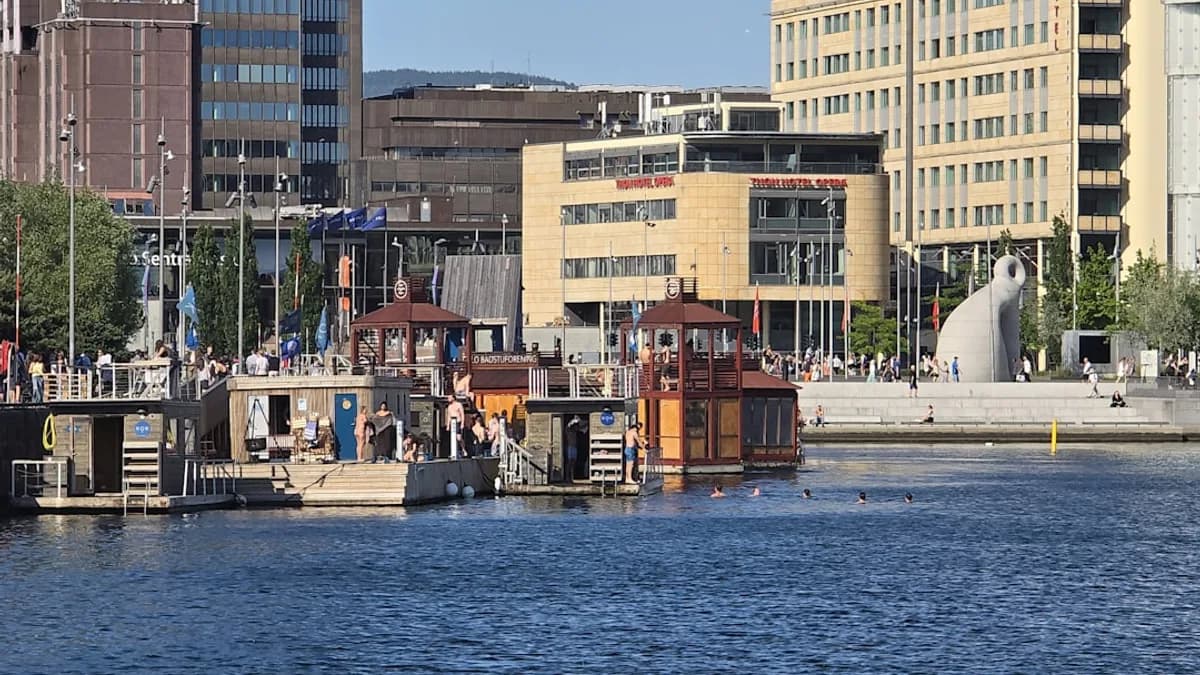
MIT describes possible uses including a temporary platform after an emergency, a market on a canal, or a stage that appears for an event and disappears afterward. Alejandro Gonzalez-Garcia, a former researcher with MIT CSAIL and the Senseable City Lab, also frames the idea around emergency bridges, floating markets, and floating stages.
“If there’s an emergency, you could form a new bridge to alleviate traffic in the city. Or you could create floating markets and floating stages. If you want a more livable city, you want to use the water, too.”
The claim is not that FloatForm is ready to replace bridges or permanent docks. It is not. The lab tests used eight robots, each 21 centimeters square, in a controlled pool. But the concept attacks a real constraint: marine infrastructure is usually expensive, slow to move, and hard to repurpose.
Analysis: the most useful near-term lens is not “robot boats build cities.” It is “robot boats make temporary water structures programmable.” That is narrower, but still meaningful.
What is FloatForm, and how do the tiny robot boats mimic ant rafts?
FloatForm is a swarm robotics system made of small autonomous boats. Each unit has its own thrusters, sensors, and magnetic latches. The robots move independently, connect physically, and form larger square-lattice structures on the water.
The biological model is the fire ant raft. Fire ants survive floods by linking their bodies into floating clusters without a central commander. Each ant follows local behavior, and the group becomes a stable structure.
Gonzalez-Garcia puts the robotics goal directly:
“Each ant is an independent agent. We wanted each robot to have its own capabilities, the same way ant colonies form a raft.”
The important point is reconfiguration. FloatForm is not just a fleet of floating robots. The same units can assemble, latch into a rigid structure, break apart, form a new shape, and then move as one larger vessel.
That makes it closer to programmable infrastructure than to conventional autonomous boats. MIT’s earlier Roboat project put full-size autonomous vessels on Amsterdam’s canals. FloatForm shrinks the idea to tabletop scale to solve a harder coordination problem: how to get dozens, and eventually thousands, of floating units to organize themselves.
How do FloatForm robots find each other and snap into floating structures?
The assembly process has two layers: limited central planning and local robot control.
A lightweight central planner assigns each robot a final position so the structure forms the intended geometry. After that, much of the work happens on the robots. They navigate toward the target shape, avoid collisions, adapt to disturbances, and coordinate by exchanging positions with nearby robots.
That matters because many self-assembling robot systems depend heavily on a central computer. MIT says that approach can scale poorly because planning complexity grows as more robots are added, and robots often assemble sequentially while others wait.
FloatForm’s approach is different:
| Approach | How it coordinates | Scaling issue |
|---|---|---|
| Centralized self-assembly | One computer dictates many moves | Planning burden grows with swarm size |
| FloatForm | Robots coordinate mostly with nearby neighbors | Complexity depends on local neighbors, not total swarm size |
In MIT experiments, eight robots gathered from random positions into a target shape, latched into a rigid structure, broke apart on command, formed a new configuration, and moved across the pool as a single vessel. Each run took four to eight minutes.
In collective transport mode, a planner charts the path for the assembled structure, while each robot computes its own thrust contribution. Gonzalez-Garcia describes the result plainly:
“Every robot becomes an actuator.”
The mechanical connection is just as important as the software. Each boat contains an origami-inspired auxetic structure driven by a central servo motor. Auxetic geometry contracts or expands uniformly, moving permanent magnets on all four sides. The magnets can grab neighboring boats across 10 to 15 centimeters and use alternating polarities to align into clean square lattices.
The latch also saves power. A 3D-printed gearbox holds the latch open or closed while the motor is off.
For small robots, that tradeoff matters. Battery capacity is limited. Energy saved on latching can be spent on computation or movement.
How might FloatForm work in an emergency water-access scenario?
A source-grounded scenario looks like this: after an emergency, responders need a temporary floating structure where fixed infrastructure is damaged or unavailable. MIT explicitly names emergency platforms, emergency response, and reconfigurable docking stations as possible applications.
In that scenario, FloatForm robots could be deployed into calm enough water, spread out, navigate to assigned positions, and snap into a platform or bridge-like shape. If conditions or access needs change, the same units could detach and form another layout.
That is the practical value of modularity:
- Shape: the platform can be reconfigured instead of rebuilt.
- Deployment: many small units are easier to move than one large structure.
- Redundancy: if one robot briefly loses position, MIT says the architecture allowed it to rejoin without stopping the whole swarm.
- Stability: joined boats can become more stable than isolated units, as Niklas Hagemann notes: “Our boats become more stable by joining together, like the ant raft, if you have waves or currents.”
This is still a research scenario, not a proven field deployment. The experiments happened in a controlled tank, not a flood zone, canal, or harbor.
What makes floating robot construction hard to scale beyond the lab?
The hardest part is not showing that eight robots can connect. MIT has done that. The harder question is whether the method survives real water, larger loads, and longer operating windows.
The source gives several limits. Gonzalez-Garcia says there is “always a relationship between the size of a boat and the magnitude of the disturbance it can handle,” adding: “These boats are very small, so in very disturbed water, they cannot work.”
Scaling up would require stronger latches, possibly mechanical interlocking like the full-size Roboat used. The lab’s ultrasonic indoor positioning would also need to be replaced with GPS or vision-based sensing. MIT says the coordination algorithm is sensor-agnostic, meaning the logic can remain while sensors change.
The experimental reliability numbers also show the gap. Across 10 trials, FloatForm completed missions without human intervention 90 percent of the time with four robots and 70 percent with eight. Simulations showed scaling to 64 robots, but simulation is not open water.
Analysis: the main bottleneck is trust. A temporary public platform cannot be “mostly reliable.” It has to tolerate drift, collisions, partial failure, and uneven forces while staying predictable around people, boats, and sensitive water environments. The source does not provide payload capacity, cost, field durability, or certification details, so those remain open.
This is where FloatForm differs from smaller consumer robotics stories we track at MLXIO, such as Xiaomi’s camera-driven Robot Vacuum 6 Max. Indoor autonomy can fail safely more often. Marine infrastructure has much less room for sloppy behavior.
Where could reconfigurable floating robots fit in marine robotics?
MIT’s stated applications stretch beyond canals: offshore inspection and maintenance, adaptive sensor networks for studying migratory species, reconfigurable docking stations for emergency response, environmental monitoring, scientific expeditions, and temporary construction platforms.
That range makes FloatForm less a single product than a research platform for programmable water space. The same idea could support different structures if the units become larger, stronger, and more reliable.
The project also sits inside a broader engineering push toward smaller, capable hardware. MLXIO has covered that miniaturization pressure in other categories, from tiny handheld devices like the Ayaneo Pocket Micro 2 to increasingly autonomous home robots. FloatForm applies a similar constraint to water: fit sensing, movement, connection, and control into a small package, then let the group do what one unit cannot.
For now, the practical takeaway is simple. Watch three things: whether MIT’s team can move from tanks to canals, whether larger latches can carry useful loads, and whether the swarm reliability improves as robot counts rise. If those pieces hold, floating infrastructure could become less like poured concrete and more like software-defined hardware on water.
Impact Analysis
- FloatForm suggests waterfront infrastructure could become flexible instead of fixed.
- The system could help cities create temporary public spaces or emergency crossings on water.
- The technology is still lab-scale, with tests using eight 21-centimeter-square robots in a controlled pool.