32 GB of RAM now costs well over €300 in Germany, even though June’s price increase looked almost flat month to month. That is the real signal in the latest DRAM crisis data: the panic spike has slowed, but the consumer market has not healed.
Germany’s retail memory market, tracked by 3D Center and summarized by Notebookcheck, shows a sharp split between tempo and level. Prices are no longer ripping higher as they did over the winter. Yet RAM already costs more than four times as much as it did a year ago.
That distinction matters. A slower climb from an extreme base is still expensive. For PC builders, gamers, high-memory mini PC buyers, workstation buyers, and small system integrators, June did not bring relief. It brought confirmation that inflated memory pricing may linger.
The €300 32GB RAM Kit Signals a PC Upgrade Market Under Stress
A 32 GB DDR5 RAM kit used to sit in the comfort zone for enthusiast builds and serious productivity desktops. In Germany, it is now “well over €300,” according to the supplied source material. That pushes a once-routine upgrade back into premium territory.
Germany is a useful read on European component pricing because its retail market is competitive and price-comparison driven. MLXIO analysis: that does not make it a perfect proxy for every EU market, but it does make sudden component repricing harder to hide.
The psychological damage is bigger than the monthly chart suggests. If buyers anchor to last year’s prices, a 1 percent June rise looks trivial only on paper. The actual purchase decision now starts from a level that has already reset violently higher.
June 2026 RAM and SSD Prices: Smaller Monthly Moves, Massive Annual Damage
The June data shows memory prices entering a slower phase after the winter surge.
| Component category | June movement | Year-on-year position |
|---|---|---|
| DDR5 RAM | +1 percent average rise | More than 4x year-earlier level |
| DDR3 / DDR4 RAM | Slight decline | Slightly more than 3x year-earlier level |
| M.2 SSDs | +1.8 percent average rise | About 2x year-earlier level |
| 8 TB SSDs with DRAM cache | +24 percent | Minimum price €1,029 |
The sequence is important. 3D Center’s tracking shows prices more than quadrupled from September 2025 to January 2026. Since then, average DDR5 prices have largely stagnated: March fell 7 percent, April was flat, and May and June each rose 1 percent.
That is not normalization. It is stabilization after damage.
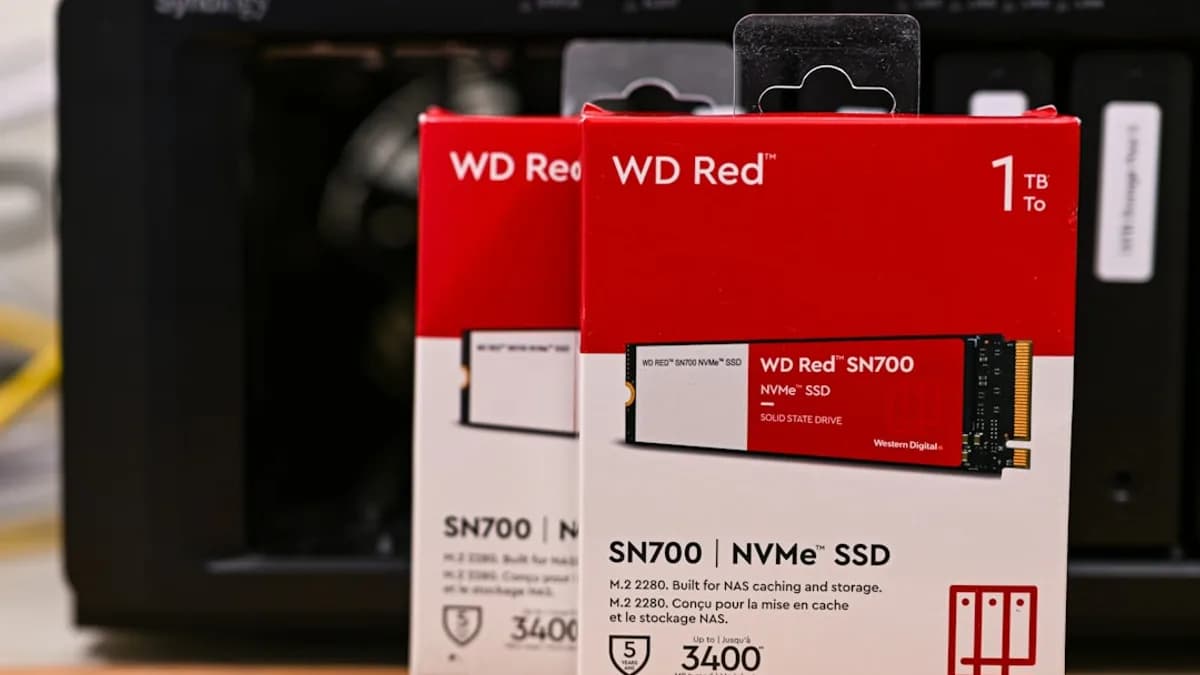
NAND-based SSDs have followed a different path from DRAM-based RAM, but the pressure is visible there too. M.2 SSDs now cost roughly twice as much as a year ago, while the largest high-end drives are moving faster than the average. An 8 TB WD_Black SN850X is listed in the source material at $1,499 in the US.
How the DRAM Shortage Shifted From Winter Price Spike to Prolonged Supply Squeeze
The crisis appears to have moved from shock repricing to a drawn-out squeeze. The trigger named in the source is high demand for DRAM and NAND flash memory from AI giants such as OpenAI, which has been pushing RAM and SSD prices higher since October 2025.
The key change is not just demand. It is where supply is being pulled.
AI servers and data centers need large memory footprints. Memory makers also have an incentive to prioritize higher-value products and enterprise demand when supply is tight. MLXIO analysis: that helps explain why consumer DDR5 can remain scarce even if retail prices stop rising rapidly for a month or two.
Notebookcheck also notes a mismatch between industrial and consumer pricing. DRAM costs for industrial customers have continued to rise in recent months, but those increases have not yet fully reached end consumers. The source points to two likely reasons: high inventories with low demand, and the fact that consumer prices were raised faster and harder at the end of 2025 than industrial prices.
Prices for DDR3 and DDR4 are now “only” slightly more than three times the price level of the previous year.
That “only” does a lot of work. Older memory is cheaper relative to DDR5, but still dramatically inflated versus last year.
From Pandemic Shortages to AI Memory Hunger: Why 2026 Feels Different
This shortage does not read like a short retail hiccup. The source ties the pressure directly to AI-driven demand for memory, not just a temporary burst from consumer PC upgrades.
That changes the interpretation of the June plateau. In a classic consumer-led spike, weak retail demand might pull prices down quickly. Here, consumer buyers are competing indirectly with AI infrastructure demand and industrial customers.
The result is a strange market: consumers may pause, but upstream pricing can still tighten. That is why the slight June increase should not be mistaken for the end of the DRAM crisis.
For readers following high-memory hardware more broadly, the capacity question is already central to product positioning, as seen in MLXIO’s coverage of 128GB MSI Cubi NUC AI+ 3MG Squeezes More Into Less. The same pressure also bleeds into gaming hardware budgets, a concern for readers tracking releases such as Live-Action Dave Locks Dave The Diver DLC for June 18.
PC Buyers, Retailers, OEMs, and Memory Makers Are Reading the June Prices Differently
For consumers, the trade-off is immediate. A DDR4-capable platform now looks more attractive because DDR3 and DDR4 prices fell slightly in June and sit below DDR5 on a relative basis. Notebookcheck’s source material explicitly says that for platforms with DDR4 support, choosing the older standard is currently worthwhile.
Retailers face a different problem. If replacement inventory is expensive, heavy discounting becomes risky even when demand is weak. That may help explain why retail prices can stagnate without collapsing.
OEMs and system builders sit in the middle. MLXIO analysis: if memory remains expensive, finished PCs can absorb the cost, pass it through, or ship with leaner RAM and SSD configurations. The supplied source does not confirm which path vendors are taking in June, so that remains an open commercial question.
Memory makers, meanwhile, benefit from firmer pricing after weaker cycles, but there is a limit. If high RAM and SSD prices suppress upgrades, the consumer channel becomes less useful as a volume outlet.
What Expensive DDR5 and SSDs Mean for European PC Builds in 2026
The practical effect is simple: memory now takes a larger bite out of the total build budget. That hits gaming PCs, creator workstations, office refreshes, and small-business machines differently, but the direction is the same.
A buyer who planned for 32 GB DDR5 may reconsider. A buyer who wanted 64 GB may delay. A buyer choosing SSD capacity may step down from a large M.2 drive if high-end models keep moving like the 8 TB segment did in June.
This is not shopping advice, because urgency depends on workload. But the decision frame is clear:
- Mission-critical capacity: buy if the system cannot wait and the RAM or SSD capacity drives revenue or deadlines.
- Flexible upgrades: monitor DDR5 and SSD pricing rather than assuming June’s small increase means relief.
- DDR4 platforms: consider whether staying on older memory extends the useful life of a system at a lower relative cost.
DRAM Price Relief May Arrive Late — and It May Not Restore 2025 Bargains
Three scenarios now define the rest of 2026. Prices could plateau at high levels. They could rise again if industrial demand keeps tightening supply. Or they could ease gradually if inventories build and retail demand stays soft.
MLXIO analysis: a fast return to last year’s lows looks difficult to support from the supplied data. The market has already absorbed a more-than-fourfold RAM reset in Germany, and AI-linked memory demand remains the stated pressure point.
The evidence to track next is specific: DDR5 availability, contract pricing signals, SSD promo frequency, default RAM in finished PCs, and whether large-capacity SSDs keep outpacing average M.2 price moves.
If those indicators soften together, June may prove to be the start of relief. If they do not, Europe’s PC market may have to treat expensive memory not as a spike, but as the new planning assumption.
The Bottom Line
- RAM prices in Germany remain extremely elevated even though June’s month-to-month increase slowed.
- A 32 GB DDR5 kit now costing well over €300 raises the cost of PC upgrades and new builds.
- The data suggests the DRAM crisis has shifted from a panic spike to a prolonged affordability problem.