Why Casio’s 10-Year Battery Life Could Redefine Digital Watch Expectations
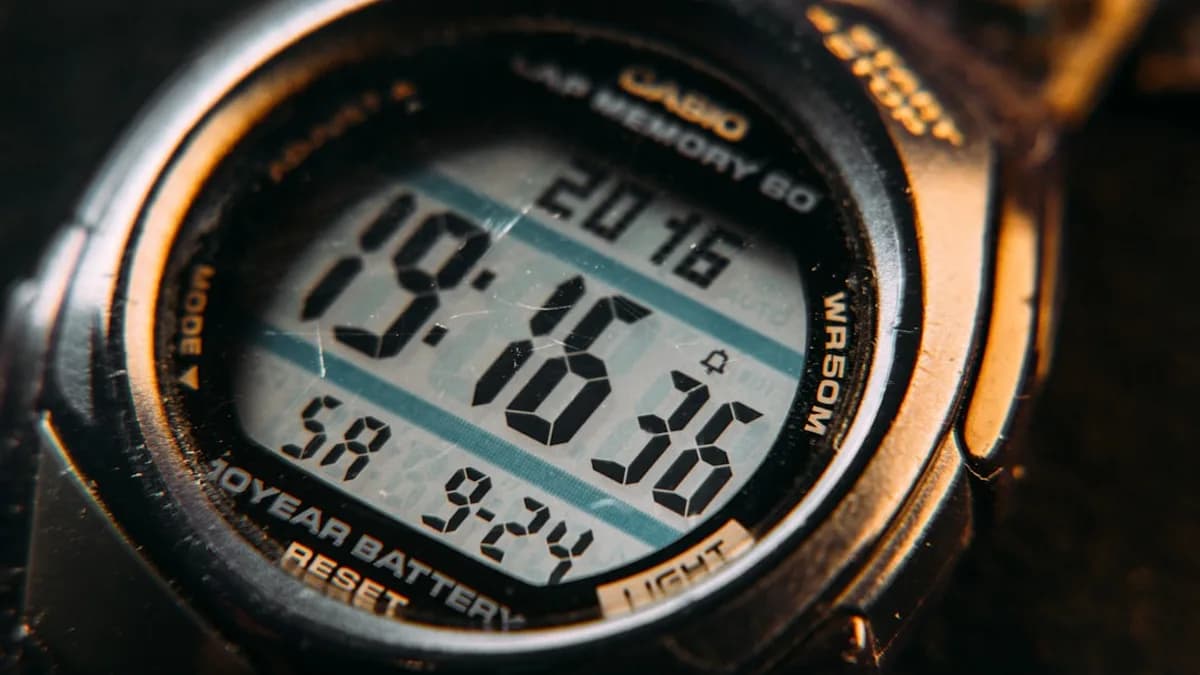
A decade-long battery life isn’t just a spec—it’s a direct challenge to the disposable mindset dominating today’s digital watch market. Casio’s upcoming W-738H series, set to launch in Japan this May, slashes the hassle of annual battery swaps and the silent costs of short-lived electronics, according to Notebookcheck. In an industry where most digital watches limp to year three before needing a new cell, a 10-year battery isn’t incremental—it’s categorical.
This isn’t about convenience alone. Extended battery life means fewer batteries manufactured, shipped, and dumped. For users, it means a watch that just works—no downtime, no fiddly disassembly, no reminders to replace a $2 button cell. That’s a direct hit to one of the biggest friction points in low-cost digital timepieces.
Casio’s feat relies on efficient circuitry, low-power displays, and optimized vibration alert hardware. The company’s proprietary battery management tweaks—likely including sleep modes and power gating for non-essential functions—turn what’s usually a 2-3 year lifespan into a decade-long marathon. In a market saturated with “smart” watches that need charging every few days, Casio is betting that old-school reliability is the real premium. The question: will consumers agree, or are they hooked on features over fundamentals?
Breaking Down the Casio W-738H Series: Features That Set It Apart
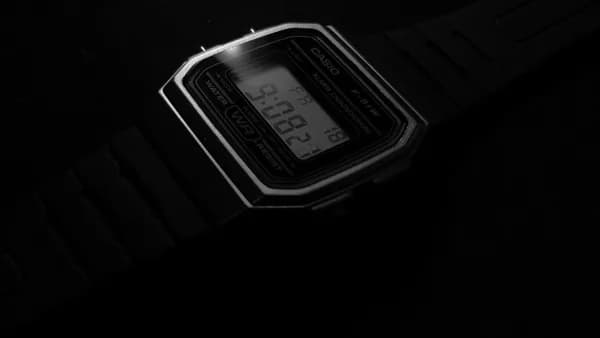
Casio’s W-738H-1AJF and W-738H-3AJF models don’t dress up as “luxury” or “smart”—they’re unapologetically functional. Both sport a square digital display, echoing the iconic look of Casio’s classic F-series but with sharper lines and a cleaner interface. This shape isn’t fashion-forward, but it’s practical: easier to read, less prone to glare, and more resistant to accidental damage.
Vibration alerts stand out in this price segment. Most watches under ¥5,000 ($30-40) skip haptic feedback entirely, relying on beeps that get lost in city noise or crowded offices. Casio’s inclusion of vibration means you’ll actually notice your alarm—without disturbing everyone else. It’s a small feature, but it signals attention to real-world usability.
Water resistance at 100 meters (10 bar) is another outlier. Plenty of digital watches claim “splash-proof” or “water-resistant,” but actual submersion protection is rare when price tags are this low. With the W-738H, swimming or showering isn’t a gamble—it’s part of the design. Even mid-range competitors often top out at 50 meters, making Casio’s offer unusually robust.
The W-738H’s package isn’t flashy, but it’s relentless in utility. No WiFi, no GPS, no touchscreens—but everything it does, it does reliably, and it does longer than nearly anything else in its class.
Digital Watch Market Data: How Casio’s New Release Fits Into Current Trends
Casio’s move comes as digital watch sales in Japan ticked up 6.5% year-on-year in 2023, bucking the global slowdown seen in smartwatch shipments, which fell 3% in the same period. The Japanese market, valued at over ¥60 billion ($400 million) for digital watches alone, is notably loyal to “standard” digital timepieces—especially from homegrown brands.
Globally, the average digital watch battery lasts 2-4 years, with most entry-level models failing to crack five. Timex’s Ironman series, a direct competitor, claims up to 3 years, while Seiko’s digital lineup rarely exceeds 2 years. Casio’s 10-year claim more than triples the industry standard. Even among “long-life” watches, like Citizen’s Eco-Drive (solar-powered, but dependent on regular light exposure), the practical lifespan can be shorter if not worn daily.
Consumer surveys from 2022 found that 42% of Japanese digital watch buyers cited “battery life” as their top pain point—higher than “features” or “brand.” Durability and longevity ranked second, with 37% wishing watches lasted longer before maintenance.
Casio’s W-738H isn’t chasing the smartwatch crowd—it’s doubling down on what buyers of traditional digital watches actually want: reliability, simplicity, and genuine longevity. The timing is deliberate. As smartwatches increasingly require daily charging and frequent software updates, the pendulum could swing back toward “set-and-forget” devices, especially in markets where practicality trumps novelty.
Diverse Stakeholder Perspectives on Casio’s Latest Digital Watch Launch
Consumers who’ve grown tired of annual battery replacements see the W-738H as a fix, not a feature. Forums dedicated to Casio and affordable watches are already buzzing: users note that a 10-year battery means “no more lost alarms” and “a watch you can forget—until you need it.” For active users—cyclists, swimmers, construction workers—the 100m water resistance and vibration alerts are more than marketing fluff; they’re daily essentials.
Industry analysts are split. Some argue Casio is playing defense, shoring up its position as the king of reliable, affordable digital watches. Others see a subtle offensive—using battery longevity as a wedge against smartwatches, especially in Southeast Asia and Japan, where battery anxiety is real and where smartphone penetration isn’t universal.
Retailers expect the W-738H series to move briskly in the ¥3,000-¥4,000 ($20-30) range. Past launches of Casio’s “long-life” models saw sellouts within weeks, and distributors anticipate similar demand. The real question: will this trickle into higher-priced models, or is Casio content to dominate the value segment?
Tracing Casio’s Legacy in Digital Watches: Innovations Leading to the W-738H
Casio’s legacy is built on reliability and incremental innovation. The original F-91W, launched in 1991, promised a 7-year battery—then unheard of for digital watches. The G-Shock line, starting in 1983, redefined durability, with shockproof cases and water resistance up to 200 meters. In both cases, Casio’s strategy was simple: outlast the competition, both physically and technologically.
Battery longevity has always been a hallmark. The F-91W and its successors used custom low-power chips and minimalist displays to stretch battery life. The AE-1200 series, popular in the mid-2010s, moved to 10-year batteries, but often struggled to deliver in real-world use due to feature creep (world time, multiple alarms, brighter backlights).
The W-738H is a return to roots: basic, tough, ultra-long-lasting. It’s what made Casio famous, but refined for a market that has seen the pitfalls of “more features, less endurance.” Unlike the past, Casio now faces competition from smartwatches and fitness bands—devices that trade battery life for connectivity. Casio’s answer is clear: when the novelty fades, reliability remains.
Implications of Casio’s New Digital Watches for Consumers and the Industry
Casio’s W-738H series could force a reset on what consumers expect from digital watches. Battery life, once a secondary concern behind styling and features, may become the new battleground. If 10-year batteries become standard, competitors will have to re-engineer—not just rebrand.
For consumers, the shift is tangible. The W-738H offers a decade of peace of mind, meaning fewer “throwaway” watches and less environmental waste. Casio’s pitch aligns with growing sustainability concerns: fewer batteries, less landfill, longer product cycles. That’s not just good marketing—it’s a measurable environmental gain. If Casio moves a million units (a realistic figure, given past sales), that’s a million fewer batteries discarded every few years.
Competitors face a dilemma. Do they chase feature parity (vibration alerts, swim-level water resistance), or do they try to one-up Casio on battery life? Either route means higher R&D costs and a rethink of low-margin strategies. The broader digital watch market, especially in Asia and Europe, could see a bifurcation: “enduring basics” versus “feature-heavy, short-lived.”
Forecasting the Future: What Casio’s W-738H Launch Signals for Digital Watch Innovation
Casio’s W-738H isn’t just a product—it’s a signal. Extended battery life will drive future digital watch designs toward minimalist, reliable hardware. Expect more brands to tout “years, not months” of power, and for consumers to demand proof—not just promises.
Casio’s next move could be integrating solar charging into its 10-year battery models, creating watches that never need replacement. Alternatively, we might see the company push modular designs, letting users swap batteries or upgrade components without discarding the entire watch—a nod to sustainability and customization.
Emerging battery technologies—solid-state, graphene, or even micro fuel cells—could eventually outpace Casio’s current chemistry. But for now, the W-738H sets the bar: a decade of use, no fuss, no landfill, no charging cable in sight.
The digital watch market is about to get a lot less disposable. Casio is betting that reliability, not complexity, is where the next wave of consumer loyalty will be built. If sales match expectations, competitors will have to catch up—or risk fading into irrelevance.
Why It Matters
- Casio's 10-year battery life dramatically reduces electronic waste and environmental impact.
- Longer battery life means fewer interruptions and lower maintenance costs for consumers.
- The launch challenges the industry norm, prioritizing reliability over unnecessary features.