Why PS5 Users Should Care About Running PS3 Games Through RPCS3 on Linux
Sony’s PlayStation 5 still can’t play most PlayStation 3 games natively—a glaring omission for owners sitting on a decade’s worth of classics. Official backward compatibility stops at PS4 titles, leaving favorites like Metal Gear Solid 4, Demon’s Souls (the original), and the Resistance series stranded. That gap isn’t just nostalgia: PS3 exclusives still command active fan bases and resell for surprising prices. Now, a new mod lets PS5 hardware run PS3 games with near-native performance, sidestepping Sony’s restrictions entirely, as Notebookcheck reports.
This isn’t just about playing old games. Installing Linux on a PS5 essentially turns it into a high-end gaming PC, unlocking everything from desktop apps to advanced emulators. RPCS3, the most mature PS3 emulator, takes the PS5’s power and finally delivers what Sony has refused: smooth, high-resolution PS3 gaming. For users who demand more from their $500 console—or those who want to run mods, fan translations, or region-locked titles—the ability to run Linux and RPCS3 is a sea change.
The move also signals a shift in power. Where Sony once dictated what your console could do, modders are now expanding its functionality far beyond official limits. For enthusiasts, this isn’t just a technical milestone—it’s a challenge to the walled garden model that’s dominated console gaming for years.
How Installing Linux Transforms the PlayStation 5 Into a Versatile Gaming PC
In late April 2026, modder Andy Nguyen (and team) released PS5-Linux, a custom install package for PlayStation 5s running firmware 3.xx and 4.xx. This isn’t a trivial hack; it requires exploiting vulnerabilities in the PS5’s firmware, then installing a tailored Linux distro that recognizes the console’s hardware—AMD Zen 2 CPU, RDNA 2 GPU, fast NVMe SSD. For users, the process involves USB boot media, patience, and a willingness to tinker. The mod is currently limited to specific firmware versions, meaning newer PS5s or those updated past 4.xx are locked out, at least for now.
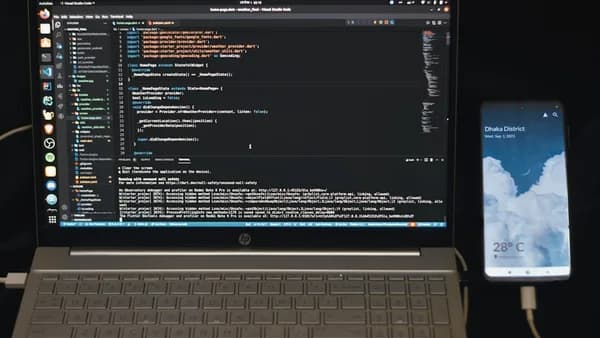
Once installed, Linux gives the PS5 access to thousands of PC applications—everything from Steam to Firefox, plus a full suite of emulators. Unlike Sony’s locked-down OS, Linux treats the PS5 as a regular x86-64 computer. That means you can run productivity tools, media players, and, crucially, emulators like RPCS3. This is the gateway: Sony’s official OS won’t allow unsigned code or homebrew, but Linux takes off the gloves.
The biggest payoff is performance. The PS5’s specs rival mid-range gaming PCs—8-core CPU, 16GB RAM, GPU with 10.28 TFLOPS. That’s more than enough for demanding emulation tasks. Users have reported running desktop environments at 4K, booting PC games, and compiling code natively. In effect, installing Linux turns the PS5 from a single-purpose console into a multi-role workstation—one that costs less than an equivalent PC build.
Not everything is smooth. Early reports cite teething issues: missing device drivers, awkward controller integration, and occasional crashes. But for the community, these are solvable. Each firmware exploit, each driver fix, pushes the PS5 further into PC territory, breaking down the proprietary walls Sony built.
What Makes RPCS3 the Leading PS3 Emulator for Near-Native Performance on PS5
RPCS3 has spent a decade in development, evolving from a proof-of-concept to a tool capable of running nearly 80% of the PS3 library with playable or perfect status. The emulator translates PS3 instructions into x86 code, using advanced techniques like dynamic recompilation, Vulkan and OpenGL graphics backends, and meticulous game-specific patches. On a typical Windows gaming PC, RPCS3 is already the gold standard; on the PS5’s Linux install, its performance is even more striking.
Emulation is usually bottlenecked by CPU and GPU speed. The PS3’s Cell processor was notoriously complex, making accurate software emulation a nightmare for weaker hardware. But the PS5’s eight-core Zen 2 CPU and RDNA 2 GPU are a leap ahead. Early tests show games like Uncharted 2 running at 60fps, with visuals upscaled to 4K. Load times shrink dramatically thanks to the NVMe SSD, and shader compilation is fast enough to eliminate most stuttering.
RPCS3’s compatibility matrix is massive: over 3,500 titles, with new patches and performance tweaks arriving monthly. Running on Linux, the emulator taps into open drivers and gets direct access to hardware, avoiding the latency and overhead of Sony’s official OS. There are still hurdles: controller mapping isn’t seamless, and some games rely on PS3-specific quirks that RPCS3 must simulate. But the pace of progress is relentless. On PS5 hardware, RPCS3 is not just playable—it’s often better than the original console, with higher resolution, faster framerates, and mod support.
For modders, this is a technical flex. RPCS3 on PS5 doesn’t just replicate the PS3—it improves upon it, showing what Sony’s hardware can really do when freed from software shackles.
Which Popular PS3 Games Can You Play on PS5 Using RPCS3 and What to Expect
The unofficial PS5-Linux + RPCS3 setup opens the floodgates for PS3 classics. Users have already reported smooth performance on titles like Red Dead Redemption, God of War III, Gran Turismo 5, and Persona 5 (the original PS3 edition). For many games, framerates hit 60fps, with resolution boosted to 1440p or 4K—a jump over the original PS3’s 720p output.
Take Metal Gear Solid 4 as a case study: long locked to the PS3, it’s now playable on PS5 via RPCS3, running at double the original framerate and with improved textures thanks to the emulator’s upscaling features. Load times drop from 60 seconds to under 10, and save states allow users to bypass notoriously long cutscenes and checkpoints. Community reports cite similar results for Yakuza 5, Ni no Kuni, and the original Demon’s Souls.
Not everything is flawless. Some games—especially those with custom hardware calls or esoteric anti-piracy measures—can crash or display graphical glitches. The PS5’s DualSense controller needs workarounds to mimic the PS3’s Sixaxis features. Multiplayer functionality is mostly absent, as RPCS3 doesn’t replicate Sony’s online infrastructure. And for games heavily dependent on PS3-exclusive peripherals (Move, EyeToy), compatibility is still hit-or-miss.
Still, the expansion is dramatic. The PS5’s official library jumps from around 4,000 games (PS4 + PS5 titles) to over 7,500 when you include playable PS3 games via RPCS3. For collectors, region-locked games, and fan-translated titles, this is a chance to play what Sony won’t sell you.
What Are the Risks and Legal Considerations of Using Linux and RPCS3 on Your PS5
Running Linux on your PS5 is not risk-free. The procedure voids your warranty, and botched installs can brick the console, turning a $500 device into a paperweight. Firmware exploits are tricky; updating the console or running official software updates can reverse the mod or lock you out of Linux entirely. There’s no official support from Sony—if you break it, you’re on your own.
Legally, the situation is murky. Emulation itself isn’t illegal, but downloading copyrighted game files (ROMs) is. RPCS3 requires original PS3 firmware and game files; using your own legally purchased disks or dumps is safest, but enforcement varies by country. Sony has historically taken a hard line against modding, issuing DMCA takedowns and software bans.
For those willing to proceed, best practices start with backing up your console’s firmware and using community-verified install guides. The RPCS3 and PS5-Linux communities maintain active forums on GitHub and Discord, with troubleshooting resources and compatibility lists. Don’t update your PS5 past firmware 4.xx until the mod is tested on newer versions.
What Happens Next: Practical Implications and What to Watch For
The PS5-Linux breakthrough isn’t just a win for enthusiasts—it’s a warning shot for platform holders. Sony’s refusal to support PS3 backward compatibility has created a demand that modders are now filling. As more users adopt Linux and RPCS3, expect a surge in homebrew development, fan patches, and modded experiences that could outpace official offerings.
Watch for official responses. Sony may patch firmware vulnerabilities or launch new legal challenges, especially if modding becomes widespread. At the same time, community support will likely expand: improved drivers, easier install tools, and better controller integration are already in the works.
For users, the practical play is clear. If you want to unlock PS3 gaming on your PS5, now is the time—before firmware updates close the door. But weigh the risks: warranty loss, legal ambiguity, and the potential for bricking your console. For tech-savvy owners, the payoff is enormous: a PS5 that’s finally worthy of its lineage, running classics at speeds and resolutions the original hardware never managed. The console war is no longer just about who sells the most units—it’s about who lets you play what you want, how you want, and when you want.
Why It Matters
- Unlocking PS3 game support on PS5 addresses a major gap for fans of classic titles.
- Installing Linux and RPCS3 expands the PS5’s capabilities beyond Sony’s official restrictions.
- This development challenges the console industry’s closed ecosystem, giving users more control.