If a $3,599.99 gaming laptop can credibly handle a workday, a photo edit, and a real gaming session, is it expensive — or just the rare machine that makes owning two laptops feel wasteful?
My answer is blunt: if I could only own one laptop for serious work and credible gaming, the 2026 Asus ROG Zephyrus G14 would be at the top of my list. Not because it is cheap. It is not. But because, according to The Verge, Asus has kept the G14’s core promise intact while adding the kind of practical details that matter when a laptop becomes your only machine.
Can one 14-inch laptop really replace a work laptop and a gaming rig?
The ROG Zephyrus G14 has survived since its 2020 debut because it never tried to be the loudest gaming laptop in the room. It tried to be the one you could actually carry, open in public, use for work, and still trust when the day turns into a gaming night.
That identity matters. Gaming laptops age fast when their only argument is raw power. The G14 has lasted because its pitch has been broader: compact chassis, strong performance, quality screen, good keyboard, serious ports, and enough restraint in the design that it does not scream for attention.
The 2026 model keeps that formula. The Verge describes it as a thin-and-light, OLED-equipped gaming laptop that can play demanding games, handle photo and video editing, and last all day on lighter tasks. That is the whole case for a one-laptop life.
Analysis: the G14 is not trying to beat every larger machine on thermal headroom or every ultrabook on minimal weight. It is trying to erase enough compromises that most buyers stop caring about category labels.
Why does the G14’s restraint matter more than another spec bump?
Because the burden of a gaming laptop is often not performance. It is everything around performance.
A big gaming laptop can be powerful and still fail as a daily machine. Too heavy. Too loud. Too awkward in meetings. Too short-lived on battery. Too visually aggressive. The G14’s best trick is that it chases gaming power without forcing the buyer to carry the full gaming-laptop penalty everywhere.
The 2026 version is described as similar in size and weight to the 14-inch MacBook Pro. That detail is doing a lot of work. It means Asus is still playing in the zone where portability is not just a spec-sheet virtue; it determines whether the laptop leaves the desk.
The same “one device” question shows up across very different hardware bets, including the latest OnePlus mini tablet leak. MLXIO has covered larger and more specialized approaches, from Lenovo’s 17-inch laptop with Intel Wildcat Lake power to the $1,799 OneXPlayer X1 Pro built around AMD Gorgon Point, along with Nvidia’s N1X laptop SoC threat. Those are different answers. The G14’s answer is cleaner: stay compact, stay polished, and still bring a discrete GPU.
That is why the G14 remains more interesting than a simple gaming notebook. It is a daily computer first and a gaming machine second. For many people, that order is exactly right.
Does Intel Panther Lake make this G14 stronger — or riskier?
The biggest technical swing is Asus moving new flagship models from AMD chips to Intel Panther Lake CPUs.
That is not a minor refresh. The G14’s reputation was built partly on delivering strong performance-per-watt in a small body. If Intel preserves that balance, Asus gets a more capable 2026 flagship without losing the reason people trusted the line in the first place.
The Verge’s review configuration includes a 16-core Intel Core Ultra 9 386H, Nvidia GeForce RTX 5070 Ti Laptop GPU, 32GB of RAM, and a 1TB SSD. The entry Intel-based model has 16GB of RAM and 1TB SSD, while the reviewed version doubles the RAM.
The performance signs are encouraging. The review says the G14 felt fast in light and heavy tasks, including editing hundreds of 50-megapixel RAW photos in Adobe Lightroom Classic. It also notes that Panther Lake showed only a small drop-off in multicore and GPU performance on battery.
That last point is the hinge. Windows gaming laptops often feel like two different computers: one plugged in, one unplugged. If this G14 narrows that gap, the Intel move becomes more than branding. It becomes the thing that makes a one-laptop setup feel less compromised.
Why is the full-size SD card slot the most underrated upgrade?
The full-size SD card slot is not a nostalgic port. It is a work signal.
Asus could have treated the G14 as a pure gaming machine and left creators to dongles. Instead, the 2026 model adds the kind of port that matters when you are moving camera files regularly. For people editing photos and video, that is not a luxury. It is friction removed.
The port selection also includes Thunderbolt 4 instead of USB4, HDMI 2.1, USB-A, USB-C, a 3.5mm audio jack, and Asus’ proprietary reversible power connector. That mix tells you Asus is not designing for a minimalist fantasy where every real workflow is outsourced to adapters.
The display strengthens the creator case. The G14 has a 2880 x 1800 / 120Hz OLED display, with 500 nits SDR brightness versus 400 nits on the 2025 model, and HDR peak brightness up to 1,100 nits versus 500 before.
| Feature | 2026 G14 detail from the review | Why it matters |
|---|---|---|
| Display | 2880 x 1800 / 120Hz OLED | Sharp enough for work, fast enough for games |
| SD slot | Full-size SD card slot | Better for camera workflows than microSD or dongles |
| Ports | Thunderbolt 4, HDMI 2.1, USB-A, USB-C | Fewer adapter compromises |
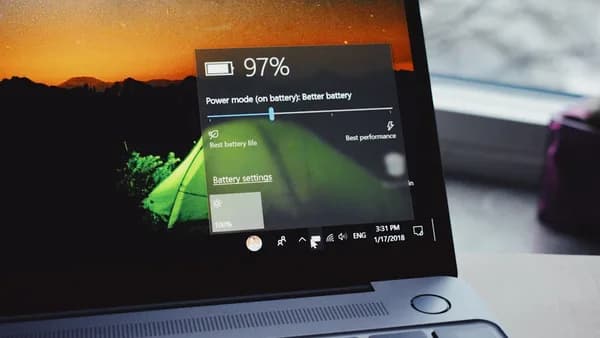
| Battery | Around 10 hours under light loads; over 17 hours in rundown testing | Makes the one-laptop argument more credible |
The webcam is still a weak point. The Verge calls it grainy in low light. But that is not enough to break the machine’s broader work credentials.
At $3,450 to start, has Asus damaged the G14’s original argument?
Yes. This is the strongest counterargument, and it is not a small one.
The new Intel-based G14 models start at $3,450. The reviewed configuration is $3,599.99. The Verge also notes that older Zephyrus G14 models used to start in the low $1,000 range, with higher-end configurations climbing to around $2,500. The reviewer paid under $1,400 for an open-box G14 in 2021 with a Ryzen 9 5900HS, RTX 3060, 16GB of RAM, and 1TB SSD.
That history stings. The G14 became beloved because it offered an unusually good blend of size, power, and price. In 2026, the blend is still there. The price is not.
“The value proposition that first defined the Zephyrus line is sadly long gone.”
The review also says the Intel review unit is $1,000 more than a nearly identical last-gen configuration with an AMD processor. Asus is keeping last year’s AMD models around as cheaper options, but the source says it is not known whether those prices could rise.
That means buyers have to be stricter. At this price, “good all-around” is not enough. The G14 must justify itself through build quality, battery life, screen quality, performance consistency, keyboard feel, ports, speakers, and daily usability. Fortunately, the review gives Asus strong marks across most of those areas: A for screen, keyboard, port selection, and speakers; B for trackpad; C for webcam.
The price does not erase the G14’s strengths. It raises the bar for who should buy it.
So who should actually choose the 2026 G14?
Buy it if the alternative is not “a cheaper laptop.” Buy it if the alternative is owning and maintaining two machines because neither one can do enough.
That is the G14’s real pitch. It is not the cheapest gaming laptop. It is not the most portable productivity laptop. It is not the most extreme performance machine. It is the laptop for people who want one computer that can survive a full day of normal work and still feel legitimate when the GPU matters.
The practical takeaway is simple: judge the 2026 Asus ROG Zephyrus G14 less by its category and more by your tolerance for compromise. If price is the first constraint, the cheaper last-gen AMD models may make more sense. If one-device simplicity is the priority, this G14 is hard to dismiss.
The watch item now is whether Asus can keep the G14’s identity intact as prices climb. A great one-laptop machine can survive being expensive. It cannot survive forgetting why people wanted one laptop in the first place.
Key Takeaways
- The 2026 Asus ROG Zephyrus G14 makes a strong case for replacing separate work and gaming laptops with one device.
- Its value comes from balancing portability, performance, display quality, ports, and restrained design rather than chasing raw power alone.
- At $3,599.99, it is costly, but the appeal is avoiding compromises that often make gaming laptops poor everyday machines.