On July 15, 2026, ASML turned a strong quarter into a broader warning for the AI market: chip demand is no longer just testing GPU designers. It is pressing against the lithography layer that determines how much advanced silicon can be built over the next two years.
The Dutch semiconductor equipment group reported roughly €9.3 billion in net sales and about €2.9 billion in net income, according to CryptoBriefing. The bigger signal was guidance. ASML indicated that demand tied to AI infrastructure remains strong enough to support a higher outlook, even if the supplied source material does not establish every detailed forecast figure.
That is not a routine earnings beat. It suggests AI capital expenditures are moving from headline commitments into hard equipment orders.
July 15, 2026: ASML’s forecast raise turns AI capex into a lithography race
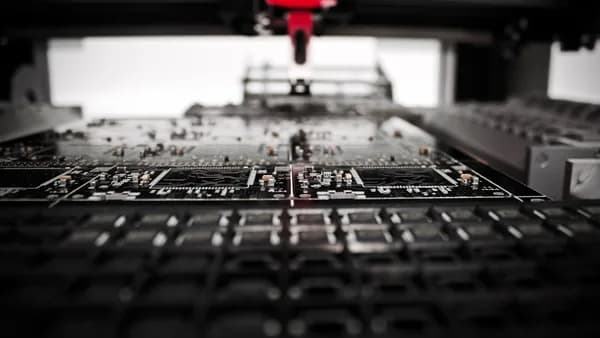
ASML sits at the narrowest point of advanced chip manufacturing: lithography. Its machines pattern the wafers that become processors, memory, and other chips. ASML itself says:
“Our lithography technology is fundamental to mass producing semiconductor chips.”
That matters because AI infrastructure spending only becomes real when chipmakers can translate demand into wafer starts. Software companies can announce AI products quickly. Data-center buyers can plan new capacity. But fabs need equipment, and lithography tools are ordered long before chips ship.
ASML’s update points to continued capacity planning among major semiconductor customers. The key read-through is simple: those customers are not behaving as if AI demand has peaked.
This follows a related MLXIO focus on ASML’s production ramp in ASML’s 30% Output Bet Reveals AI, Crypto Demand Is Real, though the current source material supports only the AI-driven semiconductor spending angle. The crypto-demand framing is not part of ASML’s July 15 update.
ASML’s raised guide shows demand is reaching the tool layer
ASML’s revised outlook implies a sharp change in customer commitments.
| Metric | Prior figure | Updated / reported figure | Signal |
|---|---|---|---|
| Q2 2026 net sales | Not supplied | Roughly €9.3 billion | Demand remained strong |
| Q2 2026 net income | Not supplied | Roughly €2.9 billion | Strong profitability in the quarter |
| Gross margin | Not supplied | Not specified in supplied context | Pricing and mix cannot be assessed from the provided material |
| 2026 revenue outlook | Not specified in supplied context | Raised outlook | Customers are pulling more capacity forward |
| EUV capacity base | Not supplied | Not quantified in supplied context | Future expansion details remain limited |
The most important number may be the guidance raise. For a company of ASML’s scale, any material reset in outlook matters because the company sits upstream of advanced chip production.
MLXIO analysis: ASML’s numbers are useful because they sit upstream of chip revenue. A cloud provider buying accelerators appears late in the chain. A chipmaker booking lithography capacity appears much earlier. That makes ASML’s guidance a forward signal for AI infrastructure spending, not just a snapshot of one quarter.
The supplied source material supports the broad point that ASML’s demand backdrop is being strengthened by AI-related semiconductor investment. It does not, however, provide enough detail to quantify every capacity timeline or convert bookings directly into a precise production schedule.
2027 and 2028 capacity remains the key question
ASML’s outlook makes future manufacturing capacity the central question for the AI supply chain. The supplied material points to continued demand for advanced lithography tools, but it does not quantify a specific EUV expansion rate for 2027 or 2028, nor does it establish how much of any future capacity has already been booked.
That distinction matters. Customers are not just asking for more chips now. They are also trying to secure the manufacturing tools that will define future chip capacity. But the available information supports that point directionally rather than with a precise capacity map.
High-NA EUV adds another layer. High-NA refers to ASML’s next-generation EUV platform with a higher numerical aperture, designed for more advanced patterning. The supplied ASML context says High-NA EUV has reached a new readiness milestone with a first high-volume logic product, without identifying a specific customer or chip program.
That is a milestone for ASML. It also shows how AI-era chip competition is becoming a manufacturing race. Foundries and integrated manufacturers need access to the most advanced tools not because the machines are prestigious, but because credibility in advanced chips depends on process capability.
The same logic applies outside semiconductors: control over scarce access points can shape outcomes. In consumer tech, platform access is the pressure point, as seen in Apple Grabs Sun Valley Access — But No Deal Signal and 93% UK Surge Puts Opera in Apple’s iPhone Browser Fight. In AI chips, ASML’s machines are the access point.
Major chipmakers are pulling on the same bottleneck
The customer mix matters even without naming every buyer. Foundries, integrated manufacturers, and memory producers do not all play the same role in semiconductors, but they all need capacity tied to advanced manufacturing.
- Foundries are central to outsourced leading-edge chip production.
- Integrated manufacturers need process capability to stay competitive.
- Memory producers matter because AI systems require large amounts of advanced memory.
- ASML benefits when multiple parts of the semiconductor chain expand at once.
MLXIO analysis: This is where the AI spending boom becomes less abstract. AI demand does not only require more accelerators. It also increases pressure on memory, advanced process capacity, and the manufacturing tools that support both. ASML’s raised outlook suggests that demand is now broad enough to reach the equipment layer.
The constraint is timing. Even if ASML expands tool output, semiconductor manufacturing capacity does not appear instantly. So the AI market may face a mismatch: immediate appetite for chips, but manufacturing capacity that takes time to translate into actual silicon.
China keeps geopolitics inside the growth story
Geopolitics remains part of ASML’s operating backdrop because advanced lithography tools are strategically sensitive and subject to export controls. However, the supplied source material does not establish a specific 2026 China sales share, does not quantify a change from prior years, and does not tie a particular China revenue trend to domestic logic chip demand.
That distinction matters. China may remain relevant to the semiconductor equipment market, but the provided material does not support a precise claim about its percentage contribution to ASML’s 2026 revenue.
The growth story is therefore not clean. It is shaped by both AI-linked demand and the policy environment around advanced semiconductor tools.
MLXIO analysis: For investors, this creates a split signal. ASML’s demand backdrop looks stronger, but customer allocation remains politically sensitive. If restrictions tighten further, the mix of what ASML can sell, and to whom, becomes as important as headline demand.
The investor read: strong evidence, but not a blank check
ASML’s quarter supports the case that AI capex is spreading beyond chip designers into semiconductor equipment. That is the useful signal.
But the evidence has limits. The source material does not prove how much end-user AI revenue will justify this buildout. It shows that chipmakers are spending and reserving capacity. It does not show whether every downstream AI buyer will earn enough return on that infrastructure.
For chipmakers, the logic is different. If lithography capacity is scarce and lead times are long, waiting can be expensive. Securing tools early protects future manufacturing optionality.
For enterprise technology buyers, the practical implication is indirect but important. If advanced chip supply remains constrained, access to AI compute may stay tight. If future ASML capacity converts into real output, supply pressure could ease later. The source does not provide pricing data, so that remains a scenario, not a claim.
The next proof point is booked EUV capacity becoming real silicon
ASML is now a bellwether for whether AI infrastructure spending is durable or simply front-loaded.
The confirming evidence would be clear: continued raised guidance, sustained bookings for EUV and High-NA EUV, and customer capacity plans that keep stretching into future years. The weakening evidence would be cancellations, slower guidance, or signs that booked tool capacity is not translating into production plans.
The core takeaway is narrower than the hype cycle, but stronger because of it: ASML’s raised outlook shows AI capital expenditures have reached the manufacturing equipment layer. The next test is whether AI usage and chip demand can grow fast enough to absorb the capacity now being planned in advance.
The Bottom Line
- ASML’s strong results suggest AI infrastructure spending is translating into real semiconductor equipment demand.
- Lithography capacity is a key bottleneck for how quickly advanced AI chips can be produced.
- The raised outlook signals major chip customers are still planning for sustained AI demand rather than a near-term peak.