The Ulefone Armor Mini 5 is most interesting because it looks underpowered on purpose: a $99 Android phone with physical buttons, a tiny touchscreen, and specs that would be embarrassing in a flagship but make sense in a secondary device.
Armor Mini 5 Proves the Best Smartphone May Be the One That Looks Like a Dumb Phone
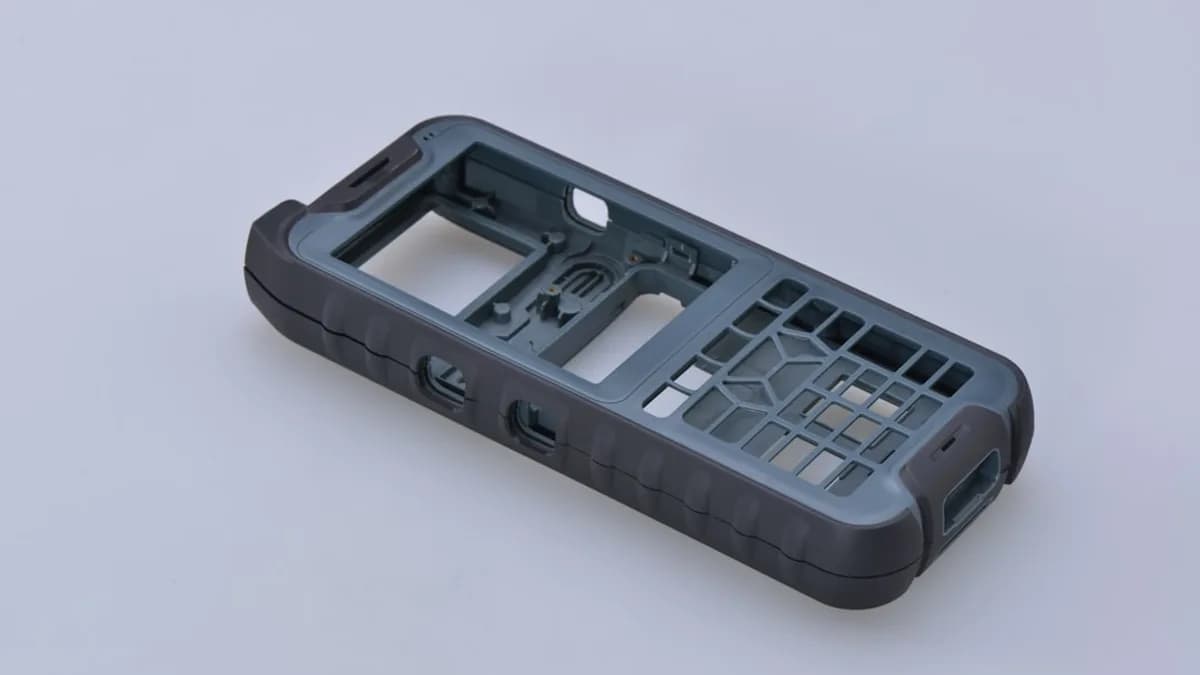
The expected move in phones is more screen, more cameras, more feed. The Armor Mini 5 moves the other way. It runs Android 11, supports installable apps, and includes a 2.8-inch touchscreen, but it wraps those smartphone basics in a feature-phone-like body with physical keys, according to Notebookcheck.
That contradiction is the product. The Armor Mini 5 is not pretending to replace a modern flagship. It is trying to make the case that a phone can be useful, like phone-based EDC tools, without becoming the center of a user’s day.
Ulefone calls it a secondary phone, and that framing matters. The device has LTE, dual-SIM support, expandable storage, a removable 2,500 mAh battery, and rugged ratings listed as IP68, IP69K, and MIL-STD-810H. It is built around communication and durability, not entertainment.
My view: this is a sharper idea than another oversized slab with marginal spec bumps. The Armor Mini 5’s limitations are not hidden. They are the filter.
Physical Buttons Give the Armor Mini 5 a Usability Edge That Slabs Have Forgotten
Modern phones turned every interaction into glass. Tap. Swipe. Hunt for the right gesture. Hope the screen wakes correctly. The Armor Mini 5 brings back the one thing the slab era discarded too quickly: tactile intent.
Physical buttons are not just retro decoration. They can make basic actions faster and more deliberate. Dialing, answering, navigating menus, and typing short messages all become less dependent on a perfect touchscreen interaction. For a device meant around calls, texts, and WhatsApp, that matters.
The Armor Mini 5 still has touch input, but touch is not the whole interface. That hybrid design is the point.
| Device idea | Main strength | Main trade-off |
|---|---|---|
| Traditional feature phone | Simple, tactile, low distraction | Limited app access |
| Full modern smartphone | Apps, media, full touch UI | Constant attention pull |
| Armor Mini 5 | Android apps plus physical controls | Tiny screen and low-end specs |
This is why the device is more interesting than a nostalgia phone. It does not reject the smartphone. It edits it.
Android App Support Turns This Compact Phone Into More Than Digital Minimalism Theater
Minimalist phones often fail because they confuse “less distracting” with “less useful.” A phone without the right apps can become a moral statement that sits in a drawer.
The Armor Mini 5 avoids that trap, at least on paper. It runs Android 11, Ulefone says WhatsApp comes pre-loaded, and the company references access to apps such as Google Maps, YouTube, and the Play Store. Notebookcheck also notes that additional apps can be installed.
That does not mean every app will be pleasant. The 240 x 320 pixel display is tiny. The MediaTek MT6739, introduced in 2017, is paired with just 1GB RAM and 8GB internal storage. Those numbers set a hard ceiling.
Still, the idea works because the hardware discourages the behavior that makes smartphones exhausting. You can install apps. You just probably will not want to doomscroll on a 2.8-inch display.
A useful before-and-after shift looks like this:
- Before: Dumb phones cut distractions by cutting capability.
- After: Armor Mini 5 cuts distractions by making capability less seductive.
- Before: Secondary phones often mean missing modern messaging.
- After: WhatsApp and Android app support keep the device connected.
- Before: Touch-only design assumes attention is cheap.
- After: Buttons make short, intentional use feel natural.
That is the device’s strongest argument.
The Armor Mini 5 Fits Secondary Phones Better Than Flagship Replacement Fantasy
Ulefone’s own positioning is unusually honest: this is a “Go-to Secondary Phone”, not a flagship killer. Good. The phone makes far more sense when judged as a second device for calls, messages, music, travel days, rough work settings, or emergency carry.
The removable battery strengthens that case. Notebookcheck reports standby time of up to 311 hours, while Ulefone says the 2,500 mAh battery can last 12 days with moderate use, with lab-data caveats. Either way, the pitch is clear: this phone should spend more time ready than charging.
There are also three card slots: two for cellular networks and one for microSD expansion up to 64GB. That gives the Armor Mini 5 a practical role for users who want two phone numbers without carrying a large primary phone everywhere.
This does not prove a mass-market shift toward tiny rugged Android devices. The source material does not support that claim. But it does show one manufacturer making a clear bet: some users want a phone that does less, survives more, and still handles essential apps.
For adjacent MLXIO context on phones moving away from one-size-fits-all assumptions, see our coverage of $599 Motorola Edge 2026 Bets Small Phones Can Win Big and Xiaomi Cracks AirDrop—and Apple’s Walled Garden Shifts.
Small Screens Are Not a Weakness When the Goal Is Control, Not Entertainment
The Armor Mini 5’s screen is objectively limited. 2.8 inches and 240 x 320 pixels will not flatter video, games, dense websites, or modern app interfaces. Notebookcheck is right to question whether demanding apps will be suitable.
But that weakness becomes useful if the goal is control. A small screen makes the device better for tasks and worse for passive consumption. That is exactly what a secondary phone should do.
Ulefone’s own marketing leans into this. The company says the phone is for “essential communication, calls, text and listening to music,” while reducing “endless scrolling” and “constant distractions.” That is marketing language, but the hardware backs it up better than most marketing language does.
A tiny touchscreen changes the question. Not “How much can this phone do?” but “How much do I actually need it to do?”
The Hard Counterargument Is That This Android Phone May Be Too Compromised
The strongest criticism is simple: the Armor Mini 5 may land between categories and frustrate both sides.
As a smartphone, it is weak. The MT6739, 1GB RAM, 8GB storage, and low-resolution screen leave little room for modern app comfort. App interfaces may scale badly. Typing may feel cramped. Media consumption will be poor. The front and rear cameras are both 0.3 MP, which Notebookcheck says is near the limit of practical usability.
As a feature phone, it may also be too complex. Android brings updates, app compatibility questions, storage pressure, and the usual software maintenance burden. The source material does not give a long-term update policy, and that omission matters for any Android device.
That is why the Armor Mini 5 should not be judged as a daily driver for most people. Its best case is narrower and stronger: a focused companion device with enough Android to stay useful and enough friction to stay in its lane.
Phone Makers Should Learn From the Armor Mini 5’s Refusal to Chase Bigger Screens
The Armor Mini 5 is not powerful. It is not glamorous. It may not even be comfortable for many apps. But it makes a point the phone industry should hear: not every device needs to maximize attention.
Manufacturers should build more phones around specific use cases: durability, physical controls, removable batteries, secondary-number support, compact carry, and restrained interfaces. Consumers should reward devices that offer a different relationship with technology instead of defaulting to the biggest, brightest slab available.
The watch item now is execution. If the Armor Mini 5’s performance, ergonomics, and app compatibility hold up in real use, it strengthens the argument for intentional phones. If they fail, the lesson is not that small phones are dead. It is that restraint still needs good engineering.
The Armor Mini 5 looks like a throwback. Its real message is forward-facing: the future of phones should leave room for restraint.
Key Takeaways
- The Armor Mini 5 shows there is still demand for simpler phones that avoid constant distraction.
- Its $99 price and rugged build make it a practical secondary device for travel, work, or emergencies.
- Physical buttons and a removable 2,500 mAh battery prioritize reliability over flagship-style features.