More than 250 U.S. airports are already becoming the proving ground for Apple’s identity ambitions, and Arkansas just added another state-issued credential to that push.
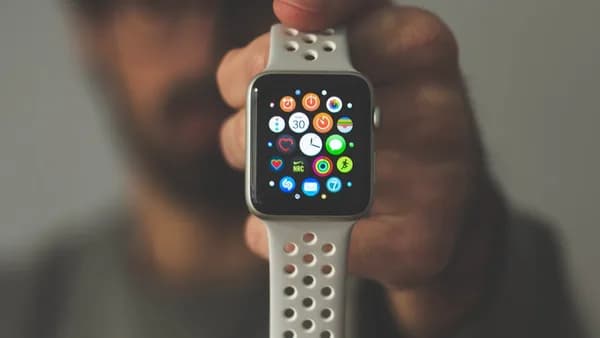
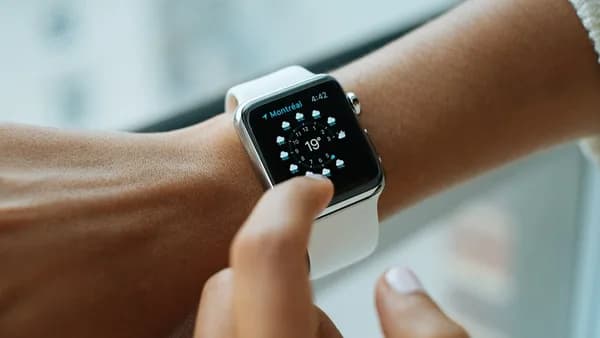
Starting today, Arkansas residents can add a driver’s license to Apple Wallet on iPhone and Apple Watch, according to 9to5Mac. The rollout matters less as a one-state product update than as another sign that government ID is moving from plastic cards into device-based credentials — slowly, unevenly, and still with Apple Wallet limits.
9to5Mac notes one timing caveat: the feature had been announced by Arkansas but did not yet appear live in the Wallet app at publication time, with availability expected to begin rolling out “within the next couple of hours.”
Arkansas Adds One More State Credential, But Not a Plastic-License Replacement
Arkansas was already on Apple’s list of states planning support for driver’s licenses and state IDs in Apple Wallet. The state launched Google Wallet and Samsung Wallet support last year, per 9to5Mac, and is now following through on Apple Wallet support through an announcement on its Department of Finance and Administration website.
The legal limit is explicit. Arkansas is not telling residents to ditch the card.
“ID in Apple Wallet does not replace your physical driver’s license or identification card and you must continue to carry your physical card. ID in Apple Wallet is voluntary and serves as an easy, private, and secure companion to your physical, plastic driver’s license/identification card.”
That sentence is the real story. Apple Wallet ID is not yet a universal credential. It is a companion credential with specific acceptance points: TSA checkpoints, plus select businesses and organizations in person, in apps, and online.
MLXIO analysis: Arkansas’ move expands the legitimacy of mobile IDs, but it does not solve the harder part — getting every agency, venue, and verification flow to accept the same credential without forcing residents into a device-only future.
The Wallet Flow Is Simple; The Acceptance Map Is Not
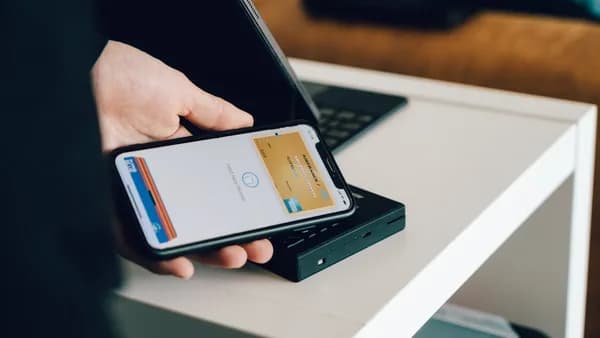
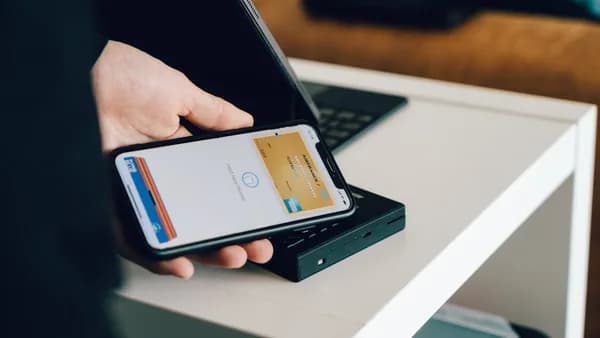
Eligible Arkansas residents can start the process in Apple Wallet by tapping the “+” button in the upper-right corner of the app. Apple Wallet then guides the user through adding the ID and verifying identity.
Once added, the credential can be presented from an iPhone or Apple Watch where supported. For Apple’s passport-based Digital ID, the company says users present by opening Wallet, selecting the ID, holding the device near an identity reader, reviewing the requested information, and approving with Face ID or Touch ID.
The distinction matters because “available in Wallet” and “accepted everywhere” are not the same thing.
| Credential type | Built from | Stated use cases in sources | Physical document still needed |
|---|---|---|---|
| Arkansas driver’s license/state ID in Apple Wallet | State-issued ID | TSA checkpoints; select businesses and organizations in person, in apps, and online | Yes, Arkansas says residents must keep carrying the card |
| Apple Digital ID | U.S. passport information | TSA checkpoints at more than 250 U.S. airports at launch; future select use cases | Yes, not a physical passport replacement and not for international travel or border crossing |
Apple’s broader Digital ID rollout also affects how investors and users should read Arkansas. State support still matters, but Apple no longer depends only on state-by-state driver’s license deals to put identity credentials in Wallet.
14 States Plus Puerto Rico Shows Progress — Not Ubiquity
With Arkansas joining, Apple Wallet driver’s license support now sits alongside a list that includes Arizona, California, Colorado, Georgia, Hawaii, Illinois, Iowa, Maryland, Montana, New Mexico, North Dakota, Ohio, Puerto Rico, and West Virginia, according to 9to5Mac.
That is meaningful coverage, but it is still a patchwork. The rollout is governed by state participation, supported devices, verification systems, and acceptance points. A resident being eligible to add an ID is only the first layer. Enrollment is another. Actual day-to-day usage is narrower still.
The TSA remains the clearest early use case. Apple said on November 12, 2025 that its passport-based Digital ID would first roll out in beta at TSA checkpoints at more than 250 airports in the U.S. for domestic travel identity verification. That gives Apple a controlled environment where readers, authentication, and requested data can be standardized more easily than across every private and public venue.
This is also where our prior coverage of Apple Wallet Digital ID escaping TSA for age checks becomes relevant: the long-term value is not just airport throughput. It is whether the same identity rail can work across more verification moments without exposing a full physical license.
Apple’s Privacy Pitch Is the Product
Apple’s argument is not only convenience. It is selective disclosure.
In its Digital ID announcement, Apple said Digital ID data is encrypted, passport data is stored on device, and Apple cannot see when or where users present an ID or what data was presented. The company also says users can review the specific information being requested before approving with Face ID or Touch ID.
“Digital IDs brings this secure and convenient option to even more users across the country, as they can now add an ID to Wallet using information from their U.S. passport,” said Jennifer Bailey, Apple’s vice president of Apple Pay and Apple Wallet.
MLXIO analysis: selective disclosure is the strongest privacy case for mobile IDs. A physical license often reveals more than a transaction needs. A digital credential can, in theory, confirm only the requested fields. The sources stop short of saying exactly how every Arkansas use case will handle data, so the practical privacy gain will depend on the acceptance system, not just Wallet itself.
Device dependency remains the obvious limit. If a venue does not support the reader flow, if the phone is unavailable, or if the person does not use a compatible Apple device, the physical card remains the fallback. Arkansas’ own statement makes that non-negotiable.
Apple, Arkansas, TSA, and Residents Are Testing Different Things
Apple gains another reason for users to keep identity, payments, passes, and daily credentials inside Wallet. That deepens the practical utility of iPhone and Apple Watch without Apple needing to sell the feature as a standalone product.
Arkansas gains another digital option for residents while keeping the legal anchor on the physical card. The state’s earlier support for Google Wallet and Samsung Wallet also suggests this is not an Apple-only credential strategy, at least based on the rollout sequence cited by 9to5Mac.
TSA gets another pool of residents who may present mobile IDs at supported checkpoints. Businesses and organizations get a possible verification path, but only where Apple Wallet IDs are accepted and the required reader or online flow exists.
Residents get the clearest near-term tradeoff: convenience when supported, redundancy when not. The sources do not provide Arkansas resident reaction, so any claim about public enthusiasm or skepticism would be guesswork.
The same software-dependency issue runs through Apple’s broader product agenda, including the iPhone and OS-level gaps we examined in WWDC 2026 Puts Apple’s Most Annoying OS Gaps on Trial. Digital ID is not just a Wallet feature. It depends on the device, the OS, state systems, and accepting institutions all working at once.
The Next Scale Test Is Usage Beyond the State Announcement
Arkansas iPhone users should treat Wallet ID as a useful add-on, not a replacement. Add it if eligible. Test where it is accepted. Keep the plastic license.
For Apple, the stronger signal would be less about the next state announcement and more about acceptance density: more TSA lanes, more select businesses and organizations, and more online or in-app verification flows that request only necessary information. Evidence that would weaken the thesis is just as clear: if Wallet IDs remain mostly a travel checkpoint feature, the state-by-state rollout will look more like a convenience layer than a real identity shift.
For now, Arkansas makes Apple Wallet ID broader. It does not make it universal. The plastic card still wins on coverage. The phone is starting to win on control.
Impact Analysis
- Arkansas expands Apple Wallet’s digital ID footprint as more states test mobile credentials.
- Residents still must carry a physical license because Wallet ID is not a full legal replacement.
- Adoption depends on acceptance at TSA checkpoints, businesses, apps, and online services.