Apple’s reported fall refresh of Apple TV 4K and HomePod mini is less about new boxes than a delayed Siri credibility test landing in the living room. The people most exposed are Apple users who already rely on Apple TV 4K, HomePod mini, and Siri for media, voice control, and smart-home commands.
The new devices are expected later this year alongside next-generation Siri in iOS 27, according to 9to5Mac, citing the latest edition of Mark Gurman’s Power On newsletter. The reported hardware changes sound modest: mostly chip upgrades, with a possible Siri Remote refresh for Apple TV 4K.
The deeper signal is sharper. Apple appears to be timing low-drama home hardware around high-stakes AI software. If Siri does not feel meaningfully better on these devices, faster chips may look like maintenance, not momentum.
Apple’s core problem: refreshed hardware has to carry a delayed Siri story
The reported launch window matters because the devices were not framed as standalone hardware updates. Per the report, Apple has held them back to align with Apple Intelligence and the new Siri experience.
“These refreshes have been held back for many, many months because they were designed to launch in tandem with the new Siri and Apple Intelligence updates. That software is now scheduled for this fall, following numerous delays.”
That line explains the strategy. Apple is not just swapping silicon. It is trying to make Apple TV 4K and HomePod mini part of the first visible wave of its more capable Siri rollout.
What happens if the software is late again?
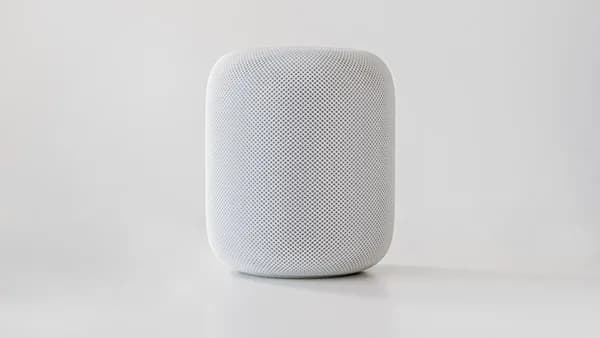
MLXIO analysis: that is the risk Apple has created for itself. A chip-focused HomePod mini update only feels meaningful if Siri becomes more useful in the room where the device lives. A smart speaker has no screen to hide behind. Its interface is the assistant. If Siri misses, the product misses.
This also connects to the broader iOS 27 AI arc we covered in iOS 27 Siri Leak Reveals Apple’s AI Power Grab on iPhone and Siri’s Gemini Makeover Puts Apple’s iOS 27 on the Line. The living room may be where Apple’s AI promises become harder to fake, because users ask for practical outcomes: play this, control that, find this show, execute this command.
Apple’s builders get a platform reset, not a redesign brief
The product scope, as reported, is narrow. A new Apple TV 4K. A refreshed HomePod mini. New chips. A possible Siri Remote update. The Apple TV box itself is expected to look similar.
Gurman’s reporting, quoted by 9to5Mac, leaves room for a remote change but does not promise a visible redesign:
“There is, I’m told, a possibility the remote will be refreshed in some form, but the box itself will look similar to the current version, which is an incarnation of the 2010 industrial design. (And even the remote update could just be a minor change inside the accessory, rather than something noticeable.)”
That puts the focus on internal capability. 9to5Mac says it is “largely believed” the Apple TV 4K will move from the A15 to the A17 Pro, while HomePod mini may move from the S5 to the S9.
| Device | Reported chip direction | AI implication from source |
|---|---|---|
| Apple TV 4K | A15 → A17 Pro | A17 Pro would give Apple TV 4K enough power to run Apple’s models locally |
| HomePod mini | S5 → S9 | S9 “most definitely cannot,” so Apple Intelligence features would likely rely on cloud streaming |
Could this be a bigger developer story than the hardware suggests?
MLXIO analysis: yes, but only if Apple makes Siri and Apple Intelligence a more reliable layer across devices. Better local model support on Apple TV 4K could matter if Apple turns tvOS into more than a video launcher. On HomePod mini, the likely dependence on cloud processing means the user experience may hinge less on the S9 chip itself and more on Apple’s backend execution.
Buyers get a familiar device, but the remote may reveal Apple’s real pain point
For end users, the reported refresh is not shaping up as a dramatic industrial-design moment. That cuts both ways. Familiar hardware reduces friction for buyers already invested in Apple’s home setup. But it also raises the bar for the software story.
The possible Siri Remote change is more interesting than it looks. Apple TV friction often shows up at the point of control: search, navigation, playback, input, and voice commands. A new chip can make the box faster. A better remote, even a small one, can make the device feel less annoying every day.
Would buyers notice a chip upgrade if Siri still behaves like old Siri?
MLXIO analysis: probably not in the way Apple wants. A faster Apple TV 4K may be appreciated, especially if local models enable quicker AI features. But HomePod mini is a more exposed test. The device’s value depends heavily on how well Siri understands intent and completes tasks. If the next-generation assistant cannot handle richer, more contextual home requests, the refreshed speaker risks feeling dated on arrival.
The source does not provide pricing, launch dates beyond “this fall,” or a final feature list. That limits any hard buyer recommendation. The practical read is simpler: anyone considering these devices should watch whether Apple ties launch messaging to specific Siri capabilities, not just new silicon.
Competitors have no reported reaction, which makes Apple’s own signal more important
The supplied reporting does not include reactions from Amazon, Google, Roku, Sonos, Samsung, or any other rival. So any claim about competitor response would be speculation.
What can be said is narrower and more useful: Apple appears to be positioning home hardware around its own AI schedule. 9to5Mac also notes that Apple’s AI rollout may be coming together thanks to “its new deal with Google to use licensed Gemini models on Private Cloud Compute,” internal reorganization, and more time to work on the software.
That is a significant framing. The Apple TV 4K and HomePod mini refreshes are not being described as a race to new form factors. They are being tied to Siri’s readiness.
Does that make the hardware defensive or offensive?
MLXIO analysis: both, depending on execution. Defensive if the devices merely catch up internally after a long wait. Offensive if Apple uses them to show that Siri can act as a natural control layer across TV, music, and the smart home. The distinction will be visible quickly because living-room tasks are repetitive and easy for users to judge.
The market signal: Apple is making Siri the interface, not the accessory
The most important unknown is not whether Apple ships a new Apple TV 4K or HomePod mini. The report says those devices are expected this fall. The harder question is whether iOS 27’s next-generation Siri is ready enough to justify why the hardware waited.
Apple’s reported product mix suggests an iterative fall launch: performance upgrades, similar Apple TV design, possible Siri Remote refresh, and a HomePod mini that depends on cloud streaming for new Apple Intelligence features. That is not a radical home-hardware reset. It is a software-first bet wrapped in familiar devices.
The evidence that would confirm the thesis is specific: Apple shows Siri completing richer home and media tasks across Apple TV 4K and HomePod mini, with clear differences from today’s experience. The evidence that would weaken it is just as clear: vague Apple Intelligence branding, delayed Siri features, or hardware that launches before the assistant can carry the pitch.
By fall, Apple’s living-room strategy may hinge on a simple test. If Siri becomes the interface, the chip upgrades make sense. If Siri remains just another feature, the refresh looks like another long-awaited maintenance cycle.
The Bottom Line
- Apple is reportedly tying modest home hardware updates to a much bigger Siri and Apple Intelligence rollout.
- If next-generation Siri is delayed again or underwhelms, the new devices may feel like routine refreshes.
- Apple TV 4K and HomePod mini users are likely to be among the first to judge whether Siri has meaningfully improved at home.