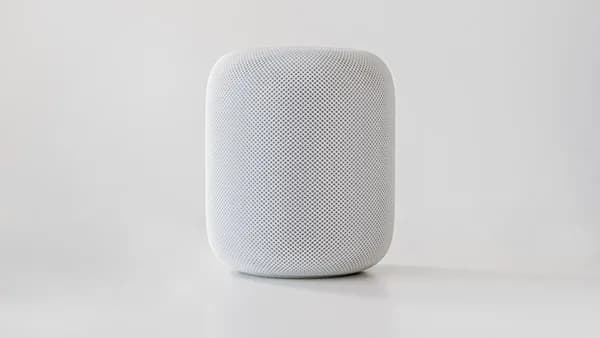
Six years is the number that reframes this Apple leak: the HomePod mini has not had a meaningful hardware refresh since October 2020, and the next version is reportedly being held back so it can launch with Apple’s delayed AI version of Siri.
The refreshed Apple TV and HomePod mini have been finished and ready for production for months, but Apple delayed them to line up with its revamped AI-powered Siri and the broader Apple Intelligence rollout, according to Notebookcheck. That makes this less a routine hardware story than a referendum on whether Apple can turn its home devices into credible AI endpoints.
If the leak is accurate, Apple is not waiting on a box or a speaker. It is waiting on the intelligence layer that makes those devices matter.
Six years later, Apple’s HomePod mini refresh hinges on Siri, not speakers
The headline hardware appears straightforward: a faster Apple TV, a refreshed HomePod mini, and possible tweaks to the Siri Remote. The real signal is that Apple reportedly chose not to ship finished devices until its new Siri is ready.
That is a sharp strategic choice. Apple could have pushed out faster home hardware earlier and sold the upgrades on performance, sound, connectivity, or gaming. Instead, the leak says the company held back because launching new “smart” home devices without the new AI assistant would undercut the point of the refresh.
MLXIO analysis: That implies Apple sees the home lineup as part of its AI distribution strategy, not just a category of accessories. A living-room box and an always-on speaker only become more valuable if users trust them to answer context-rich questions, trigger routines, control media, and handle household commands without friction.
This fits with our earlier read in Siri's Delayed AI Test Hits Apple TV and HomePod Mini: the delay is not only a product-timing issue. It is a credibility test. Apple has the hardware surfaces. The harder part is proving Siri can finally carry daily interaction across rooms.
The risk is obvious. If Apple ships the refreshed hardware before AI Siri is ready, it repeats a familiar pattern: strong silicon trapped behind underwhelming voice software. If it waits too long, the hardware cycle looks stale, especially for the HomePod mini, which would be approaching a six-year gap by fall 2026.
A17 Pro-class Apple TV would make the living room Apple’s AI front door
The next Apple TV is expected to get an upgraded processor, likely the A17 Pro from the iPhone 15 Pro, according to the leak. That chip choice matters because the A17 Pro is tied to the Apple Intelligence era, and MacRumors notes earlier rumors also pointed to the A17 Pro as “the oldest chip that supports Apple Intelligence,” according to MacRumors.
For a TV box, faster silicon is not only about smoother menus. It could support lower-latency Siri responses, more responsive tvOS features, better smart-home command handling, and heavier on-device processing where Apple chooses to keep tasks local.
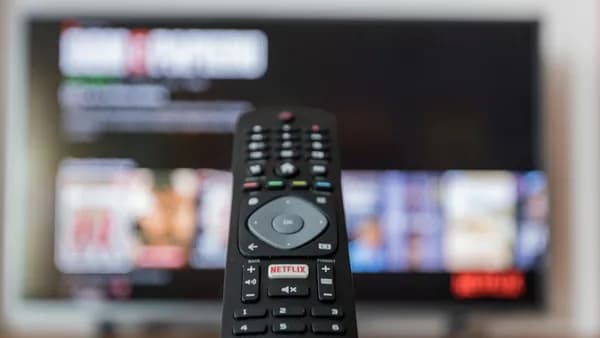
The leak also mentions possible remote refinements. That may sound minor, but the remote is the Apple TV’s most visible interface. If Apple wants the device to feel less like a streaming puck and more like a household control point, input matters. Voice, buttons, search, media navigation, smart-home scenes, and AI queries all converge there.
MLXIO analysis: The Apple TV is the strongest candidate to become Apple’s shared household AI terminal. The iPhone is personal. The Mac is task-centric. The Apple TV sits in a common room, connected to the largest screen in the house, already tied to media, apps, and HomeKit control.
That positioning only works if Siri improves. A faster chip can reduce latency, but it cannot make weak reasoning feel smart. The reported decision to tie hardware timing to Siri suggests Apple understands that distinction.
2020, 2022, 2026: the dates expose Apple’s slow home cycle
The current HomePod mini was introduced in October 2020. The current Apple TV 4K debuted in October 2022. The full-sized HomePod was last updated in January 2023, according to MacRumors.
That cadence makes the rumored fall 2026 launch window meaningful. Apple’s home hardware has not moved at the pace of its iPhone or Mac silicon story. The result is a lineup where the software ambition now appears to be forcing a hardware catch-up.
| Device | Current generation timing from supplied sources | Reported or rumored refresh focus |
|---|---|---|
| HomePod mini | Introduced October 2020 | Newer S-series processor, possible S9 or newer, support for revamped Siri |
| Apple TV 4K | Debuted October 2022 | Likely A17 Pro, possible remote refinements, AI tasks, console-quality gaming |
| Full-sized HomePod | Last updated January 2023 | MacRumors says a new model is planned, but rumored upgrades remain limited |
The HomePod mini is reportedly code-named B525 and is expected to move from the aging S5 chip to a more capable modern S-series processor. That is not a cosmetic upgrade. Voice assistants live or die on responsiveness, especially in a home setting where a delayed command can make users abandon automation entirely.
MacRumors also reports expected connectivity upgrades for the next Apple TV, including Apple’s N1 chip for Wi-Fi 7, Bluetooth 6, and Thread. For the HomePod mini, rumored additions include the N1 chip, improved sound quality, a newer Ultra Wideband chip, and a red color option. MacRumors also flags uncertainty around whether an S9 or newer Apple Watch chip would be capable enough for the revamped Siri.
That uncertainty is important. The leak says these devices are being built to support more advanced Siri capabilities, but the exact split between local processing and cloud processing is not confirmed. In smart-home products, that split determines latency, privacy posture, reliability, and whether commands still feel natural under real household conditions.
Siri has been the constraint since HomePod became a premium speaker first
Apple’s home problem has rarely been industrial design. The issue has been whether the software experience justifies the hardware.
The original HomePod leaned heavily into sound quality. But as a voice-driven home device, it faced a harder comparison: people expected the assistant to be flexible, fast, and useful across many daily requests. Siri’s limitations made the product feel narrower than the hardware suggested.
The HomePod mini widened the addressable base by being smaller and cheaper than the original HomePod, but it did not fully reset perceptions of Siri. A more accessible speaker still depends on the same assistant layer. If the assistant disappoints, the device becomes a good speaker with a voice interface many users route around.
Apple TV has had a similar tension. The hardware has often been more capable than the average streaming use case requires. The leak’s reference to an upgraded processor for AI tasks and supposedly console-quality gaming continues that pattern: Apple can put serious silicon in the living room, but the services and interaction model must make that silicon feel necessary.
That is why the connection to iOS 27 matters. Notebookcheck says the devices were designed around AI capabilities debuting in iOS 27 and corresponding tvOS and HomePod software updates, with a preview expected at WWDC 2026 and the software scheduled for fall. Our earlier analysis of iOS 27 turning Siri into Apple’s AI command center fits the same thesis: Apple’s hardware launches are increasingly paced around whether its AI software can be believed.
Users, developers, rivals, and investors will not price this leak the same way
For Apple users, the practical question is not whether the Apple TV chip is faster on paper. It is whether daily home tasks get meaningfully better.
That means:
- Media: Faster search, better show discovery, and fewer awkward Siri failures on the TV.
- Smart home: More reliable control of lights, cameras, scenes, locks, and Matter devices.
- Routines: More context-aware commands that do not require rigid phrasing.
- Household access: A useful Siri layer that works without pulling out an iPhone or opening a Mac.
For developers and accessory makers, stronger home hardware could expand the practical target for Matter, HomeKit automations, tvOS apps, and AI-aware household experiences. That does not mean Apple has announced new developer tools here. It means the installed hardware base could become more capable if these upgrades ship as described.
For rivals, the signal is narrower but still relevant. Apple may not be trying to win every low-end smart-speaker comparison. The supplied reporting points instead to a more integrated premium-home push: Apple TV, HomePod, iPhone, Siri, tvOS, HomePod software, and Apple Intelligence moving together.
For investors, the bigger read is that Apple may use home devices as more AI distribution points. These products do not need to be iPhone-sized businesses to matter strategically. They can deepen user lock-in, add more daily touchpoints, and create new surfaces for future AI services.
MLXIO analysis: The delay suggests Apple would rather sacrifice near-term hardware timing than ship devices that make its AI story look unfinished. That is the right trade if Siri improves. It is a costly one if Siri slips again.
The buying calculus changes if fall timing holds
For consumers considering an Apple TV, HomePod mini, or broader Apple smart-home setup, the reported timing argues for patience. Notebookcheck says the hardware has been held for a launch alongside the AI software overhaul, with fall now the expected window and a WWDC 2026 preview likely.
That does not make current devices unusable. It does make the next versions more strategically important than a normal spec bump. A HomePod mini with a modern processor and a more conversational Siri could feel materially different if Apple gets latency and context right.
Privacy and trust will likely sit near the center of Apple’s pitch, though the source material does not specify the technical architecture behind the new Siri. If some AI tasks run locally and others use controlled cloud infrastructure, Apple will need to explain what happens where. For home devices, that matters more than in many categories because microphones, family commands, and household routines are involved.
MacRumors reports that Bloomberg’s Mark Gurman said Apple TV and HomePod mini updates have been “ready” since last year, while the broader lineup remains tied to the personalized Siri release.
There is also a shelf-level signal. MacRumors reports Apple TV, HomePod mini, and full-sized HomePod inventory is “running low” at Apple retail stores around the world, and that some HomePod mini configurations in Toronto were not available until as late as May 8. That may suggest Apple is winding down current HomePod mini manufacturing, though it is not proof of a launch date by itself.
Fall 2026 becomes Siri’s first household stress test
Apple will likely market the refreshed home lineup less around raw specs and more around faster, more conversational, more context-aware Siri experiences. The Apple TV should get the more visible hardware story: chip, remote, media performance, gaming potential, and connectivity. The HomePod mini story should center on responsiveness, smart-home reliability, and the value of an always-available voice interface.
The full-sized HomePod adds another wrinkle. MacRumors says Gurman answered “yes” to a new full-sized HomePod coming alongside the updated HomePod mini and Apple TV, but the reported upgrades for that model remain less defined. If Apple refreshes all three, the company can present a coordinated home push rather than a pair of isolated updates.
The biggest launch risk is not industrial design. Notebookcheck says the Apple TV design is expected to remain largely unchanged from its older black plastic aesthetic. The risk is that AI Siri arrives late, limited, or inconsistent. In that case, even meaningful internal upgrades could feel incremental to users.
The evidence to watch is clear. A strong thesis would be confirmed if Apple previews Siri at WWDC 2026 with concrete household use cases, ships the software in fall, and ties the new Apple TV and HomePod mini to specific AI tasks rather than vague assistant promises. The thesis weakens if the hardware appears first with only generic speed claims, or if Siri’s most advanced features remain confined to iPhone demos.
Apple’s smart-home credibility in 2026 will depend less on a new remote, a faster chip, or a red HomePod mini than on whether Siri finally becomes dependable enough to run the room.
The Bottom Line
- Apple appears to be delaying finished home hardware until its AI-powered Siri is ready.
- The HomePod mini refresh matters because the product has gone about six years without a meaningful hardware update.
- The leak suggests Apple sees Apple TV and HomePod mini as AI access points, not just standalone accessories.