Apple's Steep Discounts Reveal a Shift in Strategy — Not Just a Clearance Sale
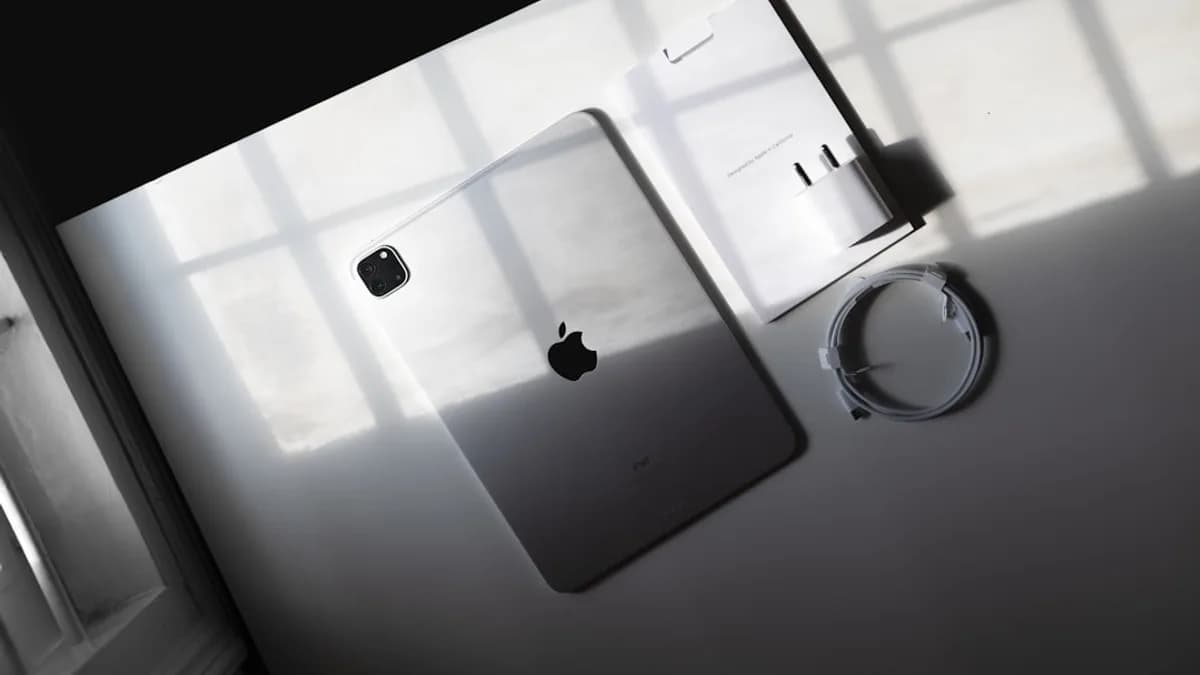
Apple is slashing prices on devices it released less than a year ago, breaking its historic reluctance to discount. The M4 iPad Air is now $110 off, and the M4 MacBook Air 16GB/512GB is $400 below its original price — levels rarely seen outside closeouts or holiday specials. The 24GB M5 MacBook Pro, barely months old, is already $300 off. These aren’t leftovers; they’re current-gen products. This isn’t just a liquidation — Apple is recalibrating its price/volume equation in real time, as 9to5Mac reports.
Consumers are seeing deals on Apple accessories, too: USB-C Charge Cables starting at $6.50 and AirTag Loops at $6. Apple’s strategy now looks more like Samsung’s — aggressive discounts to hold share — than the premium-only approach it clung to for decades. The question: why now, and what does it signal for tech buyers and rivals?
Market Forces Driving Apple’s Deep Price Cuts in 2024
Apple’s pricing pivot isn’t happening in a vacuum. Global tablet shipments dropped 7% year-over-year in Q1 2024, with laptops sliding 5%, according to IDC. Apple’s own revenue from iPad and Mac segments fell 11% and 8% respectively last quarter — its biggest declines since 2020. Inventory build-up has become more visible: leaked supply chain data shows Apple’s M4 iPad Air and MacBook Air models piling up in U.S. warehouses, even as older M2 and M3 units linger unsold.
The company’s product cycle is accelerating. With the M5 MacBook Pro arriving less than six months after M4 models, retailers — and Apple itself — face compressed windows to move inventory before the next launch. Apple tends to avoid massive overstocking, and this year’s rapid succession of chip upgrades forced its hand.
Meanwhile, consumer demand is tilting toward mid-range devices with longer upgrade cycles. Samsung, Lenovo, and ASUS are flooding the market with well-equipped tablets and ultrabooks at $600-900, undercutting Apple’s traditional pricing. The pandemic-era device upgrade rush has faded, and Apple’s high-end buyers are holding off — either waiting for bigger jumps (like M6 chips) or seeking deals.
Price Drop Breakdown: How These Apple Discounts Stack Up Against History
Here’s the math: the M4 iPad Air (256GB, 13-inch) now lists at $889, down from $999 — an 11% drop. The M4 MacBook Air (16GB/512GB) is $1,099, a 27% cut from its $1,499 launch price. The M5 MacBook Pro (24GB) sits at $2,199, $300 below its original $2,499 level. Apple USB-C cables from $6.50 and AirTag Loops at $6 are the lowest official Apple prices since their launch.
Historically, Apple’s discounts on current-gen devices rarely exceeded 5-10% outside Black Friday. The 2022 M2 MacBook Air, for example, saw only $100-150 off in its first year. Clearance pricing like this — $400 off a device less than one year old — is unprecedented.
For consumers, these deals dramatically alter the cost/benefit calculation. The M4 MacBook Air now rivals the price of high-end Windows ultrabooks ($1,100–$1,200) with better battery and resale value. The M5 MacBook Pro’s price cut makes it one of the cheapest flagship pro laptops with 24GB RAM on the market. Buying at full price now looks like a penalty, not a privilege.
Stakeholder Reactions: Consumers, Retailers, and Competitors Feel the Ripple
Consumers win big — but only if they time their upgrade right. The current window is the best for buyers who want recent Apple silicon without waiting for M6. Those who bought at launch are stuck with depreciation; resale values for M4 and M5 models will drop faster than previous cycles.
Retailers are caught between two pressures. They must clear inventory before Apple’s next cycle, which could arrive as soon as late 2024. Expect to see more bundle deals and extended return windows as stores scramble to move units. For brick-and-mortar, these discounts mean leaner margins; for online giants like Amazon, it’s a volume play.
Apple’s rivals are forced to react. Samsung’s Galaxy Tab S9 and Lenovo’s Yoga Slim 7i are already positioned against the M4 iPad Air and MacBook Air. With Apple’s price cuts, competitors either match the specs and drop prices further, or pivot to features Apple lacks (OLED displays, stylus integration, gaming). Expect rapid promotional escalations in back-to-school and holiday quarters.
Apple’s Pricing Playbook: From “Never Discount” to Tactical Price Warfare
For decades, Apple stuck to its premium guns. Launch prices stayed firm, and the only notable discounts came when a device was about to be replaced. The iPhone, iPad, and Mac lines rarely saw meaningful cuts until the next generation was announced. In 2017, the first real deviation: Apple offered $150 off the MacBook Pro through educational promos, but not on the open market.
In 2020, pandemic supply chain shocks forced Apple into broader discounts as inventory management became more urgent. Since then, Apple has grown more tactical — using clearance pricing to keep sell-through strong rather than waiting for inventory to age out.
Today’s deals signal a full embrace of strategic discounting. Apple’s brand prestige is no longer enough to guarantee volume at full price. Instead, the company’s playing a balancing act: drop prices on mid-range devices to keep share, while preserving premium pricing on flagship iPhone and Mac Pro lines. Consumers now expect Apple to compete on value as well as innovation.
Impact on Tech Buyers and the Consumer Electronics Market
For buyers, the lesson is clear: Apple’s discount windows are no longer just annual events. Timing matters — those who wait out launch hype can save hundreds, and accessory deals are more frequent. The best value is often six to nine months after launch, when inventory pressures peak but before the next chip upgrade hits.
The broader consumer electronics industry is watching Apple’s moves closely. Price cuts at this scale force competitors to either accelerate their own promotions or risk losing share. Expect to see shorter product refresh cycles, deeper bundle deals, and more aggressive clearance pricing from Samsung, Lenovo, ASUS, and even Microsoft.
Innovation cycles may slow. With Apple discounting mid-range models, buyers have less incentive to upgrade every year. That pressures device makers to focus on margin over unit volume, potentially resulting in fewer radical hardware changes between cycles. Accessories, meanwhile, are becoming loss leaders — Apple’s $6 USB-C cable is priced to undercut third-party brands and lock buyers into its ecosystem.
What Comes Next: Apple’s Pricing and Launch Strategy in 2025
Apple is likely to continue price experimentation as the M5 and M6 chip launches approach. Expect M5 MacBook Air and M6 iPad Air releases at higher launch prices, followed by steeper discounts within four to six months. Accessory pricing will stay aggressive — Apple wants to ensure its own cables and loops dominate Amazon search results, even if it means razor-thin margins.
Bundling is on the horizon. As competition heats up, Apple may package AirPods or accessories with iPads and Macs at checkout, following Microsoft’s Surface models. Seasonal promos and trade-in programs will expand, targeting buyers who’ve held off during inflationary periods.
The broader trend: Apple is moving away from “launch and hold” pricing toward a flexible, market-driven approach. That means buyers should expect deals on mid-range devices soon after launch, but ultra-premium hardware (Mac Studio, iPhone Pro Max) will remain insulated.
If Apple’s new discount strategy succeeds, rivals must either escalate their own promotions or risk ceding market share. The winner will be the consumer — at least until the next supply chain crunch changes the math again.
The Bottom Line
- Apple’s rare discounts signal a shift from its traditional premium pricing approach.
- Consumers benefit from lower prices on current-generation devices and accessories.
- Aggressive cuts may reshape competition, prompting rivals to adjust their own strategies.