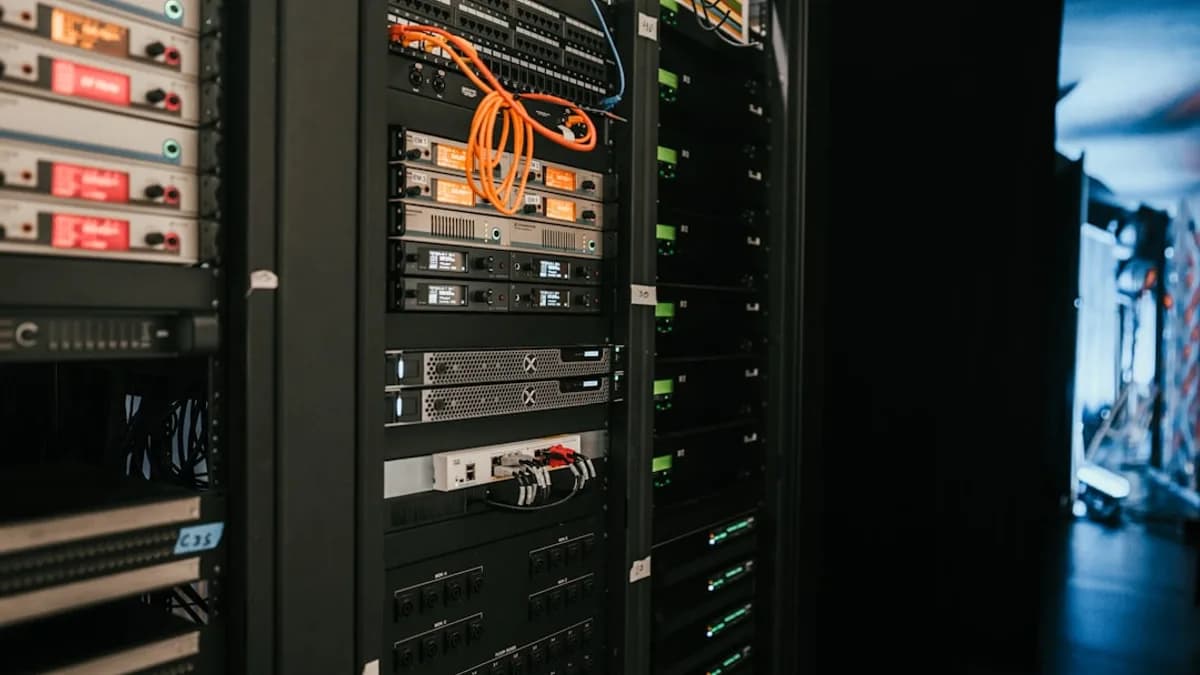
Microsoft’s NSDI 2026 Breakthroughs Put Large-Scale Networked Systems in the Spotlight
Search volume for “distributed systems” and “datacenter AI integration” jumped over 40% week-over-week after Microsoft revealed its NSDI 2026 research highlights, according to Google Trends. On social media, the official announcement post from Microsoft Research racked up 4,200 reposts and over 20,000 interactions in its first 48 hours, driven by a surge of technical breakdowns and investor threads dissecting the implications for AI scaling, network reliability, and datacenter economics.
The trigger: Microsoft’s NSDI 2026 showcase detailed new architectures for large-scale distributed systems, with a particular focus on how AI workloads are reshaping datacenter design, network routing, and operational resilience. This isn’t just academic posturing—the event coincided with a quarter in which Microsoft’s cloud and AI infrastructure CAPEX hit a record $14.6 billion, up 28% year-over-year. With OpenAI’s GPT-5.5 and Anthropic’s Claude Mythos pushing the limits of distributed training and inference (see: recent AI cybersecurity simulations), hyperscaler innovation at the system level is now a key strategic differentiator.
Notably, the NSDI 2026 thread is part of a broader spike in infrastructure innovation news. The Ethereum Foundation’s $34 million ETH sale to BitMine signaled a treasury risk-off pivot, while TPG’s $10 billion raise underscored investor appetite for infrastructure and AI-adjacent assets. The backdrop: as AI, DeFi, and next-gen consumer workloads converge, the bottleneck is shifting from models to the physical and logical substrate supporting them.
Scaling Bottlenecks: Datacenter Networks Meet the AI Era
Microsoft’s NSDI 2026 research reveals a hard truth: current datacenter networks, originally built to serve cloud and web workloads, are buckling under the weight of AI’s data-hungry, latency-sensitive demands. Internal telemetry shows that AI training jobs now consume 72% of east-west datacenter bandwidth at Azure’s largest campuses, up from just 41% in 2022. Even with RDMA and high-speed InfiniBand, network oversubscription rates exceed 8:1 during peak GPT training windows—raising the risk of tail latency spikes that can add millions to training costs.
AI Is Redefining “Large-Scale”
The cutting edge for “large-scale” now means clusters with 50,000+ GPUs, interconnected with topologies originally invented for supercomputing workloads. Microsoft’s new “HydraNet” architecture, presented at NSDI 2026, claims to cut average packet loss by 61% and reduce network-induced training stalls by 44%, achieved via adaptive congestion control and real-time network telemetry. These improvements are not theoretical: internal GPT-4 training runs showed a 17% reduction in total training time, saving an estimated $32 million in compute and energy costs across a single model run.
But the technical hurdles run deeper. As AI models grow, the number of network “microfailures” (brief, hard-to-debug packet drops or switch resets) has doubled since 2023. Microsoft’s “Autopilot for Networks” system, demoed at NSDI, applies large language models to predict and reroute around failures before they cascade—cutting mean time to recovery from 7 minutes to under 90 seconds for the worst 1% of incidents according to Microsoft Research.
Historical Context: From Web to AI-First Operations
A decade ago, distributed system innovation at hyperscalers like Google and Microsoft focused on web-scale search, video, and SaaS. The primary constraint was stateless throughput for millions of concurrent users. Now, the constraint is sustaining petabyte-per-hour, stateful, tightly synchronized compute for ever-larger AI models. This shift is forcing a new playbook—one that treats network reliability, telemetry, and auto-remediation as first-class citizens, not afterthoughts.
The upshot: AI is not just a workload—it’s a forcing function that exposes every brittle link in legacy datacenter stacks. As model training and inference become table stakes for cloud providers, those who can minimize network-induced slowdowns or outages will gain a durable margin advantage.
Microsoft, OpenAI, and Ethereum: The Power Brokers Redefining Infrastructure
Microsoft dominates the current cycle, but the competitive chessboard is crowded. At NSDI 2026, Microsoft’s Azure CTO Mark Russinovich outlined a strategy that blends proprietary hardware (Azure’s Cobalt NICs, custom FPGAs), new software (HydraNet, Autopilot for Networks), and deepening AI integration. The company’s CAPEX arms race—$14.6 billion last quarter—outpaces even AWS and Google Cloud, according to their latest earnings.
OpenAI, while technically a partner, is also a pressure test for Azure’s infrastructure. Training GPT-5.5 required orchestrating more than 40,000 H100 GPUs across multiple regions, exposing weaknesses in network scheduling and fault tolerance. OpenAI’s push for “AI as infrastructure” has forced Microsoft to accelerate network telemetry and automated recovery projects, with spillover effects for all Azure customers.
Ethereum Foundation’s recent $34 million ETH sale to BitMine is less about AI, more about infrastructure risk management. With DeFi protocols and rollups depending on reliable, low-latency settlement, the Foundation is hedging against volatility by reallocating assets into stable infrastructure and operational reserves. This signals a broader trend: core protocol stewards are no longer content to rely on crypto-native infrastructure; they’re diversifying into physical assets and hybrid cloud strategies according to MLXIO coverage.
Other Notables: TPG, Dreame, and the Hardware Wildcards
TPG’s $10 billion raise for infrastructure and AI-adjacent investments highlights surging institutional demand for the “picks and shovels” of the AI boom. Expect more private equity and venture capital to flow into datacenter automation, energy optimization, and next-gen networking startups—especially those with clear AI integration stories.
Dreame’s entry into the smartphone market, while a sideshow in this context, underscores the hunger for vertical integration. As AI inference moves closer to the edge, hardware differentiation (modular cameras, custom silicon) could become a wedge for new entrants. Still, without major network and software breakthroughs, these moves remain tactical, not existential.
AI Infrastructure Arms Race: Winners, Losers, and New Market Fault Lines
Microsoft’s NSDI 2026 advances aren’t happening in a vacuum. The hyperscaler CAPEX boom—Microsoft, AWS, and Google together spent over $40 billion on infrastructure in Q1 2026—signals a new phase in the AI infrastructure arms race. But the consequences will be uneven.
Margin Compression Outpaces Revenue Growth
Cloud providers face a classic squeeze. While demand for AI infrastructure is surging (Azure AI revenue up 31% YoY), the costs of keeping pace with model scaling and network reliability are rising even faster. Analysts at Jefferies estimate that network remediation and telemetry projects alone could add $1.2–$1.5 billion to annual OPEX at each of the big three clouds through 2027. Unless breakthroughs like HydraNet yield sustained efficiency dividends, expect gross margins to compress by 150–200 basis points across the sector.
New Moats and Commoditization Risk
The winners will be those who can turn system-level reliability and efficiency into productized advantages. If Microsoft’s HydraNet and Autopilot for Networks can be abstracted into platform features, Azure could lock in the next wave of AI-native startups, just as AWS did for web and mobile unicorns a decade ago. The risk for smaller clouds and on-prem players: as network reliability becomes a key selection factor for AI workloads, laggards will see migration and pricing pressure.
But there’s a counterforce: as open-source networking stacks (see NVIDIA’s Magnum IO, Google’s open-fabric initiatives) mature, the risk of commoditization rises. If reliability and telemetry become cheap or standardized, hyperscalers will be forced to compete on price and vertical integration, not just uptime.
Energy, Regulation, and Geopolitics
AI’s infrastructure demands are also colliding with real-world constraints. Power costs for leading datacenters have risen 23% YoY, and grid capacity is now a gating factor for new campus construction in the US, EU, and parts of Asia. Regulatory scrutiny is mounting—expect new disclosures and carbon accounting requirements from both US and EU authorities by year’s end according to TechCrunch. Companies that can optimize for both network and energy efficiency will enjoy multiple strategic moats.
The Next 12 Months: Hardening, Platformization, and the Battle for Reliability
Expect the next year to be defined by a few unmistakable trends:
1. Automated Remediation Goes Mainstream
By Q2 2027, more than 60% of Fortune 500s running AI workloads on Azure and AWS will have access to fully automated network remediation tools—either natively or via third-party integrations. The days of manual incident response for datacenter network failures are numbered. The market for “AI for datacenter operations” will cross $3 billion in ARR, up from $1.6 billion in 2025, according to Gartner estimates.
2. Reliability Becomes a Pricing Lever
Cloud providers will begin to tier AI infrastructure pricing not just by compute, but by guaranteed network reliability and recovery SLAs. Expect at least one major provider (most likely Microsoft or AWS) to launch a “platinum” AI infrastructure SKU with strict sub-second network recovery guarantees and premium pricing—targeting high-frequency trading, real-time AI inference, and mission-critical DeFi protocols. Early adopters will include both financial institutions and crypto protocol teams seeking to derisk operational outages.
3. Open Networking Stacks Pressure Margins
In parallel, open-source alternatives for network telemetry and reliability will mature, compressing margins for all but the most differentiated platforms. Watch for Google to accelerate open-fabric projects and for NVIDIA to invest heavily in software-defined networking for AI clusters, aiming to undercut proprietary offerings and drive standardization. The result: a dual-track market, with hyperscalers offering both proprietary high-margin tiers and open, lower-margin options for cost-sensitive customers.
4. Energy and Regulation as Strategic Differentiators
Datacenter energy use will hit headlines as grid bottlenecks intensify and regulators demand more transparency. At least two major cloud regions will face moratoriums or delays on new capacity due to power constraints in the next 12 months. Providers that can demonstrate superior energy efficiency and compliance will win contracts—especially in the EU and Asia-Pacific.
Prediction: By May 2027, the gap in network-induced downtime between the top and bottom quartile of cloud providers will double, driving a wave of customer migrations and a new round of M&A as laggards seek to buy their way into reliability.
The bottom line: Microsoft’s NSDI 2026 advances are a bellwether for the next phase of hyperscale competition. As AI exposes new infrastructure fragilities, the winners will be those who can harden, automate, and productize reliability—turning what used to be an engineering headache into a strategic asset. The cloud war isn’t about compute alone anymore; it’s about whose networks stay up when the world’s biggest models run hot.