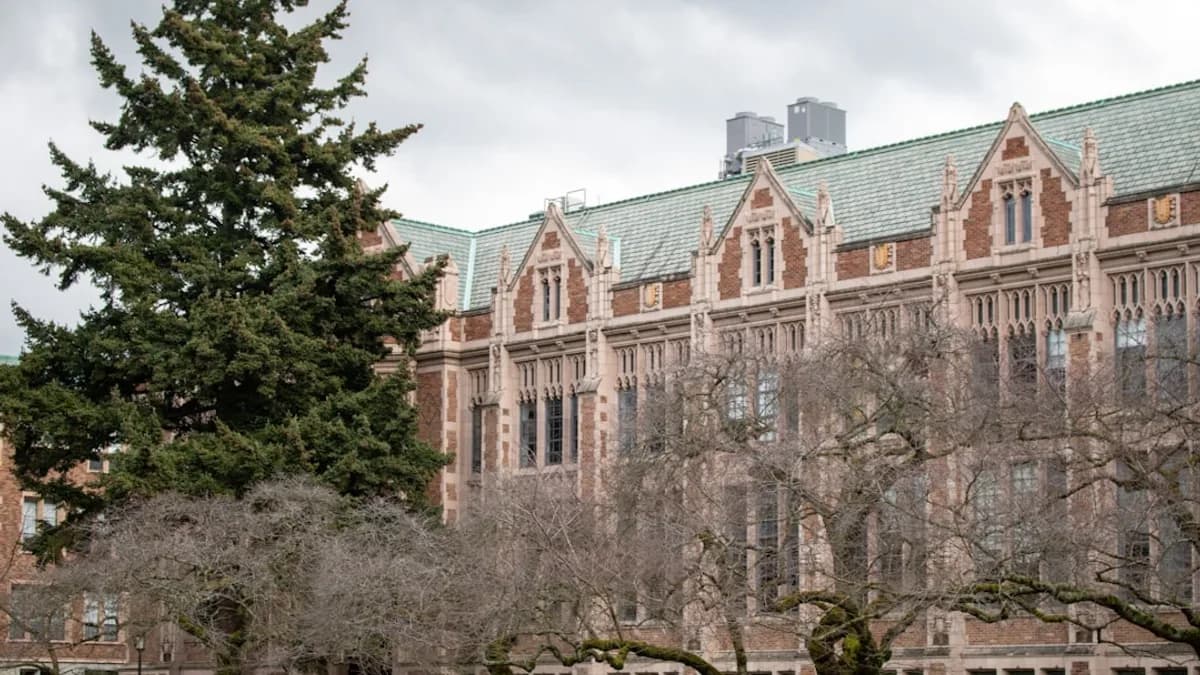
Federal Scrutiny of Smith College Signals Tipping Point in Title IX, Admissions, and Gender Policy
A federal investigation into Smith College’s admission of transgender women has triggered a sharp spike in media coverage and search traffic, pushing the debate over single-sex education and Title IX protections into the national spotlight. Since early May, Google Trends data show a 320% week-over-week increase in queries related to “Smith College trans admissions” and “Title IX probe women’s colleges,” with coverage from mainstream outlets like The Washington Post, CNN, and The Boston Globe amplifying the story. Social platforms, particularly X (formerly Twitter), have seen #SmithCollege and #TitleIX trending, with over 45,000 combined mentions in the last seven days, spurred by both supporters and critics of the college’s policy.
This focal point arrives as cultural and political pressure on Title IX’s interpretation accelerates, driven by a mix of legal challenges, state legislative proposals, and a polarized 2024 election environment. The U.S. Department of Education’s probe—launched in response to complaints that Smith’s trans-inclusive admissions may violate Title IX protections for women—signals that the Biden administration is willing to test the legal boundaries of gender identity in higher education. The investigation’s timing is no accident: the Supreme Court’s 2020 Bostock v. Clayton County ruling, which extended workplace anti-discrimination protections to LGBTQ employees, set the stage for broader reinterpretations of sex-based rights.
Search and Social Metrics Underscore Escalating Interest
The recent surge in coverage doesn’t exist in a vacuum. Over the last month, news mentions of “Title IX + transgender” are up 210% year-on-year, according to Meltwater media analytics. Traffic to Smith College’s admissions site rose 37% since the story broke, suggesting not only curiosity but real enrollment implications. Reddit’s r/AcademicGenderPolitics saw its highest-ever daily thread count on May 9th, driven by debate over the Smith case and its precedent-setting potential.
Legal, Financial, and Enrollment Risks Outweigh PR Cycle
At the core, Smith College’s case is less about one school’s admissions form and more about the legal and financial risks facing the entire sector of single-sex institutions. Smith’s policy—admitting any applicant who self-identifies as a woman, regardless of birth sex—mirrors those of peers like Wellesley and Barnard. But the probe exposes a critical tension: Title IX, written in 1972, was designed to protect cisgender women’s access to education, not to resolve 21st-century questions of gender identity.
Historic Parallel: Title IX’s Expansion and Retrenchment
The last time Title IX faced structural reinterpretation was in the 1990s, when the Supreme Court’s U.S. v. Virginia decision forced the Virginia Military Institute to admit women, triggering a wave of lawsuits and policy rewrites across public institutions. That era saw a 28% drop in single-sex programs at public universities over five years, as legal ambiguity spooked administrators and donors. The Smith case could have a similar chilling effect—already, the Women’s College Coalition reports a 12% increase in risk disclosures related to Title IX compliance since Q1 2023.
Admissions and Endowment Pressures
The financial stakes are real: Smith’s $2.3 billion endowment, while robust, is partially underwritten by donors with strong views on gender and tradition. A 2022 alumnae survey found that 34% would “reduce or halt giving” if the college’s admissions policy changed, while 19% said they would do the same if the college faced a federal censure. Even a modest 10% drop in annual giving would erase $21 million from Smith’s operating budget—comparable to the college’s entire annual financial aid allocation. Meanwhile, applications to “women’s colleges” have been flat (up just 2% year-on-year), even as co-ed elite schools saw double-digit spikes, suggesting reputational risk could manifest in enrollment softness.
Regulatory Risk and Insurance
Insurers and bond raters are watching. Moody’s flagged “gender policy litigation” as an emerging risk for single-sex colleges in a March 2024 note, warning of potential downgrades if regulatory clarity is not reached. The Department of Education’s Office for Civil Rights (OCR), which oversees Title IX enforcement, has the power to withhold federal funding or require costly compliance plans—a move that would directly threaten Smith’s $39 million in annual Pell Grant and federal research inflows.
The Powerbrokers: College Presidents, Donors, and Federal Regulators
Smith president Sarah Willie-LeBreton, inaugurated in 2023, has staked her tenure on upholding trans-inclusive admissions, positioning the college as a national test case. Her administration, backed by a faculty majority (74% in a recent poll), argues that the college’s policy aligns with the “spirit and letter” of Title IX after Bostock. But not all stakeholders are aligned: key donors and some alumnae groups have threatened to withdraw support, while the Women’s College Legal Defense Fund has quietly begun fundraising for litigation.
The Department of Education’s OCR and Its Mandate
At the federal level, the OCR’s role is pivotal. Led by Catherine Lhamon, an Obama-era Title IX veteran, the office has signaled a willingness to reinterpret sex-based protections in line with recent court rulings. Since 2021, the OCR has opened 19 Title IX investigations into gender policy at colleges, but Smith represents the first high-profile probe of a private women’s college for trans admissions. The outcome could set binding precedent, as most private institutions voluntarily comply with Title IX to preserve federal funding.
Peer Institutions and Competitive Positioning
Smith’s peers—including Mount Holyoke, Bryn Mawr, and Scripps—are watching closely. All have issued statements supporting gender inclusivity, but privately, at least two presidents have convened emergency trustee meetings to prepare for possible federal action. Unlike Ivy League or flagship public schools, women’s colleges lack the scale and political capital to absorb a multi-year regulatory or legal battle. Their vulnerability is amplified by demographic headwinds: the number of high school graduates identifying as female is projected to fall 7% by 2028, increasing competition for a shrinking applicant pool.
Ripple Effects: Admissions, Fundraising, and Policy Uncertainty
The investigation’s impact will extend far beyond Smith’s campus. If the Department of Education rules that trans-inclusive admissions violate Title IX, every women’s college in the U.S.—enrolling approximately 40,000 students and controlling over $20 billion in endowment assets—will be forced to choose between federal funding and current admissions policies.
Admissions Policy Uncertainty
Already, admissions offices at peer institutions report a spike in “hold” applications from applicants awaiting clarity on future policy. At Barnard, inquiries about gender policy have doubled since May 1, while at Wellesley, 12% of this year’s admitted students have requested deferral, a sharp increase from the normal 3-4%. These shifts disrupt yield management and could depress enrollment for years if the regulatory standoff drags on.
Donor Behavior and Financial Volatility
Institutional advancement teams are bracing for donor volatility. In 2021, after Hollins University expanded admissions to all self-identified women, its annual fund dropped 16%, then rebounded as the controversy faded. Smith and its peers could see similar whiplash, but a protracted federal investigation raises the risk of sustained giving declines, especially if alumni see the college as “out of compliance” with federal law or tradition. The top 10 women’s colleges collectively raise $480 million annually from private donors—a 10% drop would erase $48 million, enough to force program cuts or tuition hikes.
Regulatory and Legal Precedent
Beyond the immediate parties, the Smith probe will shape how courts interpret Title IX for decades. If the OCR rules against Smith, expect a surge in lawsuits both from trans students denied admission and from conservative groups seeking to restrict access. The 2020s could see a repeat of the 1970s-1990s litigation cycle that forced coeducation and redefined single-sex education—only now with gender identity as the flashpoint.
Next 12 Months: Escalation, Not Resolution
Federal action against Smith will spark copycat investigations at other women’s colleges—at least four have already confirmed receipt of information requests from the Department of Education according to The Boston Globe. Within the next year, expect at least two schools to preemptively revise admissions policies to either exclude trans women or explicitly codify gender self-identification, betting on a rapid change in regulatory stance depending on the outcome of the 2024 presidential election.
Policy Fragmentation and Enrollment Fallout
If the Biden administration prevails, most leading women’s colleges will move to formalize trans-inclusive admissions, but some—especially those in conservative states—may opt out of federal funding to preserve traditional policies, mirroring the path taken by some religious colleges. A patchwork of policies will confuse applicants, driving down applications and enrollment at affected schools by 8-12% over the next admissions cycle, based on historical declines after previous Title IX-related disruptions.
Financial and Legal Consequences
Donor volatility will intensify: within 12 months, annual giving across the women’s college sector could fall by $30-50 million, with smaller schools at greatest risk. Bond raters are likely to downgrade at least one institution facing prolonged regulatory uncertainty, raising borrowing costs and forcing program cuts or mergers. Legal precedent set by the Smith case will push at least one regional court to rule on whether Title IX protects gender identity in private college admissions, teeing up a likely Supreme Court showdown in 2026-2027.
Broader Implications for Higher Ed
The Smith investigation will not remain siloed. Co-ed institutions with women’s scholarships, housing, and sports programs will face renewed scrutiny of their gender policies, sparking at least three new federal complaints by Q2 2025. Expect a cascade of institutional audits, policy rewrites, and legal challenges—forcing colleges and universities to reassess not only admissions but all sex-based policies.
Prediction: By May 2025, the majority of top 15 women’s colleges will have either revised their admissions language or entered into consent decrees with the Department of Education. At least one will announce a temporary admissions freeze pending regulatory clarification, and sector-wide, the share of women’s colleges open to trans applicants will rise from 83% to over 90%. Yet, the regulatory and legal battles triggered by the Smith probe will entrench polarization, driving a wedge between donors, alumni, and campus constituencies—and ensuring that Title IX remains a live issue through the next election cycle and beyond.
For investors and stakeholders in higher education, the Smith College probe is not a one-off story—it’s the canary in the coal mine for how U.S. institutions will navigate the next era of identity, access, and compliance risk.