

Introduction to Voyager 1: Humanity’s Pioneer in Interstellar Space
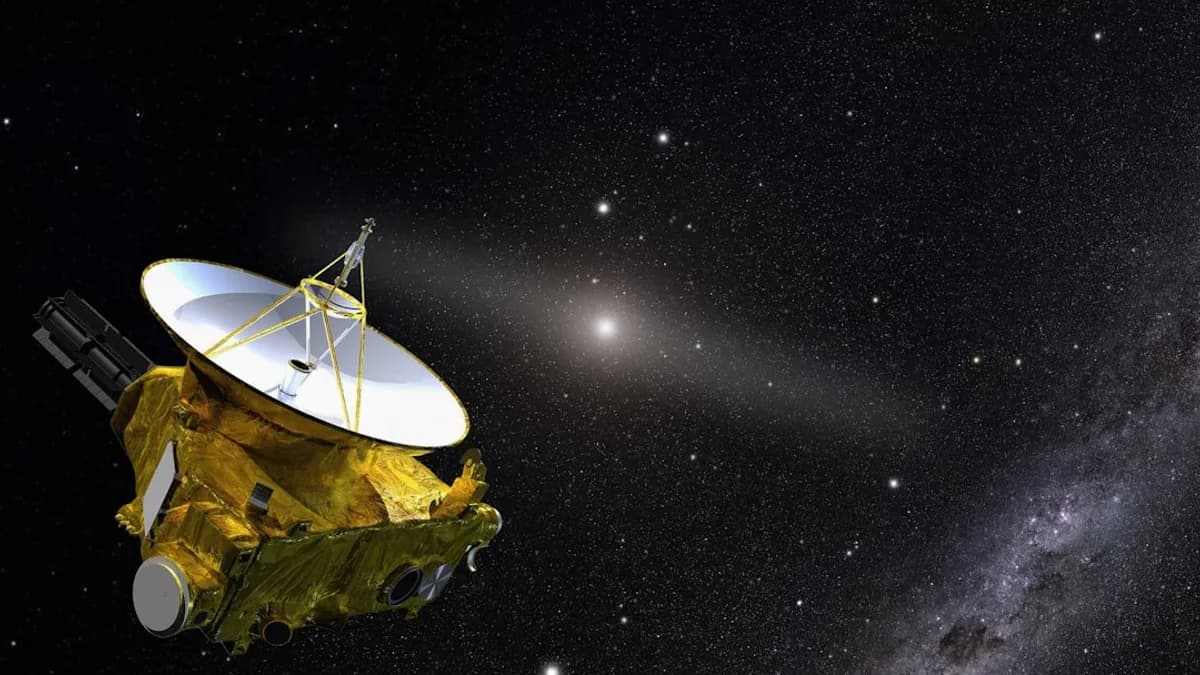
It’s easy to forget that one of humanity’s most audacious engineering feats is still quietly unfolding over 24 billion kilometers from Earth. Launched in 1977, NASA’s Voyager 1 was built to explore the outer planets, but it has since become the first human-made object to cross into interstellar space—a realm untouched by any other spacecraft [Source: Source]. More than four decades after its journey began, Voyager 1 continues to communicate with Earth, sending back invaluable data from the edge of our solar system. Its endurance represents not only a triumph of engineering but also the persistent curiosity driving space exploration. As Voyager 1 now faces the inevitable decline of its power supply, its legacy and lessons remain deeply relevant for the future of deep space missions.
Understanding Voyager 1’s Power System and Its Challenges
Voyager 1’s journey through the cold, unforgiving void of interstellar space is powered by a technology both ingenious and simple: Radioisotope Thermoelectric Generators (RTGs). These devices convert heat from the natural radioactive decay of plutonium-238 into electricity, providing a steady—if steadily declining—source of power. At launch, Voyager 1’s three RTGs delivered about 470 watts of electricity, but after nearly 47 years, that output has dwindled to roughly 70% of the original capacity and continues to fall by about 4 watts per year [Source: Source].
This gradual power loss results from the physical half-life of plutonium-238, which decays predictably over time. Another factor is the slow degradation of the thermocouples that convert heat to electricity, reducing efficiency. As the power available shrinks, NASA’s mission managers face increasingly tough choices about which instruments and systems to keep running. Every watt counts. The challenge is balancing the spacecraft’s scientific utility with the imperative to avoid a total systems shutdown. With each passing year, the margin for error narrows, and the opportunity to gather new data from interstellar space becomes more precious—and precarious.
Why NASA Turned Off Instruments on Voyager 1 to Conserve Power
In 2024, NASA made the difficult decision to begin shutting down additional instruments aboard Voyager 1 in order to stretch its remaining operational life [Source: Source]. This is not the first time such measures have been taken; over the years, heaters, cameras, and other non-critical systems have been switched off to conserve precious power. The latest round of shutdowns includes one of the probe’s four remaining scientific instruments, marking a significant step in the spacecraft’s gradual disablement.
The rationale is straightforward: by prioritizing the most essential functions—such as communications, navigation, and select science instruments—NASA can keep Voyager 1 operational for as long as possible. Instruments that monitor cosmic rays or measure the interstellar medium remain active because their data is unique and unobtainable from any other current mission. Others, whose functions have either been superseded or are less critical for current scientific goals, are powered down.
This triage approach reflects a cold logic but also a deep respect for Voyager 1’s historic role. Each instrument that goes dark is a farewell to a specific scientific capability, but it is also a calculated move to ensure the longest possible contact with humanity’s farthest emissary.
The Importance of Voyager 1’s Continued Operation for Science and Exploration
Voyager 1’s continued operation is much more than a sentimental exercise. It remains the only spacecraft actively sampling the environment beyond the influence of the Sun’s solar wind—offering direct measurements of the interstellar medium, magnetic fields, and high-energy particles [Source: Source]. These readings help scientists map the complex boundary of the heliosphere, the bubble of charged particles surrounding our solar system.
What makes Voyager 1’s data truly irreplaceable is perspective. No other probe has ventured so far, nor has any mission since been launched with the same long-term ambitions. The insights gleaned inform not only our understanding of cosmic rays and galactic phenomena but also the very limits of our solar neighborhood. Researchers use Voyager’s observations to refine models of how solar and interstellar environments interact, shaping plans for future missions that might one day follow its path.
Beyond the science, Voyager 1 carries profound symbolic weight. Its Golden Record—a time capsule of Earth’s sounds, images, and greetings—remains a testament to a species striving to reach beyond its cradle. The continued contact with Voyager 1 is a thread connecting generations of scientists and dreamers, embodying the best of human aspiration and ingenuity.
NASA’s Plans and Innovations to Extend Voyager 1’s Lifespan
Facing inevitable power decline, NASA’s engineers have devised a series of creative strategies to eke out every last watt from Voyager 1. The latest, dubbed the “Big Bang” upgrade, involves shutting down redundant safety systems, cross-wiring some instruments to share power, and optimizing software routines to reduce consumption [Source: Source]. These changes require meticulous planning—after all, a misstep could sever communication permanently.
In recent years, NASA has also explored reprogramming certain onboard computers, offloading non-essential tasks, and even leveraging the spacecraft’s dwindling thermal energy to prevent critical systems from freezing. The team continually weighs the risks of each adjustment, given that Voyager 1 is operating far beyond its original design life and in an environment that precludes any physical intervention.
Despite these efforts, the reality is unyielding. At some point, the probe’s RTGs will no longer supply enough electricity to power even a single instrument or maintain communication. NASA estimates this moment may arrive before the end of this decade, though the precise timeline remains uncertain. The challenge is not only technical but philosophical: how to preserve the spacecraft’s legacy while accepting the natural limits of its journey.
Implications of Voyager 1’s Power Decline for Future Deep Space Missions
Voyager 1’s slow fade offers a masterclass in the art of spacecraft longevity. Its experience has already shaped the design of subsequent missions, such as New Horizons, which also relies on RTGs but incorporates more efficient electronics and flexible power management systems. For future deep space probes—especially those aiming to operate for decades—sustainable power generation and redundancy in critical systems are paramount.
The lessons also extend to the broader philosophy of space exploration. As we contemplate missions to the outer solar system, Kuiper Belt, or even interstellar space, Voyager 1’s story underscores the need for robust long-term planning and adaptability. Advanced technologies, such as next-generation nuclear power sources or even theoretical concepts like fusion-based generators, are under consideration to ensure future probes can survive—and thrive—far from the Sun.
In essence, Voyager 1’s twilight years illuminate both the promise and the perils of pushing technological boundaries in space. Its legacy is not only what it has discovered, but how it has endured.
Conclusion: The Legacy and Future of Voyager 1 in Space Exploration
Voyager 1’s voyage is a testament to human ingenuity, resilience, and the hunger for discovery. Despite mounting challenges and dwindling power, it continues to beam back science from the edge of the unknown, providing insights and inspiration in equal measure. NASA’s ongoing commitment to this ancient spacecraft demonstrates a reverence for both the value of long-term exploration and the lessons of careful resource management [Source: Source]. As Voyager 1 nears the end of its journey, its story will inform the next generation of deep space missions—and remind us all that even the smallest signals, sent across the void, can have a profound impact on our understanding of the universe.