
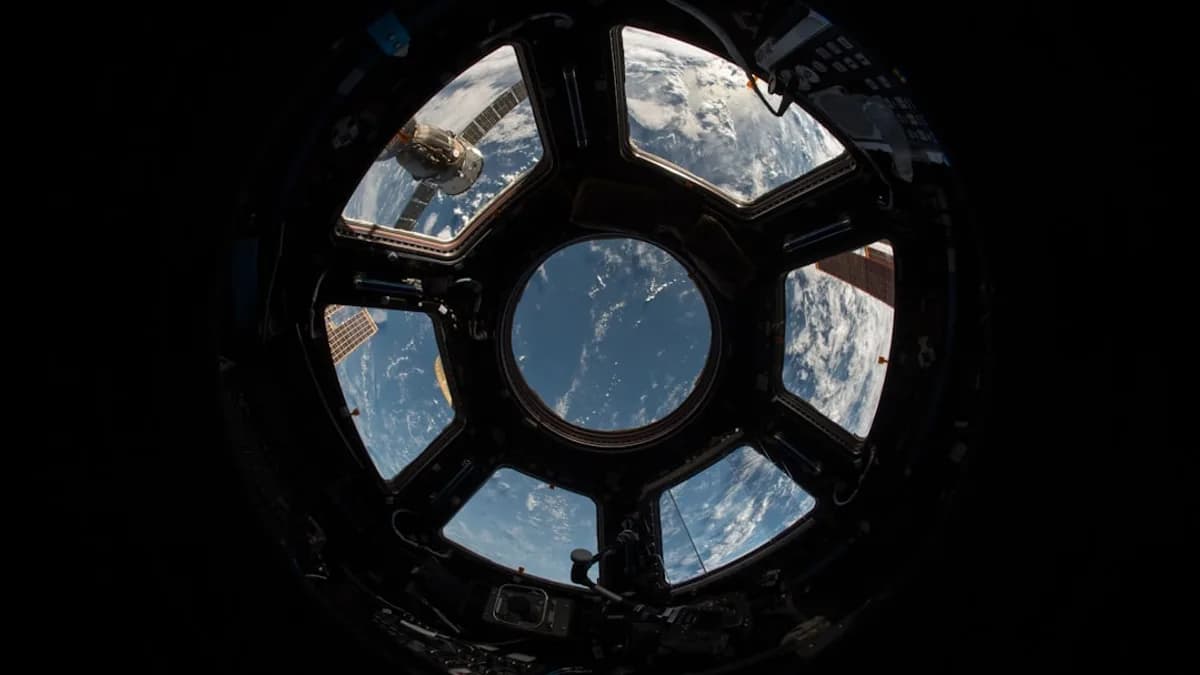



Introduction: Arrival of Northrop Grumman Cygnus XL at the ISS
The International Space Station (ISS) welcomed a significant new arrival this week as Northrop Grumman's Cygnus XL cargo ship docked successfully, marking a milestone for both NASA and the company’s commercial resupply program. The spacecraft, officially named the S.S. Steven R. Nagel in honor of the late NASA astronaut, carried vital supplies and scientific experiments for the station’s ongoing operations. This arrival underscores the critical role of private partners in supporting human activity in low Earth orbit, further cementing Northrop Grumman’s position as a key player in NASA’s resupply strategy [Source: Source].
Details of the Cygnus XL Cargo Ship and Mission
The Cygnus XL represents an evolution in Northrop Grumman’s cargo spacecraft design, boasting increased capacity and upgraded systems compared to its predecessors. The XL variant is engineered to haul larger payloads, enabling more efficient resupply missions and reducing the frequency of flights needed to support the ISS. Its robust structure and advanced avionics contribute to safer and more reliable deliveries, helping sustain the station’s crew and research initiatives [Source: Source].
The CRS-24 mission carried a diverse payload, including food, water, spare parts, and scientific equipment. Among the scientific experiments were investigations into materials science, biological studies, and new technology demonstrations aimed at improving future space missions. These payloads are essential for the ISS, which functions as a testbed for research that benefits both space exploration and life on Earth.
Cargo resupply missions like CRS-24 are indispensable to the ISS’s continued operation. With a permanent crew onboard, the station relies on regular shipments from Earth to maintain its life-support systems, enable ongoing research, and ensure the safety and well-being of astronauts. The Cygnus XL’s increased capacity means more resources can be delivered in a single mission, helping optimize the station’s logistics and freeing up crew time for scientific work.
Northrop Grumman’s ongoing partnership with NASA through the Commercial Resupply Services (CRS) contract has made these missions routine but no less vital. Each successful delivery not only sustains the ISS but also advances the broader strategy of leveraging commercial partners to support space exploration, reduce costs, and spur innovation in aerospace technology [Source: Source].
Capture and Berthing Process at the Space Station
The arrival of the Cygnus XL at the ISS involved a precisely coordinated capture and berthing sequence, demonstrating the skill and teamwork of the station’s crew and ground controllers. As the spacecraft approached the ISS, it was carefully guided into position using onboard thrusters and navigation systems. Astronauts aboard the station then operated the Canadarm2 robotic arm, a sophisticated piece of equipment designed to grapple incoming vehicles [Source: Source].
Once the Cygnus XL was within reach, the crew maneuvered the robotic arm to capture the spacecraft, ensuring a secure hold before aligning it with the station’s docking port. This process demands close communication between astronauts and mission control, as well as real-time monitoring of the spacecraft’s position and status. After the successful capture, Cygnus XL was berthed to the station’s Unity module, where it will remain for several weeks while its cargo is unloaded.
The timeline of events saw the Cygnus XL approach and stationkeeping in the early morning hours, with capture occurring shortly thereafter. Berthing and integration with the station’s systems followed, allowing crew members to begin transferring supplies and experiments almost immediately. The smooth execution of this process illustrates the maturity of ISS operations and the reliability of Northrop Grumman’s spacecraft, which has now supported over two dozen resupply missions for NASA [Source: Source].
Context: Recent ISS Resupply Missions and Launch Details
The Cygnus XL’s arrival comes amid a busy period for the ISS, with multiple resupply missions from both Northrop Grumman and SpaceX helping maintain the station’s productivity. SpaceX recently launched a Falcon 9 resupply mission, delivering additional cargo and scientific payloads to the station [Source: Source]. These back-to-back deliveries are coordinated to ensure the ISS remains fully stocked and operational, with each provider contributing unique capabilities.
Comparing the two, Northrop Grumman’s Cygnus XL offers increased cargo volume and flexibility in payload configuration, while SpaceX’s Dragon capsule is distinguished by its ability to return cargo to Earth. Both systems have proven their reliability and efficiency, forming the backbone of NASA’s commercial resupply program and enabling the agency to concentrate on deep space exploration.
The recent Falcon 9 launch was notable not just for its payload, but also for its stunning visuals. Observers in Florida captured images of the rocket transiting the sun, an awe-inspiring demonstration of human engineering against the backdrop of our solar system [Source: Source]. Such moments highlight the public’s ongoing fascination with spaceflight and underscore the importance of these missions for inspiring future generations.
With regular launches from both providers, the ISS enjoys a steady flow of supplies, experiments, and equipment. This redundancy and diversity in resupply methods are crucial for ensuring station sustainability and minimizing risks associated with single points of failure. NASA’s strategy of partnering with multiple commercial providers represents a pragmatic approach to space station operations, leveraging innovation and competition to drive efficiency and reliability [Source: Source].
Conclusion: Impact and Future Outlook
The successful arrival of the Cygnus XL at the ISS marks another milestone in NASA’s ongoing partnership with commercial aerospace companies. By delivering essential supplies and scientific payloads, Northrop Grumman’s latest mission ensures the station can continue its groundbreaking research and maintain crew safety. The increased capacity of the Cygnus XL sets the stage for more ambitious resupply missions, supporting the ISS as a hub for scientific discovery and international cooperation [Source: Source].
Looking ahead, the collaboration between NASA and its private partners will be central to the sustainability of the ISS and future space endeavors. As commercial spacecraft become more capable and reliable, the dream of routine space access comes closer to reality. The Cygnus XL’s arrival demonstrates the power of public-private partnerships in advancing science, technology, and humanity’s presence in space—a promising sign for the future of exploration.