Newly Discovered Asteroid Set for Close Earth Flyby This Week
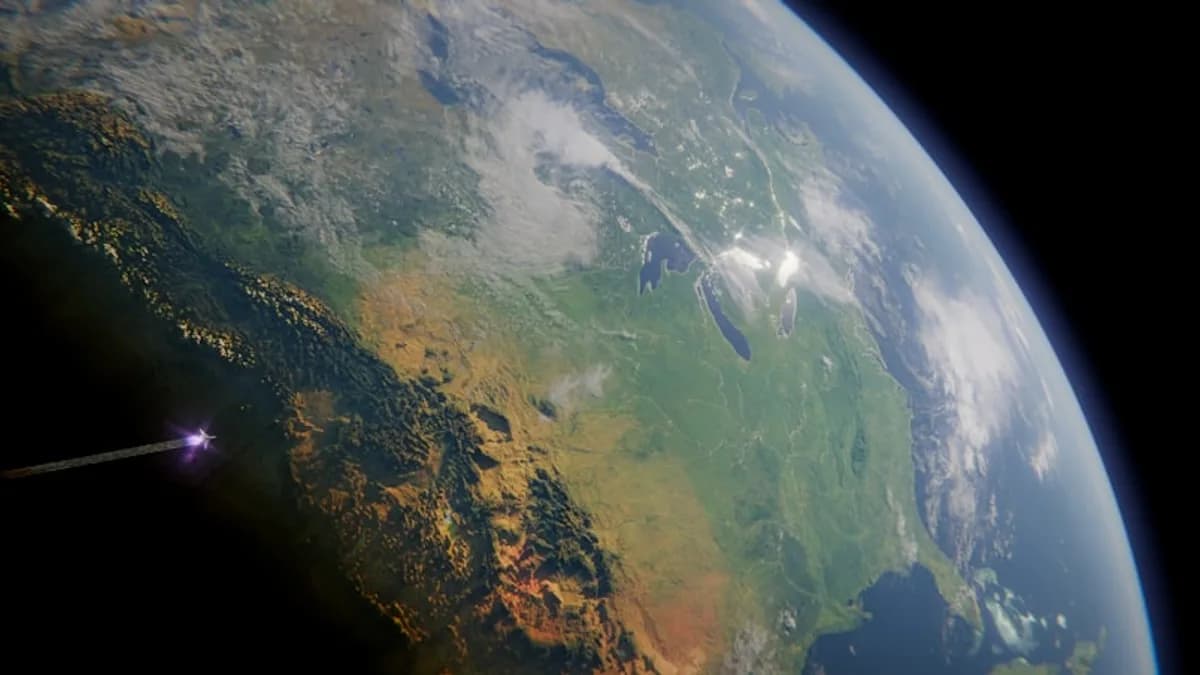
A newly detected asteroid will pass unusually close to Earth in the coming days, offering both a rare spectacle for skywatchers and a reminder of how little time sometimes separates discovery from encounter. Astronomers only spotted the object recently, according to Notebookcheck. Details like the asteroid’s size, trajectory, and exact time of its closest approach remain under wraps.
The real news: this is not a theoretical threat, nor a distant blip. Instead, it’s a live event, with the asteroid’s passage visible to anyone with a modest telescope—or even just a livestream window open. There’s no suggestion of danger; current projections show the asteroid will miss Earth, with no risk flagged by astronomers.
Analysis: The short runway between discovery and flyby underscores how many near-Earth objects slip past detection until they’re almost upon us. While most such asteroids miss by a comfortable margin, the lack of public detail about this object’s size and path leaves a gap in public understanding. It’s a wake-up call for planetary defense efforts that rely on advanced warning.
What’s still unclear: The discovery timing, who made the find, and how close the flyby will be. The absence of public numbers means the scientific community—and the public—are in the dark on critical context.
How and Where to Watch the Asteroid Pass Using Amateur Telescopes and Livestreams
This flyby won’t require specialized observatories or expensive gear. The asteroid will be observable through amateur telescopes—details on the ideal size or optical specs aren’t provided, but the implication is that accessible equipment will suffice. For those without their own kit, livestreams are planned, making the event globally accessible regardless of weather or location.
Analysis: The democratization of space observation is on full display here. Not long ago, events like this would have been the domain of a handful of professionals. Now, anyone with an internet connection can watch the flyby in real time. That’s a powerful shift in public engagement with science.
What’s missing: Exact timing for the flyby, which parts of the world will have the best telescope views, and which organizations are providing livestream access. Without those specifics, would-be observers are left waiting for updates or forced to search multiple channels for reliable feeds.
Watch item: Once official viewing windows and livestream links are released, expect a surge in public interest. If the flyby is bright or dramatic enough, it could spark a new wave of amateur observations and renewed debate about asteroid preparedness.
What Scientists Will Learn from This Close Asteroid Encounter and Future Monitoring Plans
Close asteroid flybys are science opportunities, not just sky shows. Each event like this offers a fleeting chance to gather data on an object’s orbit, reflectivity, and—if imaging is sharp enough—its rotation or surface features. While the source doesn’t outline any specific research plans for this object, real-time observation often yields rapid advances in understanding near-Earth asteroids.
Significance: With the discovery coming just days before the flyby, astronomers have little time to refine models or coordinate global observations. That makes every data point—brightness, speed, path—valuable for updating tracking algorithms and risk assessments.
Still unclear: What, if any, coordinated research campaigns are underway for this asteroid. No details on follow-up monitoring, physical properties, or whether this object will be tracked beyond its brief appearance.
Forward-looking analysis: This flyby highlights both the promise and the limitations of current asteroid detection efforts. Scientists and the public alike should watch for follow-up reports: Did the object behave as expected? Was its orbit more uncertain than usual? The next close pass—announced in time or not—could test the balance between curiosity and caution, especially if it’s bigger or on a less certain trajectory.
Why It Matters
- The asteroid's late discovery highlights gaps in our ability to detect near-Earth objects before close approaches.
- The event offers a rare and accessible opportunity for the public to observe an asteroid flyby in real time.
- Limited public information about the asteroid's size and trajectory raises concerns about planetary defense readiness.