Why the Discovery of an Atmosphere on a Trans-Neptunian Object Challenges Current Planetary Science
The solar system’s deep freeze is supposed to strip small, distant bodies of any real atmosphere — yet astronomers may have just spotted one where it shouldn’t exist. During a recent stellar occultation, a trans-Neptunian object (TNO) well beyond Pluto showed evidence of an atmosphere, according to Notebookcheck. This shakes the foundations of planetary science: the farther from the Sun, the harder it should be for an object to retain gases.
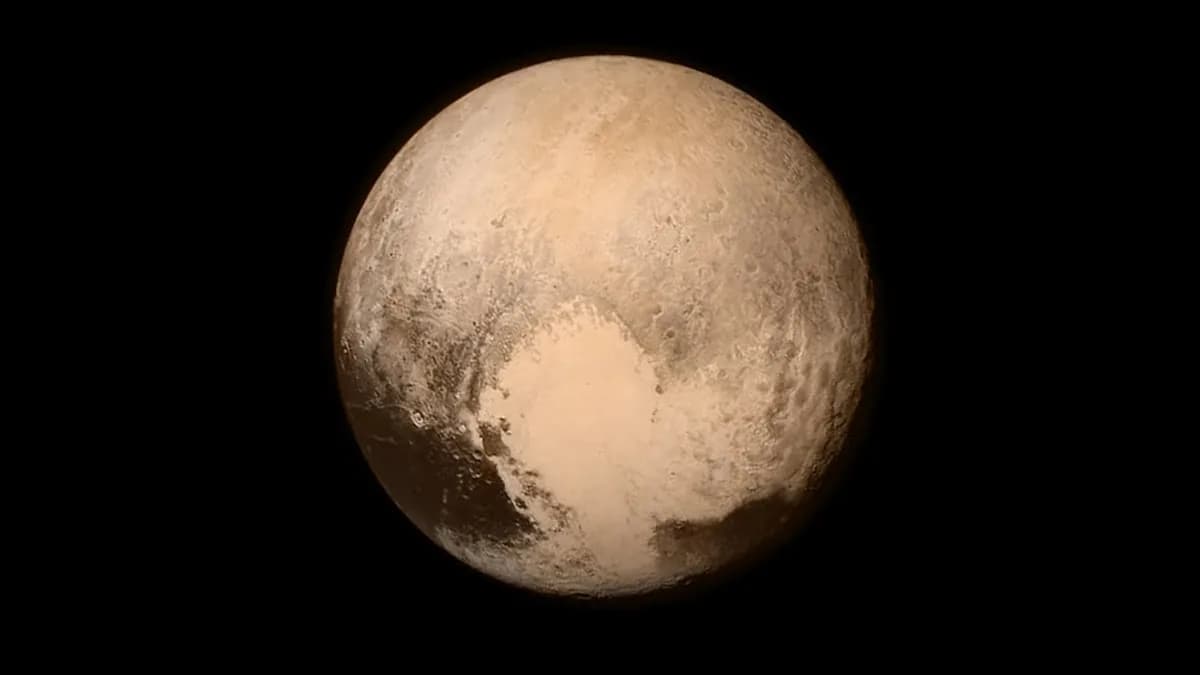
TNOs, especially those smaller than Pluto, face a triple threat. Their weak gravity can’t hold onto volatile molecules. Their frigid temperatures — often below -230°C — should lock most gases into ice. And cosmic rays, solar wind, and micrometeorite impacts constantly erode whatever thin atmosphere might form. Only the largest bodies, like Pluto (with a diameter of around 2,377 km), have managed to retain tenuous atmospheres, mostly nitrogen and methane, through sheer mass and distance.
So, the detection of an atmosphere on a TNO smaller than Pluto upends prevailing models of solar system formation and evolution. It suggests either unknown sources of replenishment — maybe cryovolcanism or recent impacts — or that some TNOs possess physical properties not accounted for in current theory. If confirmed, this finding would force scientists to revisit how volatiles behave at the fringes of the solar system, and could spark a new round of debate on what qualifies as a planet or dwarf planet.
Analyzing the Observational Data: How Astronomers Detected the Atmosphere on This Distant Object
Astronomers didn’t stumble on this atmosphere by chance — they caught it during a stellar occultation, a method where a distant object passes in front of a star, momentarily dimming its light. Think of it as the solar system’s version of a CT scan: as the star’s light grazes the TNO, any atmosphere will refract or absorb the light, creating a signature in the data.
In this case, researchers observed subtle variations in the star’s brightness and timing as the TNO moved across its path. These variations implied a thin, extended layer of gas enveloping the object, rather than a sudden, sharp edge typical of an airless body. The specifics: the light curve showed gradual dimming and recovery, with a distinct “shoulder” that can only be explained by an atmosphere several kilometers thick.
Yet, the reliability of this detection rides on the precision of timing and the number of telescopes observing simultaneously. Occultations are rare and fleeting — often lasting just seconds. Any measurement error or local atmospheric disturbance (on Earth) could create false positives. The occultation was observed by multiple teams, but the event’s brevity and the object’s faintness leave room for uncertainty. Further observations are needed to rule out alternative explanations, such as dust rings or unusual surface reflectivity, which could mimic atmospheric effects.
Comparing Atmospheric Characteristics of Trans-Neptunian Objects: What Makes This One Unique?
Pluto’s atmosphere is a known quantity: nitrogen dominates, with traces of methane and carbon monoxide, fluctuating seasonally as its elliptical orbit warms and cools the surface. The only other TNO with a confirmed atmosphere is Triton, Neptune’s largest moon, with a thin nitrogen shell and geysers of sublimated ice.
The newly detected atmosphere stands out. The TNO in question is reportedly smaller than Pluto — estimates put its diameter in the range of 600–800 km, less than half of Pluto’s size. Its distance from the Sun is greater than Pluto’s average 39.5 AU, placing it in a region where solar heating is almost negligible. The odds of volatile retention drop sharply with both size and distance.
What could this atmosphere be made of? The most plausible candidates are nitrogen, methane, or carbon monoxide, but the exact composition remains unknown. If the atmosphere is methane-dominated, it would suggest active geological processes, since methane gets destroyed by photolysis and needs replenishment. If nitrogen is prevalent, it would challenge models of primordial volatile distribution in the Kuiper Belt.
A key difference: Pluto’s atmosphere swells and contracts, sometimes collapsing entirely as temperatures drop. For a smaller, colder TNO to maintain a stable atmosphere, either its surface is continually outgassing, or the object experienced a recent impact that vaporized subsurface ices. Both scenarios would be unprecedented for objects of this size and distance.
Diverse Scientific Perspectives: What Astronomers and Planetary Scientists Are Saying About This Unexpected Atmosphere
The planetary science community is split between cautious optimism and outright skepticism. Supporters point to the robustness of the occultation data: the gradual light curve, repeated across different telescopes, aligns with atmospheric refraction seen on Pluto and Triton. If true, this expands the catalogue of objects with atmospheres and hints at unknown processes in the outer solar system.
Skeptics counter that the signature could easily be caused by a dusty coma or ring around the object — not a true atmosphere. Given the brevity of the occultation and the faintness of the TNO, they argue that confirmation bias and atmospheric interference on Earth could skew the results. Some propose that the observed dimming could be due to complex surface features, such as frost-covered hills, rather than a gaseous envelope.
The discovery touches on a wider debate: what defines a planet or a dwarf planet? If objects smaller than Pluto can sustain atmospheres, the criteria for planetary status may need a rethink. At the same time, it raises questions about volatile distribution and retention in the Kuiper Belt — a topic that remains unsettled since Pluto's demotion and the discovery of Eris, Haumea, and Makemake.
Historical Context: How Discoveries of Atmospheres on Distant Solar System Bodies Have Evolved Over Time
The history of atmospheric discoveries in the outer solar system is marked by surprise and recalibration. When Pluto’s atmosphere was detected in 1988 via stellar occultation, it forced astronomers to acknowledge that even small, distant bodies could retain gases under certain conditions. Triton's nitrogen atmosphere, discovered by Voyager 2 in 1989, added another wrinkle — geysers of nitrogen ice indicated active geology at the edge of the solar system.
Advances in detection technology have transformed the field. Early occultation observations relied on analog photometers; now, digital sensors and coordinated international campaigns can catch fleeting events with millisecond precision. The last major paradigm shift came in 2015, when New Horizons revealed Pluto’s atmosphere to be more dynamic and complex than expected, with haze layers and seasonal changes.
Each discovery has forced scientists to update models of volatile retention, surface chemistry, and planetary classification. If this new TNO atmosphere holds up, it will mark the latest in a series of upsets — and suggest the Kuiper Belt is more alive than previously thought.
Implications for Planetary Science and the Search for Life: What This Atmosphere Means for Future Research
An atmosphere, even a thin one, can radically alter surface conditions. It can trap heat, protect against cosmic rays, and mediate chemical reactions. For habitability, this matters: while the TNO is still far too cold for life as we know it, the presence of an atmosphere implies active processes that could create organic compounds — the building blocks of life.
Models of solar system evolution hinge on how volatiles migrate and stick to bodies in the outer regions. If small TNOs can retain atmospheres, current models underestimate the complexity of the Kuiper Belt, and may need to account for ongoing replenishment or hidden heat sources. This could shift priorities for future missions, making these objects prime targets for flybys or sample-return missions.
The discovery also has implications for planetary formation. Atmospheres can slow down erosion, preserve geological features, and even affect the accretion of material. If confirmed, researchers could look for similar signatures in other TNOs, expanding the scope of observational campaigns and refining criteria for which objects might host atmospheres.
Looking Ahead: Predictions and Next Steps in Confirming and Understanding This Mysterious Atmosphere
Astronomers are gearing up for follow-up observations. The most direct method: repeat occultations, ideally with more telescopes and higher sensitivity, to catch the signature again and rule out non-atmospheric explanations. Spectroscopic measurements could reveal the actual composition of the gases, distinguishing between nitrogen, methane, or more exotic molecules.
If the atmosphere is confirmed, expect a surge in proposals for space-based telescopes and Kuiper Belt flybys. The James Webb Space Telescope could be pressed into service, scanning for infrared signatures of volatile outgassing. A confirmed atmosphere would prompt a reexamination of known TNOs — objects like Sedna, Eris, and Orcus might suddenly become candidates for atmospheric studies.
Within a decade, this finding could reshape planetary science. Models of Kuiper Belt chemistry, thermal evolution, and habitability would need updating. Missions could shift from just cataloguing objects to probing their atmospheres and geology. And if similar atmospheres are found on more TNOs, the definition of what makes a “planet” or “world” in the solar system could change yet again, with far-reaching consequences for how scientists — and the public — understand our cosmic neighborhood.
Why It Matters
- The discovery challenges current models about which bodies can retain atmospheres in the solar system's outer regions.
- It could reveal unknown mechanisms for atmosphere replenishment, like cryovolcanism or impacts.
- If confirmed, this finding may prompt a redefinition of what constitutes a planet or dwarf planet.