Introduction: Understanding Voyager 1 and Its Historic Journey
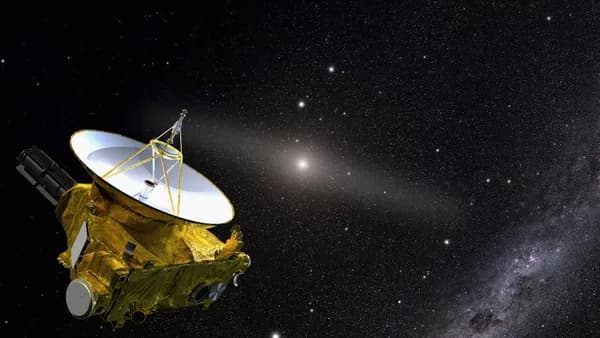
In the silent darkness at the edge of our solar system, NASA’s Voyager 1 quietly continues its odyssey—an aging but resilient messenger from Earth, now farther away than any human-made object in history. Launched in September 1977, Voyager 1 was designed for a bold grand tour of the outer planets, but it has long since surpassed its original mandate. Today, it sails through interstellar space, more than 15 billion miles from home, confronting the harsh realities of cosmic radiation and dwindling power reserves. Decades after its twin, Voyager 2, also left Earth, Voyager 1 stands as a testament to humanity’s drive to explore the unknown. But as the spacecraft’s energy supply fades, NASA faces tough decisions about which instruments to keep alive—and which to let go—highlighting both the triumphs and limitations of deep space exploration [Source: Source].
Why NASA Shut Down an Instrument on Voyager 1: Power Constraints Explained
Voyager 1’s endurance hinges on a shrinking reservoir of power. Unlike spacecraft closer to the Sun, which can rely on solar panels, Voyager 1 depends on three radioisotope thermoelectric generators (RTGs). These RTGs convert heat from the radioactive decay of plutonium-238 into electricity—a reliable solution for the darkness of deep space, but not an infinite one. Each year, the RTGs generate a little less power as the plutonium decays and the system ages. When Voyager 1 launched, it produced about 470 watts of power; today, it can muster only about 70 watts—barely enough to run a single household light bulb [Source: Source].
Recently, NASA made the difficult decision to switch off the Plasma Wave Subsystem (PWS), an instrument that has monitored the density and composition of plasma (ionized gas) in space. The PWS played a pivotal role in detecting when Voyager 1 crossed into interstellar space in 2012 by picking up telltale changes in plasma density. As the spacecraft’s power supply continues to dwindle, engineers have prioritized keeping the command and communication systems operational, along with a select few scientific instruments. Shutting down the PWS is a trade-off: it preserves the health of Voyager 1’s core systems and extends its life, but at the cost of real-time data about the environment beyond our solar system.
This calculated sacrifice underscores a harsh reality—every watt counts. As power drops further, more instruments will inevitably go dark. NASA’s approach is pragmatic: focus on the spacecraft’s most critical functions and squeeze every possible year from this aging pioneer before silence finally falls.
The Technical Challenges of Operating Voyager 1 in Deep Space
Operating a spacecraft more than 15 billion miles from Earth is an engineering high-wire act. At such distances, sunlight is far too weak for solar panels to be practical, making nuclear power essential. But the challenges go well beyond power generation.
Every command sent from NASA’s Deep Space Network takes over 22 hours to reach Voyager 1, and another 22 hours for a reply to return, making real-time troubleshooting impossible. Over the decades, cosmic radiation has battered Voyager’s electronics, and thermal cycling has stressed its components. The spacecraft’s systems must autonomously manage their own health—routing power, monitoring instrument status, and even rebooting after minor glitches.
Resource management is critical. As power output drops, engineers have juggled instrument priorities like triage doctors in a crowded emergency room. They have also devised clever workarounds: for example, repurposing backup circuits, rerouting redundant wiring, and even drawing on tiny power reserves intended for heaters or backup systems. In 2023, NASA managed to eke out a little more power by tapping a backup circuit, forestalling the shutdown of instruments for a few extra months [Source: Source].
The fact that Voyager 1 is still operational after nearly five decades is a tribute to both the robustness of 1970s engineering and the ingenuity of today’s mission controllers. It also highlights the limits of even the most resilient hardware—no spacecraft can run forever on a finite supply of radioactive material.
Scientific Contributions of Voyager 1 and Impact of Instrument Shutdown
Voyager 1’s scientific legacy is unrivaled. It delivered humanity’s first close-up images of Jupiter and Saturn, revealing the complexity of their atmospheres, rings, and moons. It discovered active volcanoes on Jupiter’s moon Io, the thick haze of Saturn’s moon Titan, and sent back data that fundamentally reshaped our understanding of the outer solar system.
Perhaps most famously, Voyager 1 captured the “Pale Blue Dot” photograph in 1990—a distant image of Earth suspended in a sunbeam, immortalized by astronomer Carl Sagan as a humbling reminder of our cosmic insignificance. Since 2012, it has been our only direct probe of interstellar space, measuring the density, temperature, and composition of the plasma that fills the void between stars [Source: Source].
The recently disabled Plasma Wave Subsystem has been essential for these insights, providing data that confirmed Voyager’s crossing into interstellar space and revealing the structure of the heliopause—the boundary where the solar wind meets the interstellar medium. Losing this instrument means that future measurements of plasma waves and densities will rely solely on indirect methods or on Voyager 2’s similar, but differently situated, instrument suite.
The scientific impact is significant: while Voyager 1 will continue to measure magnetic fields and cosmic rays for some time, its ability to directly probe plasma conditions is now lost. This narrows our window into the interstellar environment and marks the gradual dimming of a unique source of data that cannot be replaced by any other mission currently in flight.
What Voyager 1’s Status Means for Future Deep Space Missions
Voyager 1’s twilight years offer hard-earned lessons for future interstellar exploration. Chief among them: energy is the ultimate constraint. The gradual shutdown of instruments, dictated by power availability rather than hardware failure, underscores the need for more sustainable energy solutions for ultra-long-duration missions.
Future deep space probes may incorporate advanced nuclear technologies, such as next-generation RTGs or compact fission reactors, to provide more durable power supplies. They might also feature modular, upgradable instrument packages, or even the capacity for remote software updates and repairs—a far cry from the fixed, hardwired systems of 1977.
Voyager’s journey also highlights the value of building redundancy and flexibility into mission design. NASA’s creative solutions—repurposing circuits, reassigning power, and rewriting software decades after launch—show the importance of planning for scenarios that engineers might not even imagine at the outset.
Finally, Voyager 1’s story is a reminder of the importance of patience and persistence in space science. Decades-long missions require institutional commitment, stable funding, and a willingness to adapt as circumstances change. As NASA and other space agencies look to future interstellar probes—such as the Interstellar Probe concept, or ambitious calls for missions to the Oort Cloud—Voyager’s experience will serve as both a technical blueprint and a philosophical touchstone.
Conclusion: The Enduring Legacy of Voyager 1 Amidst Power Challenges
Voyager 1’s fading power reminds us that even the most storied missions must one day confront the limits of time and technology. Yet, despite the gradual loss of its instruments, Voyager 1’s achievements remain monumental: from revealing the secrets of the outer planets to becoming humanity’s first interstellar ambassador.
The spacecraft’s story is not just one of scientific discovery, but also of human ingenuity—of engineers and scientists who have kept it alive far beyond its original lifetime. As Voyager 1 continues its silent journey into the unknown, it inspires a new generation of explorers to push the boundaries of what’s possible.
The end of the Plasma Wave Subsystem is not just an endpoint, but a call to action: to invest in the next era of deep space exploration, to innovate in the face of adversity, and to keep reaching for the stars, however faint their light may become. As we look ahead, Voyager 1’s legacy will echo in every probe that dares to follow it into the cosmic dark.