Introduction: NASA Takes Critical Step to Preserve Voyager 1
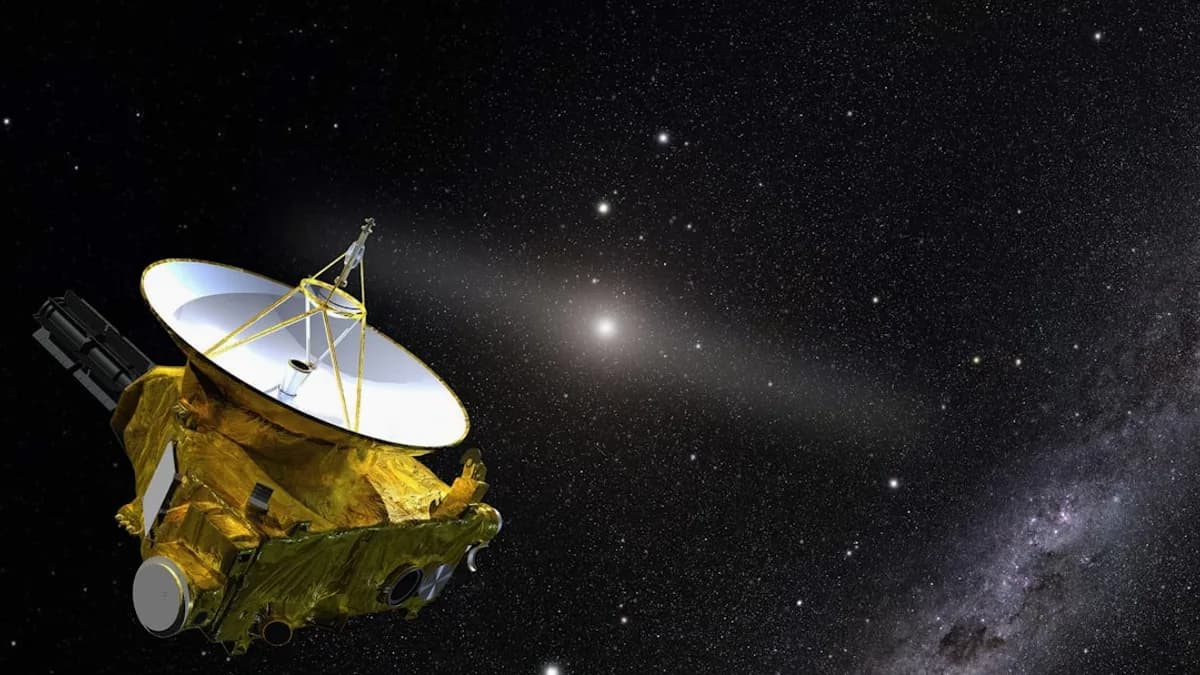
Voyager 1, launched in 1977, holds the distinction of being the farthest human-made object from Earth. For more than four decades, it has delivered invaluable data from the outer reaches of our solar system and into interstellar space. This week, NASA announced a pivotal decision to shut off one of Voyager 1’s scientific instruments, a move designed to conserve the spacecraft’s remaining power and extend its operational life [Source: Source]. As Voyager 1 continues its journey billions of miles from home, this step highlights both the challenges of managing aging hardware and the enduring importance of its mission to expand our understanding of the cosmos.
Background on Voyager 1 and Its Instruments
Voyager 1 began its mission in September 1977, embarking on a groundbreaking voyage across the solar system. Initially tasked with providing close-up images and scientific measurements of Jupiter and Saturn, Voyager 1 exceeded expectations, capturing iconic photographs such as the “Pale Blue Dot” and revealing new details about planetary atmospheres, moons, and rings. After completing its primary mission, the spacecraft continued toward the edge of the heliosphere, eventually crossing into interstellar space in 2012—a milestone marking humanity’s first venture beyond the influence of our Sun [Source: Source].
Equipped with a suite of scientific instruments, Voyager 1 has measured magnetic fields, plasma waves, cosmic rays, and more. These tools have enabled researchers to study the environment of deep space and the transition from solar to interstellar regions. Among its key instruments are the Cosmic Ray Subsystem (CRS), the Plasma Science (PLS) instrument, and the Magnetometer (MAG), each contributing to a comprehensive understanding of the space environment.
The instrument NASA recently shut off is the Cosmic Ray Subsystem (CRS), which was originally designed to detect and analyze high-energy particles originating from the Sun and beyond. CRS has played a crucial role in monitoring cosmic rays and providing insight into the protective bubble formed by the heliosphere. Its data has helped scientists understand how cosmic radiation interacts with our solar system and the broader galaxy [Source: Source].
Reasons Behind Shutting Off the Instrument
Voyager 1 faces unprecedented technical challenges, primarily due to its limited power supply and aging components. The spacecraft relies on radioisotope thermoelectric generators (RTGs), which gradually lose efficiency over time as their radioactive material decays. After 47 years in space, Voyager 1’s available power has dwindled to the point where difficult choices must be made to prioritize essential functions.
NASA’s engineers have carefully managed the spacecraft’s resources, routinely shutting off individual heaters and non-critical systems to conserve energy. The decision to deactivate the CRS instrument was based on a thorough assessment of its power consumption versus its scientific output. As Voyager 1 moves farther from the Sun, the cosmic ray environment becomes increasingly uniform, reducing the value of continued CRS measurements. By shutting down the instrument, NASA frees up precious power for onboard systems essential to maintaining communication and navigation [Source: Source].
The process leading to this action involved months of review and deliberation. Engineers evaluated the health of all instruments, analyzed the spacecraft’s energy budget, and consulted with mission scientists about the potential impact on ongoing research. Ultimately, the need to ensure Voyager 1’s ability to send data back to Earth—and to keep its critical systems functioning—outweighed the diminishing returns from the CRS. This pragmatic approach underscores NASA’s commitment to maximizing the scientific yield from its oldest explorer, even as it faces complex challenges far beyond the solar system.
Implications for Voyager 1’s Mission and Future Operations
The shutdown of the Cosmic Ray Subsystem marks a turning point for Voyager 1’s scientific activities. While the loss of CRS data means fewer insights into cosmic ray variations, the spacecraft continues to operate other instruments, such as the Magnetometer and Plasma Wave Subsystem, which still provide valuable information about interstellar space [Source: Source]. NASA expects that Voyager 1 will remain operational for several more years, with the potential to continue sending back vital data until at least 2025.
The primary impact of this adjustment is a shift in the focus of Voyager 1’s mission. With fewer instruments active, the spacecraft’s scientific output will be more limited, but still meaningful. Researchers can continue to study the properties of the interstellar medium, the behavior of magnetic fields, and the influence of solar wind beyond the heliosphere. Each data transmission from Voyager 1, even in a reduced capacity, serves as a reminder of humanity’s persistent drive to explore the unknown.
NASA’s plans for Voyager 1 now center on maintaining communication and ensuring the health of remaining systems. Ground controllers at the Jet Propulsion Laboratory (JPL) will continue to monitor the spacecraft, sending commands and receiving information through the Deep Space Network. As power dwindles further, additional shutdowns of individual systems may be necessary, but the team is committed to keeping Voyager 1 alive as long as possible. Every bit of data returned from this distant probe adds to the legacy of exploration and advances our understanding of the universe.
Conclusion: Voyager 1’s Legacy and NASA’s Commitment
Voyager 1’s journey has been nothing short of historic. From its early encounters with giant planets to its pioneering passage into interstellar space, the probe has transformed our view of the solar system and the cosmos. The decision to shut off a scientific instrument reflects the realities of managing a spacecraft far beyond its intended lifespan, but it also underscores NASA’s dedication to preserving this mission for as long as possible [Source: Source].
The legacy of Voyager 1 endures not only in the data it has sent home, but also in its influence on future exploration. As engineers and scientists grapple with the challenges of deep space, lessons learned from Voyager 1 will inform the design of new missions capable of venturing even farther. NASA’s proactive steps to extend Voyager 1’s life are a testament to the ingenuity and determination that define space exploration. With every transmission, Voyager 1 reminds us of our ability to reach across the vastness of space—and inspires the next generation of explorers to follow its path.