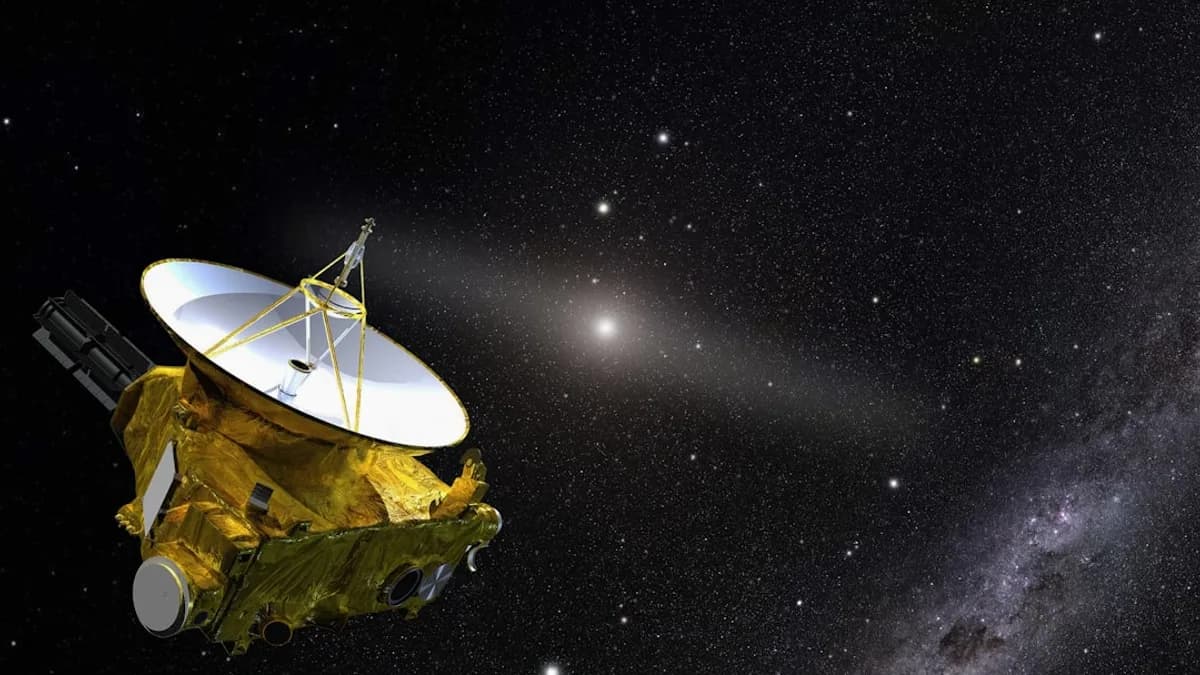
NASA Powers Down Voyager 1 Instrument Amid Critical Energy Conservation Efforts
NASA has shut off another instrument on Voyager 1, the spacecraft now floating over 15 billion miles from Earth. This move is part of a big effort to save power and keep Voyager 1 running as long as possible [Source: Google News]. The probe, launched in 1977, is humanity’s most distant explorer. NASA wants to stretch every watt left so Voyager 1 can keep sending data from deep space.
The shutdown comes as NASA gears up for a risky 'Big Bang' maneuver, meant to squeeze more life out of the probe’s shrinking power supply. With every passing year, Voyager 1’s battery fades a little more. Cutting off another instrument means less science, but more time for the spacecraft to keep talking to us. For NASA, it’s a tough trade — but one needed to keep Voyager 1 alive.
Voyager 1’s Power Challenges: Understanding the Energy Decline in Deep Space
Voyager 1 runs on radioisotope thermoelectric generators, called RTGs. These power packs use heat from decaying radioactive material to make electricity. When Voyager 1 launched, the RTGs were strong. But after nearly 47 years, their power has dropped a lot. Each year, the energy they make shrinks by about four watts. That doesn’t sound like much, but for the probe, it’s huge.
Less power means NASA must pick which instruments to run and which to turn off. Some sensors have already been shut down. This includes the cosmic ray detector and some parts of the plasma science system. Each shutdown means Voyager 1 sends less data home. It becomes harder for NASA to hear the spacecraft, too. Weak power also affects radios and heaters, which keep the probe’s systems safe from deep space cold.
Voyager 1 was built to last, but it wasn’t meant to survive forever. NASA teams watch the power numbers closely. They know the probe is near a limit where it can barely run its most important gear. This is why they are making tough choices now, like shutting off more instruments. Every move is about buying time and keeping Voyager 1 alive for as long as possible [Source: Google News].
The ‘Big Bang’ Maneuver: What It Is and Why NASA Is Taking This Risk
NASA has planned a bold step called the 'Big Bang' maneuver. Unlike its name, this is not about explosions. It’s a smart way to reset Voyager 1’s power systems. Engineers will turn off non-essential circuits and reroute power to the most critical systems. The hope is to cut wasted energy and keep the probe’s main science and communications tools running.
This maneuver is tricky. Voyager 1 is so far away that signals take over 22 hours to reach it. If something goes wrong, there’s no quick fix. The probe is old, and its parts are worn. A misstep could mean losing contact with Voyager 1 forever. Still, NASA thinks the risk is worth it. If the 'Big Bang' works, Voyager 1 may keep working for months, maybe even years longer.
The benefits are big. Every extra day Voyager 1 survives is another chance to learn about interstellar space — the area outside our solar system. No other spacecraft has gone so far. For NASA, this is a last push to get more data before Voyager 1’s power runs out. It’s a gamble, but one that shows how much the agency values the science from this tiny probe.
Scientific Impact: What Shutting Down Instruments Means for Voyager 1’s Research
The instrument just turned off was one of Voyager 1’s science tools. It helped measure particles and fields in space. Losing this instrument means Voyager 1 can’t collect certain types of data anymore [Source: Google News]. The probe’s reports will be less detailed, and some questions about deep space will go unanswered.
NASA must now choose which instruments are most valuable. The team keeps the ones that help track the probe’s surroundings or send data home. Others get shut off to save power. This makes every decision important — each cut means less science, but more time for Voyager 1 to stay alive.
Despite these limits, Voyager 1 has already taught us a lot. It sent back the first close-up images of Jupiter and Saturn. It crossed the edge of our solar system and showed what interstellar space looks like. Even with fewer instruments, its legacy is secure. Voyager 1’s story is about making the most of what’s left, and squeezing every last bit of knowledge from a tired machine.
Broader Implications: Voyager 1’s Status and the Future of Deep Space Exploration
Voyager 1’s power struggle highlights the challenge of long missions in space. RTGs slowly fade, and every probe must face the end at some point. NASA’s careful moves to save power show how much planning goes into making probes last. Voyager 1’s endurance is rare — most space robots don’t run for nearly 50 years.
This mission teaches engineers about building tough machines. For future probes, lessons from Voyager 1 will help. They may use smarter power management, better batteries, or new ways to keep instruments alive longer. The limits of Voyager 1’s RTGs make scientists think about other energy sources, like solar panels or even small nuclear reactors.
The public and researchers still care about Voyager 1. Every time NASA makes a big move, it gets attention. People love that a tiny probe, launched before most of us were born, still sends messages from far beyond the planets. In the science world, Voyager 1 is proof that old tech can still matter. Its journey inspires new missions, like NASA’s plans for probes to explore distant moons or break into interstellar space.
Voyager 1 may soon go silent, but its story shapes the way we think about exploring far-off places. It reminds us that even simple machines, built with care, can outlast expectations and rewrite what we know about the universe.
The Enduring Journey of Voyager 1 and NASA’s Commitment to Exploration
NASA’s new power-saving move is about squeezing every last drop of life from Voyager 1. Shutting off another instrument hurts, but it keeps the probe talking to Earth. This is a sign of the tough choices needed to keep old spacecraft running [Source: Google News].
Voyager 1 holds a special place in space history. It was the first to reach interstellar space, and it still sends back clues about what’s out there. The probe shows what humans can do with smart engineering and big dreams. Its journey is a tribute to the people who built it and the scientists who keep it alive.
Looking ahead, Voyager 1’s story asks us to value what we have — and dream bigger. As NASA pushes boundaries, the lessons from Voyager 1 will guide new missions. For now, every signal Voyager 1 sends is a reminder of how far we’ve come, and how much more there is to explore.