Introduction: The Voyager Missions and Their Historic Significance
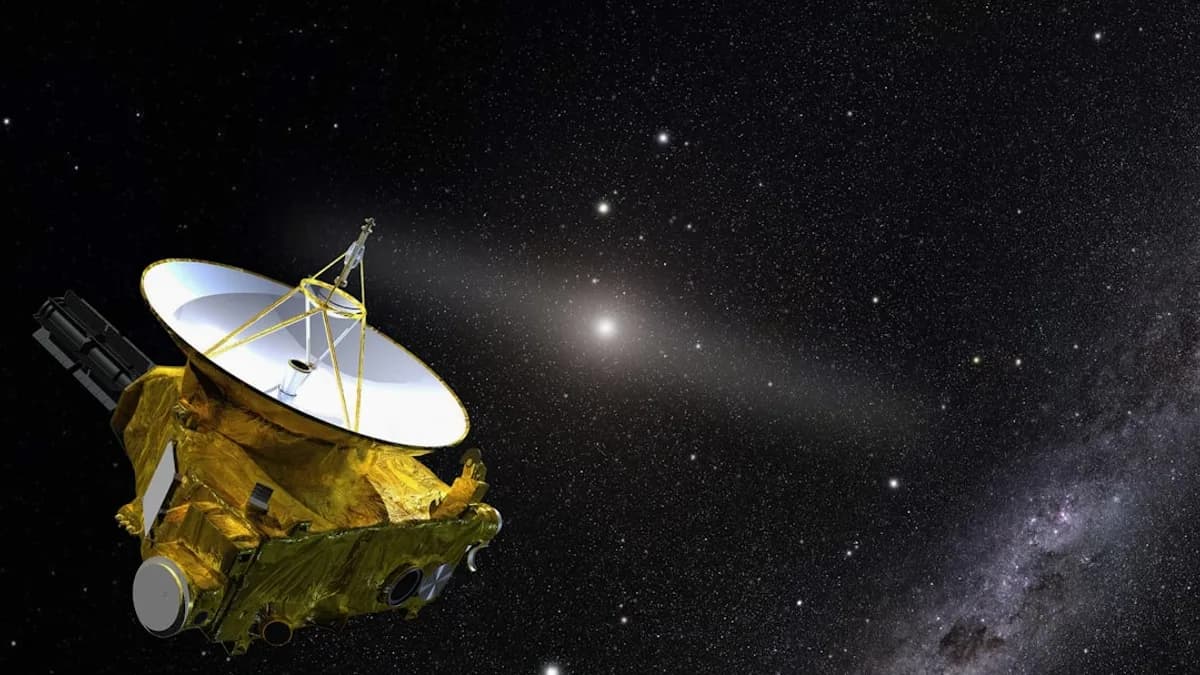
In 1977, NASA launched two small spacecraft on a mission that would far outlast even the most optimistic projections of their designers. Voyager 1 and Voyager 2, originally tasked with flybys of Jupiter and Saturn, have since become the most distant human-made objects in history, carrying humanity’s ambitions and curiosity into the uncharted territory between the stars. They are our silent ambassadors, still phoning home across a cosmic gulf so vast that their faint signals take over 22 hours to reach Earth. Now, nearly five decades after their launch, these robotic pioneers face their greatest challenge yet: dwindling power supplies that threaten to finally silence their voices. NASA’s response—a so-called ‘Big Bang’ upgrade—could keep the Voyagers alive longer, rewriting the limits of what’s possible in deep-space exploration [Source: Source].
Understanding the Power Crisis: Why Voyager 1’s Instruments Are Being Shut Down
The Voyagers’ endurance is a testament not just to NASA’s engineering, but to the robust yet finite power source that fuels them. Both spacecraft rely on Radioisotope Thermoelectric Generators (RTGs), which convert heat from the natural decay of plutonium-238 into electricity. When the Voyagers launched, each RTG produced about 470 watts—roughly enough to power a household blender. But the radioactive decay process is relentless; each year, the output drops by about 4 watts. After nearly 47 years, the available power has dwindled to less than half its original level—insufficient to run all scientific instruments and vital systems [Source: Source].
This slow-motion crisis reached a critical point in early 2024. To prevent catastrophic failure, NASA engineers made the difficult decision to shut off one of Voyager 1’s five remaining science instruments—a move that buys “about a year of breathing room,” but at the cost of reduced data collection [Source: Source]. The instrument in question, the Plasma Subsystem (PLS), provided crucial data about the density and temperature of the plasma environment in interstellar space. Its loss narrows Voyager 1’s scientific vision at a time when every bit of data from beyond the solar system is precious.
The consequences of power loss extend beyond science. As the spacecraft’s systems shut down, so too does its capacity to communicate with Earth. The communications subsystem, heaters, and other critical electronics are prioritized, but every watt counts. Even minuscule voltage drops can knock essential hardware offline, risking irreparable failure. In effect, NASA is forced into a high-stakes triage—choosing which functions to save, and which to sacrifice, in a bid to prolong the mission’s heartbeat.
NASA’s ‘Big Bang’ Upgrade: Innovative Strategies to Extend Voyager’s Operational Life
In response to this escalating power crisis, NASA has unveiled what it calls a ‘Big Bang’ upgrade—a comprehensive campaign to squeeze every last ounce of utility from the aging spacecraft [Source: Source]. The initiative is as much an exercise in creative problem-solving as it is in engineering, demanding a blend of software ingenuity and hardware husbandry that echoes the resourcefulness of Apollo-era mission control.
At its core, the upgrade involves a painstaking reassessment of the power budget. Software updates are being coded and uploaded—a remarkable feat given the Voyagers’ 1970s-era computers and the 45-year-old assembly language they run. These updates will alter the way the spacecraft allocate power, reprioritize instrument usage, and streamline data handling to minimize energy waste.
One key tactic is the selective cycling of scientific instruments—running only the most essential sensors at any given time, rather than all simultaneously. This approach maximizes the scientific value of the remaining power, even if it means some gaps in the data record. NASA engineers are also exploring hardware workarounds, such as disabling internal heaters and non-critical subsystems. These measures come with risks: without heaters, key components could freeze in the frigid vacuum of interstellar space, potentially causing failures that no software patch could fix.
Additionally, the ‘Big Bang’ upgrade includes efforts to recalibrate how the spacecraft manage their limited memory and data transmission. By optimizing the scheduling and compression of data sent to Earth, NASA can reduce the energy cost of communication—critical as signals weaken over astronomical distances.
Yet, even with these innovations, the upgrade cannot reverse the underlying march of entropy. The Voyagers’ RTGs will continue to fade, and hard choices will become ever more frequent. Still, each extension—measured in months or years—is a scientific windfall, offering new opportunities to probe the mysteries of interstellar space.
Implications of Extending Voyager’s Mission: Scientific and Technological Perspectives
The value of every extra day the Voyagers operate cannot be overstated. As the only functioning probes in interstellar space, they provide unique measurements of cosmic rays, magnetic fields, and the properties of the interstellar medium—data that cannot be acquired by any other means. For astrophysicists, the ongoing trickle of information from Voyager 1 and 2 offers an unprecedented window onto the physical conditions far beyond the influence of our Sun [Source: Source].
Beyond the immediate science, the Voyagers’ extended mission life has profound implications for future deep-space exploration. Every workaround and software patch becomes a case study in managing spacecraft well past their intended design life—a scenario that will likely become more common as humanity pushes farther into the solar system and beyond. Lessons learned from the Voyagers inform the design of next-generation probes, from power management to robust fault tolerance and autonomous operations.
From a technological perspective, the ‘Big Bang’ upgrade is a masterclass in system longevity and adaptability. The ability to patch and reconfigure software on hardware nearly half a century old is extraordinary—and a testament to the value of open, modular designs. These lessons feed into current projects such as NASA’s Artemis program and future interstellar concepts like Breakthrough Starshot, where reliability over decades is not just desirable, but essential.
The Voyagers’ persistence also shapes NASA’s broader philosophy toward mission planning. Rather than treating spacecraft as disposable, the agency increasingly views them as long-term assets, with strategies in place for incremental upgrades and remote intervention. This shift reflects a maturing space sector, where sustainability and resilience are as important as initial capability.
Challenges and Risks: What Could Still Threaten Voyager’s Longevity
Despite NASA’s ingenuity, the Voyagers remain vulnerable to a host of risks that no upgrade can fully mitigate. The most immediate threat is continued power loss; the RTGs will inevitably reach a point where even the most critical systems fail. But other dangers loom as well. The spacecraft’s electronics, exposed to nearly five decades of relentless cosmic radiation and extreme cold, could suffer spontaneous failures at any time—a ticking clock with no warning.
Communication is another growing challenge. As Voyager 1 speeds away from Earth at over 17 kilometers per second, its signal weakens, requiring increasingly sensitive ground-based receivers and complex error-correction protocols. Eventually, the signal-to-noise ratio may drop below the threshold for reliable contact, even if the spacecraft itself remains functional.
NASA’s current upgrade efforts are constrained by the hardware’s age and limited redundancy. Unlike modern spacecraft, the Voyagers lack backup systems for many functions; a single failure could cripple communications or navigation. While the mission team maintains contingency plans—such as switching to backup transmitters or reprogramming autonomous routines—there are limits to what can be done from billions of kilometers away.
The deep space environment itself is a source of uncertainty. Unknown hazards—such as micrometeoroid impacts or unexpected electromagnetic phenomena—could spell disaster without warning. In the end, the Voyagers’ survival depends not just on engineering, but on luck.
Conclusion: The Enduring Legacy of Voyager and the Future of Interstellar Exploration
NASA’s relentless effort to keep the Voyager spacecraft alive is more than a technical challenge—it’s a powerful symbol of human curiosity and perseverance. Each upgrade, instrument shutdown, and software patch is a calculated gamble to wring a little more knowledge from our most distant explorers, postponing the inevitable silence for as long as possible [Source: Source].
The Voyagers’ legacy is already secure. They have transformed our understanding of the solar system’s outer reaches, inspired generations of scientists and engineers, and proven that even the humblest machines can achieve greatness with enough ingenuity and care. As their power flickers, their example lights the way for future missions—reminding us that with patience, creativity, and resilience, we can reach farther than we ever thought possible.
Ultimately, the story of the Voyagers is about more than hardware and data. It’s about the enduring human drive to explore, to adapt, and to persist in the face of daunting odds. As NASA pushes the boundaries of what’s possible with the ‘Big Bang’ upgrade, the world watches—knowing that even as these pioneers fade, their echoes will shape the future of interstellar exploration for decades to come.