Why the Hubble Image of a Spiral Galaxy 53 Million Light-Years Away Captivates Astronomers
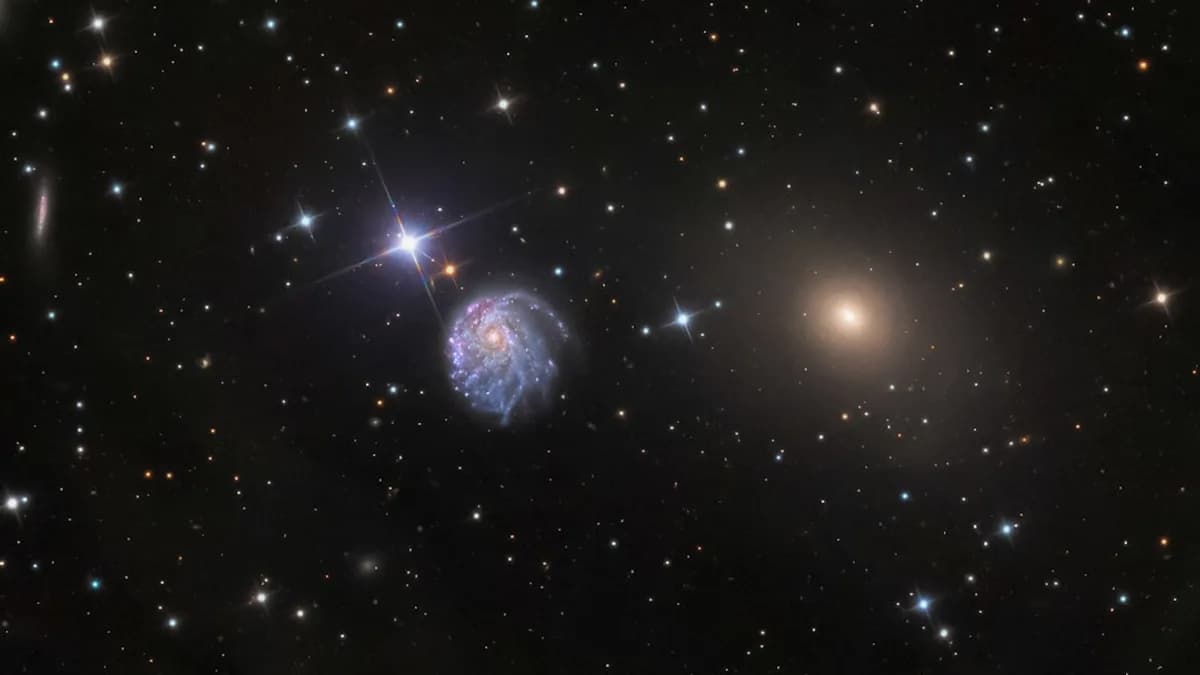
Hubble’s latest shot delivers more than cosmic eye candy: it exposes intricate details of a spiral galaxy sitting 53 million light-years from Earth, a feat that even most ground-based telescopes can’t match. The galaxy in question—NGC 5054—shows off star clusters and dusty arms with clarity that’s rare for objects at this distance, according to Notebookcheck. For astronomers, this isn’t just a pretty picture; it’s a window into galactic anatomy and the forces shaping galaxies far beyond our own.
Detailed imagery allows researchers to dissect everything from stellar nurseries to the distribution of dark matter. High-resolution data feeds models of galaxy formation, helping pinpoint when and how spiral arms emerge, why some galaxies are bursting with new stars while others are quiescent, and how galactic collisions rewrite cosmic history. Hubble, with its unblinking gaze above the distorting veil of Earth’s atmosphere, has enabled scientists to catalogue thousands of galaxies, but each unique image—especially of a spiral structure so clean and distant—offers fresh clues about the universe’s architecture.
What sets this image apart is its sharpness and depth. The fine structure visible in NGC 5054’s arms is rarely captured at this scale, revealing patterns that challenge previous assumptions about how gas and dust move through galaxies. As space telescopes evolve, discoveries like these become benchmarks, setting new standards for what astronomers can expect from their instruments.
What Makes Spiral Galaxies Unique and Important in Understanding the Universe
Spiral galaxies are cosmic engines, driving star formation and shaping the visible universe. Their iconic structure—bright central bulge, winding arms, and a faint halo—marks them as sites of ongoing stellar birth and dynamic evolution. The arms, studded with young blue stars, trace the pathways of dense gas clouds. The core, often hosting an older population of stars, anchors the galaxy’s gravitational center, sometimes housing a supermassive black hole. The halo, a diffuse region extending beyond the visible disk, contains ancient stars and dark matter, which together influence the galaxy’s rotation and stability.
Roughly 60% of nearby galaxies are spirals, including our own Milky Way. Their prevalence makes them crucial for understanding not just local dynamics, but the grand narrative of cosmic history. Spirals are thought to form from the cooling and settling of galactic material after initial mergers—making them a late-stage product in the universe’s evolution. By studying their structure and star formation rates, astronomers can reconstruct timelines of galactic growth and infer conditions in the early universe.
The newly released image of NGC 5054 exposes features rarely seen with such clarity at this distance. Individual star clusters dotting the arms hint at recent bursts of star formation; streaks of dark dust cut across bright regions, marking zones where future stars may emerge. Subtle color gradients reveal populations of stars at different evolutionary stages. These details make NGC 5054 a case study in galactic diversity—while its basic spiral shape is familiar, the specifics of its star-forming activity and dust distribution sharpen our understanding of how spiral galaxies evolve and interact.
The ability to resolve these features feeds directly into big questions: How do spiral arms persist for billions of years? What triggers waves of star formation? Why do some spirals maintain perfect symmetry while others twist and warp? Each answer refines the framework astronomers use to decode the universe’s past and predict its future.
How the Hubble Space Telescope Captures Detailed Images of Galaxies Millions of Light-Years Away
Hubble’s orbit—350 miles above Earth—lets it sidestep atmospheric turbulence that blurs ground-based observations. Its suite of instruments, including the Wide Field Camera 3 (WFC3) and Advanced Camera for Surveys (ACS), can capture light across ultraviolet, visible, and infrared wavelengths. This range is essential: dust and gas in galaxies obscure some wavelengths, while others reveal hidden structures invisible to optical telescopes.
Imaging distant galaxies like NGC 5054 presents several hurdles. Light that left the galaxy 53 million years ago is faint and stretched by cosmic expansion. To collect enough photons, Hubble’s cameras use long exposures, sometimes clocking dozens of hours per target. The telescope’s stability is crucial—its gyroscopes and guidance systems keep its gaze fixed to within microarcseconds, preventing smearing.
Raw images aren’t ready for analysis out of the box. Astronomers run them through a pipeline of calibration and enhancement steps. They correct for detector noise, align multiple exposures, and filter out cosmic rays. Color composites are built from data collected at different wavelengths, revealing contrasts between hot young stars, cooler old populations, and regions dense with dust. Sometimes, image processing exposes structures that would be lost in the glare or blur of a single shot.
Hubble’s vantage point has proved transformative. Before its launch in 1990, most galaxy images were fuzzy and incomplete; now, researchers routinely study galaxies billions of light-years away in detail. The telescope’s legacy includes the Hubble Deep Field and Ultra Deep Field projects, which imaged thousands of galaxies in tiny patches of sky, rewriting estimates of galaxy numbers and diversity. Today, each new observation builds on this foundation, filling gaps and refining models of galactic behavior.
What the New Image Reveals About the Spiral Galaxy’s Structure and Composition
The Hubble image of NGC 5054 lays bare a tapestry of cosmic features. Star clusters—some just a few million years old—punctuate the spiral arms, signaling ongoing star formation. Dust lanes, visible as dark streaks, snake through the disk, tracing the raw material for future stars and marking regions of complex gravitational interplay. The galaxy’s core glows with a yellowish light, indicative of older stars, while the arms shimmer with blues and whites, colors tied to hot, massive young stars.
One striking detail: the arms of NGC 5054 are more loosely wound than those of the Milky Way, suggesting a slower rotational speed and a different history of mergers or interactions. The distribution of dust is uneven, with some regions almost entirely obscured, hinting at areas where star formation may be suppressed or delayed. Embedded within the arms are knots of light—likely giant star-forming regions, each hosting thousands of stars.
The image also reveals a faint halo surrounding the disk. This is a signature of stellar populations ejected during gravitational encounters, or possibly a sign of dark matter’s influence on the galaxy’s structure. By measuring the brightness and color gradients from core to halo, astronomers estimate that NGC 5054 is a mature spiral, likely several billion years old, but still actively forming stars at a rate of about one solar mass per year—a figure comparable to the Milky Way’s current pace.
A unique aspect of this galaxy: its asymmetrical structure. One arm appears more pronounced, possibly due to a past encounter with another galaxy or ongoing tidal forces from nearby companions. Such irregularities are clues to the galaxy’s dynamic past, offering a laboratory for testing models of spiral arm formation and longevity.
These observations feed directly into theories of galaxy evolution. Researchers debate how spiral arms persist, whether they’re long-lived structures or transient waves triggered by interactions. The detailed anatomy of NGC 5054—visible in this image—lets astronomers run simulations and compare real data to predictions, tightening the link between theory and observation.
How Studying This Spiral Galaxy Can Influence Future Astronomical Research and Discoveries
Every sharp image of a spiral galaxy like NGC 5054 raises new questions. Why does its dust distribution differ from other spirals at similar ages? What drives the asymmetry of its arms? How does its star formation rate compare to isolated spirals versus those in crowded galaxy clusters? These puzzles shape future research agendas, guiding telescope time allocations and instrument development.
The data from Hubble’s NGC 5054 image could inform upcoming missions—like the James Webb Space Telescope (JWST)—which will probe even deeper in infrared, targeting regions obscured to optical sensors. By mapping dust and star clusters in detail, astronomers can prioritize targets and refine imaging strategies, ensuring that future telescopes build on Hubble’s discoveries rather than duplicate them.
A precedent: Hubble’s 1994 imaging of the Whirlpool Galaxy (M51) revealed star-forming knots and dust patterns that led to the first detailed models of spiral density waves. Those insights shaped a generation of research, influencing everything from simulation codes to the design of new detectors. In the same vein, the NGC 5054 image may spark investigations into spiral arm stability, interstellar medium dynamics, or the role of minor mergers in galactic evolution.
Space telescopes remain essential for expanding cosmic knowledge. Hubble’s success proved the value of high-resolution, multi-wavelength imaging from orbit. As JWST, the Nancy Grace Roman Space Telescope, and others join the roster, astronomers will push farther—examining galaxies at greater distances and earlier epochs. Each new image is more than a snapshot: it’s a data-rich resource, driving questions and answers about the universe’s deepest workings.
What Astronomers and Investors Should Watch Next
Expect follow-up observations of NGC 5054, especially in the infrared, to reveal hidden star-forming regions and clarify the role of dust. Watch for papers analyzing the galaxy’s asymmetry and star cluster distribution, which could redefine how spiral arms are understood. Investors in space or imaging technology should track new instrument proposals, as demand for sharper, deeper images drives innovation in sensors, optics, and data processing.
Hubble’s latest image sets a new baseline. As telescopes grow more powerful and datasets expand, discoveries at this level will become commonplace—but only for those with the tools to capture and analyze them. The lesson: high-resolution space imaging isn’t just about pretty pictures. It’s about unlocking the real physics behind galaxy evolution, star formation, and the history written in the skies.
Why It Matters
- Hubble’s detailed image of NGC 5054 reveals features invisible to ground-based telescopes, advancing galactic research.
- The sharpness and depth of the image provide clues about star formation and the distribution of dark matter in spiral galaxies.
- This breakthrough sets new benchmarks for space telescope technology and expands our understanding of the universe’s structure.