Introduction: Bruce the Parrot’s Unlikely Rise to Alpha Status
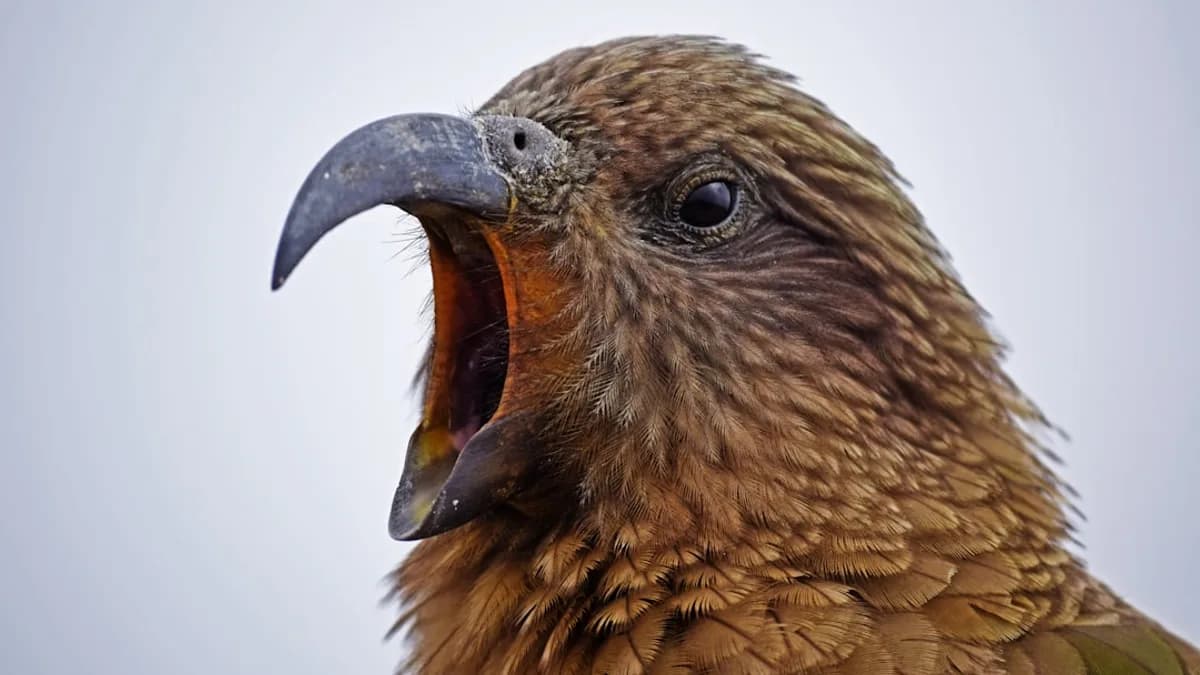
When we imagine the natural world's alphas—the dominant individuals who rule their communities—we often picture the largest, strongest, most physically complete creatures. But Bruce, a kea parrot from New Zealand, is rewriting those rules with every feathered step. Despite missing his upper beak, a tool considered essential for survival and social competition among parrots, Bruce hasn't just survived—he's thrived. In fact, he's become an undefeated champion in his flock's "beak-jousting" contests, a dominance duel at the heart of kea society. His ascent is more than a quirky animal story; it's a profound reminder of how resilience and adaptability can redefine what it means to be strong, both in the animal kingdom and beyond [Source: Source].
Understanding Bruce’s Unique Adaptation and Behavior
For a kea parrot, the beak isn't just for cracking nuts or preening feathers—it's a critical weapon in displays of dominance and a vital tool for daily life. The loss of an upper beak would usually spell disaster, stripping a bird of its ability to feed properly, defend itself, or vie for social status. Yet Bruce, faced with this daunting handicap, refused to be sidelined.
Instead, Bruce has developed a novel technique: wielding his broken beak as a weapon, he participates in—and wins—beak-jousting matches, the kea equivalent of a duel for supremacy [Source: Source]. Remarkably, Bruce’s unusual method is not just compensatory; it’s effective enough to make him the undefeated alpha, a role typically dominated by the most physically intact birds.
This adaptation speaks volumes about behavioral flexibility—a trait that distinguishes the most successful species. Kea parrots are already renowned for their intelligence and problem-solving skills, regularly featuring in studies on animal cognition. Bruce's improvisation is an exceptional case study in plasticity: he has not only retooled his approach to social competition but has also forced others in the flock to adapt to his style.
Biologically, this kind of adaptation challenges our assumptions about how animal hierarchies are maintained. Social dominance in birds often hinges on displays of physical prowess. Bruce’s case suggests that innovation and unpredictability can be just as powerful as brute strength. His victories, despite a visible "disadvantage," underscore that success in nature is often about making the best of what you have, not lamenting what you lack.
Challenging Assumptions: Disability and Strength in the Animal Kingdom
Bruce’s remarkable rise prompts a critical rethink of how we define disability and strength—not just in parrots, but across the animal kingdom. Too often, disability is equated with weakness, both in popular narratives and even scientific literature. Yet evolution regularly produces stories of animals overcoming injuries or congenital differences through ingenuity and adaptation.
Consider the three-legged African wild dog that learns to run as swiftly as its four-legged peers, or the dolphin whose missing tail fin leads to an entirely new swimming technique. These creatures don't just survive; they sometimes become leaders, parents, or even legends within their groups. Bruce’s story is a vivid addition to this roster, providing fresh evidence that resilience is a more complex and dynamic quality than we often recognize [Source: Source].
In fact, disability in the wild is rarely a simple matter of being "less than." It often catalyzes unexpected strengths. In some cases, animals with injuries develop alternative strategies that can outwit or outlast their fully-abled peers. For example, studies have shown that elephants with broken tusks sometimes become more cautious and strategic, altering group behavior in positive ways.
Bruce’s success as a disabled alpha challenges us to rethink the evolutionary narrative of "survival of the fittest." Fitness, after all, is about the ability to adapt to one's environment—not adhering to a preconceived standard of wholeness or perfection. His triumph in the kea’s competitive social structure is a living example of how natural selection can favor adaptability, creativity, and determination just as much as sheer physical power.
From a scientific standpoint, Bruce’s journey invites biologists and ethologists to look beyond visible traits when assessing animal hierarchies and capabilities. Behavioral plasticity, resourcefulness, and the social dynamics of adaptation deserve greater attention. In a world facing rapid environmental change, such qualities may become more important than ever.
Broader Implications: What Bruce Teaches Us About Overcoming Adversity
Bruce’s story resonates far beyond the aviaries of New Zealand. His triumph over adversity echoes in human experiences of disability, resilience, and leadership. Just as Bruce refused to let his missing beak define him, countless individuals around the world overcome physical or mental challenges through creativity, grit, and the refusal to be underestimated.
Adaptability is at the core of both Bruce's and humanity’s greatest successes. Throughout history, those who have navigated adversity—whether inventors with physical limitations, leaders rising from humble beginnings, or athletes overcoming injuries—have not only survived but frequently changed the world. Bruce’s innovation in the face of his challenge mirrors the spirit of problem-solving that propels human progress.
Moreover, Bruce’s example challenges the notion that leadership or dominance must be rooted in conventional strength or appearance. In both animal societies and human organizations, there is growing recognition that the best leaders are not always the most outwardly impressive, but those who inspire, adapt, and persist. Inclusive workplaces and diverse teams often outperform more homogeneous groups precisely because they draw on a wide range of perspectives and problem-solving approaches.
Bruce prompts us to question our own biases—how often do we overlook talent or potential because it doesn't fit our expectations? His story is a call to action: to value resilience, to celebrate difference, and to create environments where unconventional strengths can shine. As the world grapples with complex challenges like climate change and social inequality, adaptability and innovative thinking will be at a premium, both in nature and in our own communities.
Conclusion: Celebrating Bruce’s Triumph and Redefining Strength
Bruce’s rise from underdog to undefeated alpha isn’t just a remarkable animal tale—it’s a powerful symbol of resilience, adaptability, and the true meaning of strength. His ability to overcome what should have been a crippling disadvantage and ascend to the top of his social order forces us to reconsider our assumptions about disability and dominance, both in nature and in our own societies [Source: Source].
As we celebrate Bruce’s achievements, let’s also embrace a broader, more inclusive view of ability and leadership—one that recognizes the value of diversity, innovation, and tenacity in all its forms. In a world where change and adversity are the only constants, Bruce’s story reminds us that strength is often found where we least expect it—and that the future belongs to those who are willing to adapt, persist, and redefine the rules.