



Introduction to Blue Origin’s New Glenn Launch and Subsequent Grounding
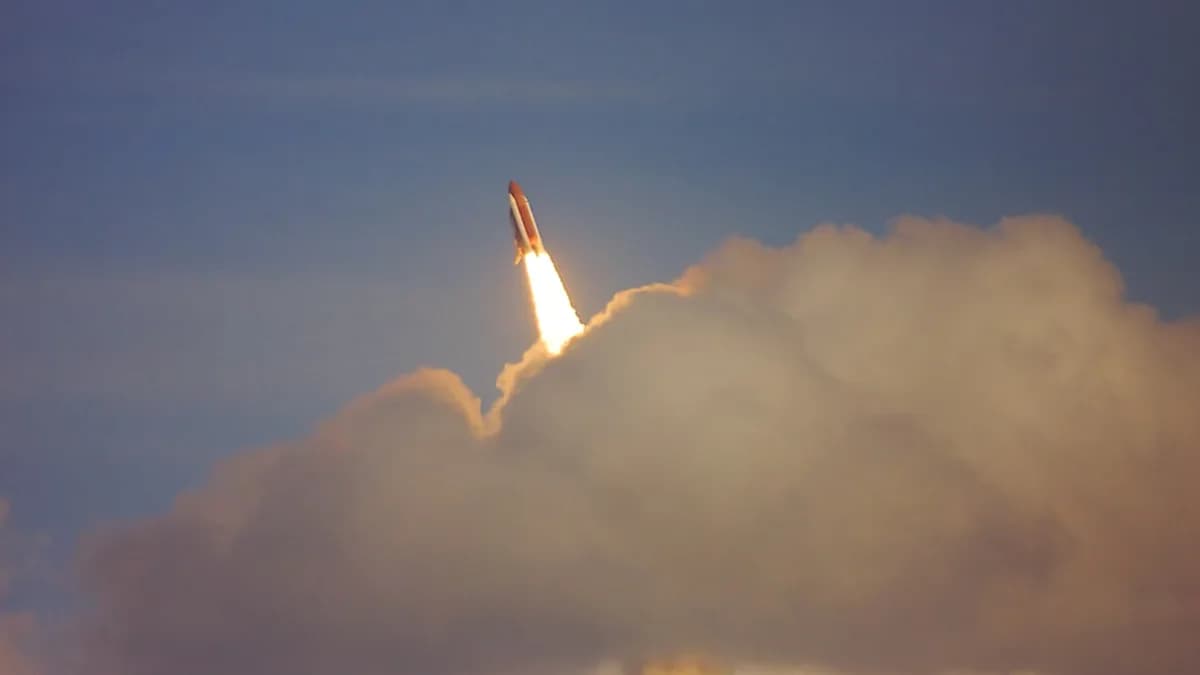
A single error in orbit can echo across an entire industry. On Sunday, Blue Origin’s much-anticipated New Glenn rocket launched from Cape Canaveral, carrying the AST SpaceMobile satellite—a mission billed as a major milestone for Jeff Bezos’s space company and the broader commercial space sector. After a flawless liftoff and a picture-perfect return of its reusable booster, the mission suffered a critical setback: the upper stage of New Glenn failed to deliver its payload to the correct orbit. This misstep prompted immediate regulatory action. The Federal Aviation Administration (FAA) swiftly grounded New Glenn, citing a “mishap during the second-stage flight sequence” [Source: Source]. The grounding not only halts Blue Origin’s momentum, but also raises fresh questions about reliability in the increasingly crowded field of commercial spaceflight.
Technical Breakdown of the New Glenn Launch and Orbit Mishap
Blue Origin’s New Glenn represents a new generation of heavy-lift launch vehicles, designed to compete directly with SpaceX’s Falcon Heavy and United Launch Alliance’s Vulcan Centaur. Sunday’s mission was a crucial demonstration: a reusable booster, capable of vertical landing, and an advanced upper stage meant to deliver large payloads to precise orbits.
The launch itself unfolded according to plan in its early stages. New Glenn’s first stage, a towering, reusable booster, ignited cleanly and separated as scheduled, returning to its landing pad in a maneuver reminiscent of SpaceX’s celebrated Falcon 9 recoveries. This success showcased Blue Origin’s progress in reusability—a key factor in reducing launch costs and increasing cadence.
The trouble emerged during the second-stage flight. Instead of guiding the AST SpaceMobile satellite to its intended orbit, the upper stage failed to achieve the necessary trajectory. While technical details remain under investigation, such orbit insertion failures often stem from issues like premature engine cutoff, guidance system errors, or propellant mismanagement. Even minor deviations in burn duration or orientation can result in significant orbital errors, leaving payloads stranded in unusable orbits.
For AST SpaceMobile, the consequences are severe: the satellite may not be able to fulfill its intended mission, depending on the actual orbit achieved and its onboard propulsion capabilities. This is a sobering reminder of the complexity of multi-stage launches, where even a flawless first stage cannot compensate for upper-stage anomalies. Blue Origin now faces the technical challenge of diagnosing and rectifying what went wrong—a delicate process that will shape future missions and customer trust.
Regulatory Response: FAA’s Role in Spaceflight Safety and Investigation
The FAA’s immediate grounding of New Glenn underscores the regulator’s evolving role in commercial spaceflight. Unlike traditional aviation, where mature certification processes exist, commercial space launch oversight is still developing, balancing innovation with public safety and asset protection.
In its statement, the FAA noted it was “aware that Blue Origin New Glenn 3 experienced a mishap,” and confirmed the grounding pending a thorough investigation [Source: Source]. This approach mirrors previous FAA actions following launch anomalies—such as the temporary grounding of SpaceX’s Falcon 9 after the 2016 Amos-6 explosion, or Astra’s repeated delays after flight failures.
For Blue Origin, the grounding means all future New Glenn launches are paused until the FAA is satisfied with corrective measures. This not only delays scheduled missions but also forces Blue Origin to prioritize transparency and cooperation with regulators. In the high-stakes environment of commercial launches, even a single failure can trigger cascading delays and contractual repercussions. The FAA’s quick response reinforces its commitment to learning from every incident, ensuring the safety bar for the entire industry continues to rise.
Implications for Blue Origin’s Market Position and Commercial Space Industry
Blue Origin’s hard-won reputation for reliability and technical innovation faces a critical test. For years, New Glenn was touted as a challenger to SpaceX’s dominance and a key player in the competitive satellite launch market. This orbit insertion failure, however, puts Blue Origin on the back foot at a time when customer confidence and investor interest are especially fragile.
Clients like AST SpaceMobile are now grappling with the fallout. Failed deployments can trigger insurance claims, contract renegotiations, and potentially millions in lost revenue or replacement costs. For commercial customers, reliability isn’t just a preference—it’s a prerequisite. This incident may push risk-averse clients toward proven providers like SpaceX or ULA, both of which have invested heavily in reliability and rapid anomaly resolution.
Competitive dynamics in the commercial launch sector are unforgiving. SpaceX, for instance, recovered from early failures with a relentless focus on data-driven fixes and transparent communication, winning back both public and customer trust. Blue Origin must now walk a similar path if it hopes to maintain its place in the market.
More broadly, the incident highlights the razor-thin margins for error in commercial spaceflight. As the industry shifts from government-funded “test” launches to high-stakes commercial deployments, tolerance for missteps is shrinking. Satellite operators, investors, and insurers will watch Blue Origin’s next moves closely, recalibrating their expectations for new entrants and reinforcing the market premium on proven reliability.
Future Outlook: Lessons Learned and Steps Forward for Blue Origin
The investigation into New Glenn’s upper-stage failure will likely be exhaustive. Blue Origin, in coordination with the FAA, will analyze telemetry, review manufacturing and integration processes, and test potential fault scenarios. The goal: isolate the root cause, implement engineering fixes, and validate them with ground and (eventually) flight tests.
Technical improvements could involve redundant guidance systems, enhanced engine monitoring, or revised software protocols. But technical fixes alone aren’t enough. Blue Origin’s ability to communicate openly—with customers, regulators, and the public—will be vital in rebuilding trust. After all, SpaceX’s transparency after its early failures helped transform setbacks into learning opportunities and industry-wide best practices.
How quickly Blue Origin can resume New Glenn flights will depend on both regulatory signoff and customer confidence. The company’s future schedules, contract pipeline, and public image are all on the line. Successfully addressing this mishap could position Blue Origin as a company that learns and adapts—an essential trait in the unforgiving world of orbital launches.
Conclusion: Assessing the Significance of the New Glenn Grounding in Spaceflight Evolution
The grounding of New Glenn after a high-profile orbit insertion failure is a stark reminder: space remains an unforgiving frontier, even for well-funded, technically sophisticated players. While Blue Origin’s booster recovery demonstrated progress in reusable rocketry, the upper-stage anomaly exposed the persistent challenges of delivering flawless end-to-end missions.
The FAA’s decisive response reinforces the importance of robust oversight as commercial spaceflight scales up. Every setback is a chance to strengthen safety norms and improve reliability across the sector. For Blue Origin, the path forward hinges on rigorous investigation, transparent communication, and the engineering grit to turn failure into future success.
As the commercial space industry matures, such incidents—while costly—help drive the continuous improvement needed to make space access routine and trustworthy. The industry will be watching closely to see not just how Blue Origin recovers, but how it sets a new standard for learning from adversity.